By: Fatou Dahaba
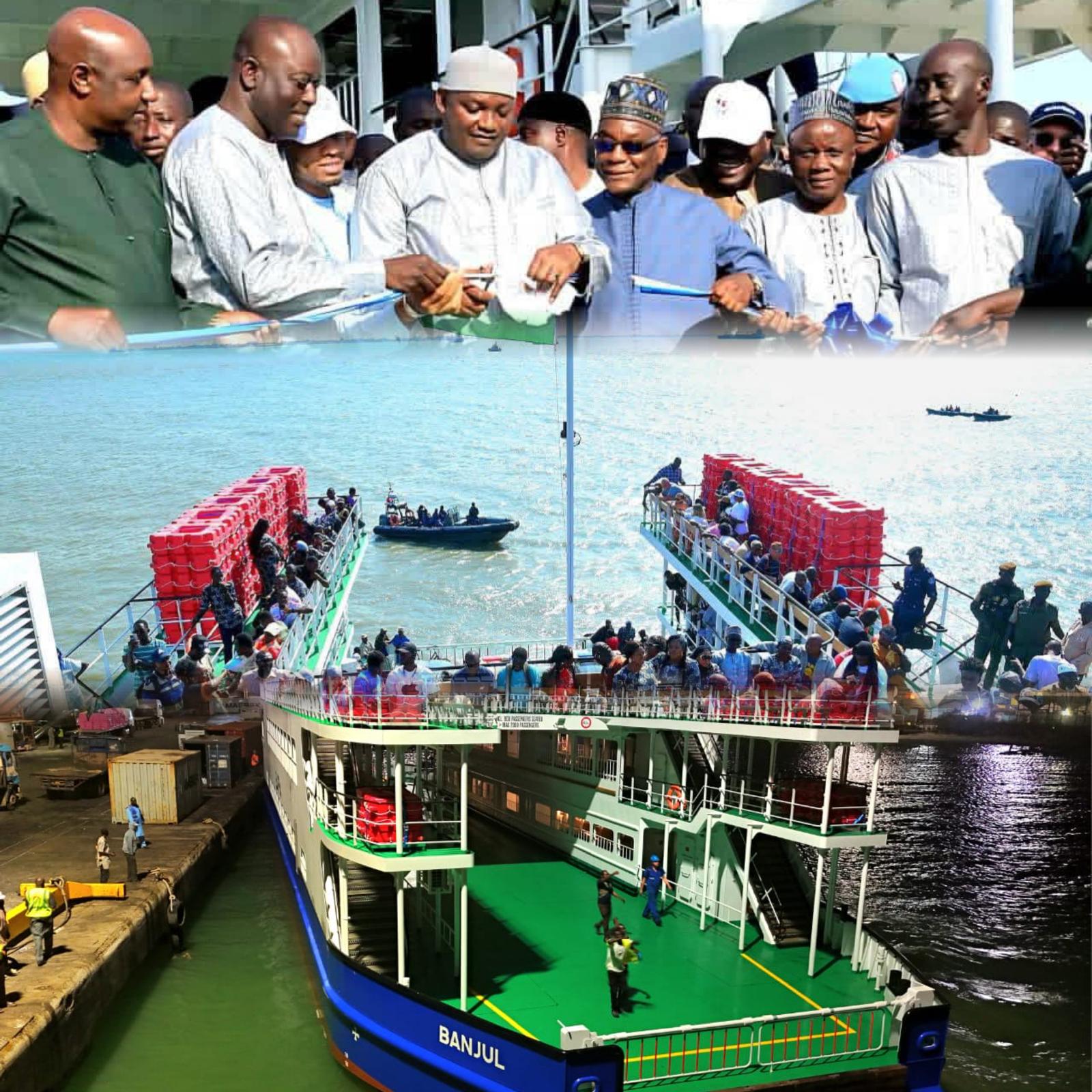
In a landmark ceremony held on Monday, March 23, 2026, at the Banjul ferry terminal, President Adama Barrow officially commissioned the state-of-the-art hybrid green ferry named Barra. The vessel promises to transform river transportation along the vital Banjul-Barra route, easing chronic congestion, enhancing connectivity between the North and South Banks, and advancing the nation’s commitment to sustainable development.
The event drew a large crowd of dignitaries, government officials, citizens, and ferry users eager to witness this milestone. The Barra ferry, a hybrid design incorporating dual diesel engines alongside a solar generation system, represents a forward-thinking investment in eco-friendly maritime infrastructure. Built to high international standards by the renowned Dutch shipyard Damen (with construction beginning in September 2024 and completed in just 14 months), the vessel underwent sea trials in the Netherlands before its delivery to The Gambia earlier this month.
President Barrow, in his keynote address, underscored the ferry’s broader significance for The Gambia’s economy. He linked efficient transport gateways—such as seaports and ferry services—to the country’s socio-economic well-being and domestic production base. “The strength of our transport infrastructure directly impacts our competitiveness and ability to serve as a hub for sub-regional trade,” Barrow stated. He referenced the National Development Plan (YIRIWA), which prioritizes ongoing upgrades to transport networks to foster sustained growth and regional integration.
The president acknowledged longstanding challenges with the existing ferry fleet, including frequent breakdowns and capacity limitations that have frustrated daily commuters and traders. The new *Barra* addresses these issues head-on, boasting a capacity for over 1,000 passengers, more than 20 vehicles, and up to four trucks. Enhanced safety features, including advanced firefighting systems, improved passenger amenities, and reduced carbon emissions enabled by its hybrid technology, mark a clear shift toward modern, reliable service.
While celebrating the achievement, Barrow cautioned that success depends on effective management. He called for a transition from reactive repairs to systematic preventive maintenance programs, professional oversight, and sustainable operational frameworks. “This investment brings new responsibilities,” he emphasized, reaffirming his administration’s support for the Gambia Ports Authority (GPA) in upgrading infrastructure and service delivery.
Ousman Jobarteh, Managing Director of the Gambia Ports Authority, provided technical details on the project. He highlighted the ferry’s eco-friendly innovations, which reduce fuel consumption and emissions, and announced the deployment of a resident engineer to oversee operations and facilitate knowledge transfer. A group of young Gambian engineers from the Regional Maritime University will gain hands-on experience, building local capacity in maritime engineering.
Jobarteh also linked the ferry to broader economic benefits, particularly for agricultural communities reliant on efficient goods transport. He noted its alignment with the major trans-Africa highway network linking Dakar to Lagos, positioning The Gambia as a key node in regional trade corridors.
Lamin Barrow, representing the African Development Bank (AfDB), described the commissioning as a “transformative investment in sustainable maritime transport.” The $20.56 million grant from the AfDB formed a core part of the 4th Banjul-Barra Port Expansion Programme, underscoring the bank’s long-standing partnership with The Gambia since 1974. He commended President Barrow’s leadership in prioritizing innovation, environmental stewardship, and climate-resilient systems across Africa.
Lamin Saidykhan, the regional governor of North Bank Region, echoed these sentiments, framing the ferry as a symbol of hope for economic progress and environmental responsibility. He urged all stakeholders to treat it as a national asset, taking collective responsibility for its careful management and long-term upkeep.
The Barra joins efforts to modernize The Gambia’s aging ferry services, which have long been a bottleneck for the bustling Banjul-Barra corridor—a lifeline for thousands of daily commuters, traders, and travelers crossing the Gambia River. Authorities anticipate reduced wait times, lower operational costs over time, and improved customer satisfaction as the vessel enters regular service.
This commissioning arrives amid growing regional focus on green transport solutions. As The Gambia advances its sustainability goals, the Barra stands as a concrete example of blending economic necessity with environmental innovation.
President Barrow concluded by urging the Ferry Services to prioritize cost minimization, regular maintenance, and superior customer service. With this new addition to the fleet, The Gambia takes a decisive step toward more reliable, inclusive, and greener river transportation—benefits that promise to ripple across communities and the broader economy for years to come.