By: Kexx Sanneh
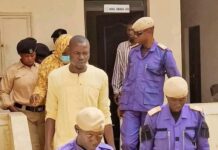
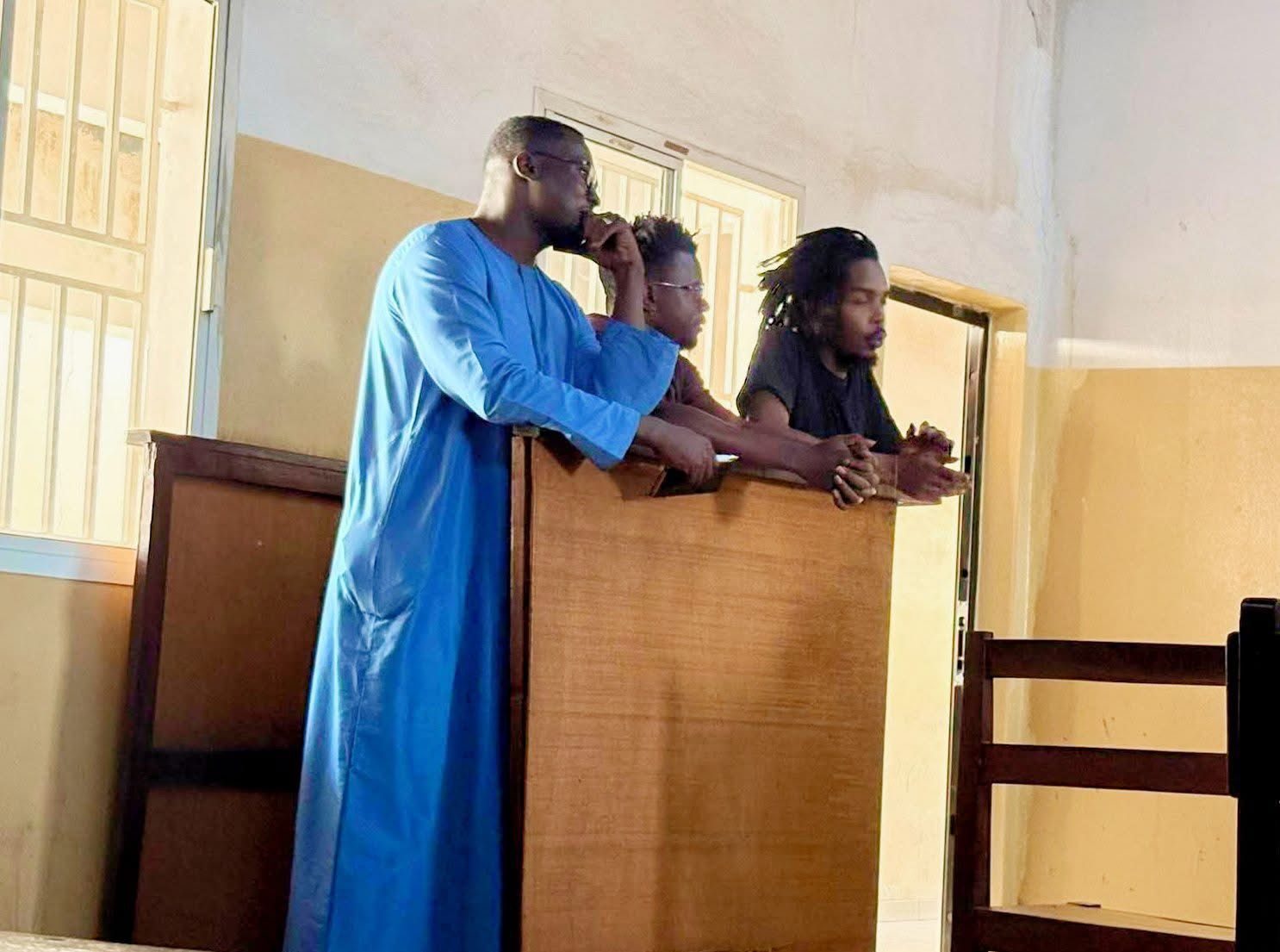
The high-profile trial of three Gambians Against Looted Assets (GALA) activists charged with unlawful assembly drew toward its conclusion today as the prosecution abruptly closed its case, following a dramatic courtroom sequence marked by an absent defendant, a near-miss bench warrant, and a sharp evidentiary battle.
Presiding Magistrate Sallah Mbye presided over the session where the fate of GALA members Alieu Bah, Kemo Fatty, and Omar Saibou Camara hung in the balance. The trio faces misdemeanor charges stemming from an alleged attempt to stage an unauthorized protest outside the National Audit Office on September 15, 2025.
Tension flared at the outset when Commissioner Sanneh, prosecuting on behalf of the Inspector General of Police, noted Omar Saibou Camara’s empty spot in the dock. Only Bah and Fatty were present. Sanneh swiftly applied for a bench warrant.
“This is the second consecutive absence of the accused Camara,” Sanneh declared. “The court cannot allow the proceedings to be undermined. We seek his immediate arrest and detention.”
Defense counsel L.S. Camara rose promptly in opposition. He informed the bench that he had spoken with Kexx Sanneh, who confirmed Camara was en route. “I cannot mislead this honorable court—I do not know the precise reason for his delay,” Camara conceded candidly. “Nevertheless, this is a minor offense. I respectfully request that the court proceed in his absence for the time being. Should he remain absent by day’s end, Your Worship may then consider the warrant application.”
Magistrate Mbye granted the indulgence, permitting the trial to proceed while reserving the warrant decision.
The prosecution then summoned its fourth witness, Sub-inspector Ousman Colley of Kairaba Police Station’s CID unit. Sworn in, Colley described his role in the post-incident investigation panel headed by then-Inspector Demba J. Bah (now Deputy Superintendent). He explained that the panel interviewed the three GALA members following reports that they had attempted to protest without a permit.
According to Colley, Superintendent Dawda Jallow first ordered the group to disperse; when they refused, a Police Intervention Unit (PIU) team under Officer Landing Bojang repeated the directive. Their continued defiance, he testified, prompted the arrests.
Defense counsel L.S. Camara launched a methodical cross-examination that swiftly exposed the witness’s lack of personal observation.
“You were not physically present at the National Audit Office that day, correct?” Camara asked.
“That’s correct,” Colley replied.
“You did not witness the arrests yourself?”
“Correct.”
“You did not see what the accused actually did?”
“Correct.”
A series of similar questions followed, each drawing admissions that Colley’s entire account rested on second-hand information relayed by others. The defense effectively characterized the testimony as hearsay, lacking direct knowledge.
Prosecutor Sanneh then sought re-examination. “During your interview with the accused, did they produce any permit?” he inquired.
Counsel Camara sprang to his feet. “Objection! Re-examination is confined to clarifying ambiguities arising from cross-examination—not to introduce fresh material or bolster the case-in-chief.” Citing Section 197 of the Evidence Act, he argued no such ambiguity existed and accused the prosecution of attempting to reopen its case improperly.
Sanneh countered, invoking Sections 3 and 192 to justify clarifying “doubt” about the permit issue.
After hearing both sides, Magistrate Mbye sustained the objection. She ruled that no contradiction had emerged in cross-examination and that the proposed question exceeded the proper bounds of re-examination.
With the line of inquiry blocked, Commissioner Sanneh rose once more. “My Lady, the prosecution hereby closes its case.”
The court adjourned proceedings to March 9, 2026, at 9:30 a.m., when the defense will open. Counsel Camara indicated they intend to submit a “no case to answer” motion, setting the stage for a potential early resolution.
The outcome now rests on whether the magistrate finds the prosecution’s evidence sufficient to require the accused to mount a defense.