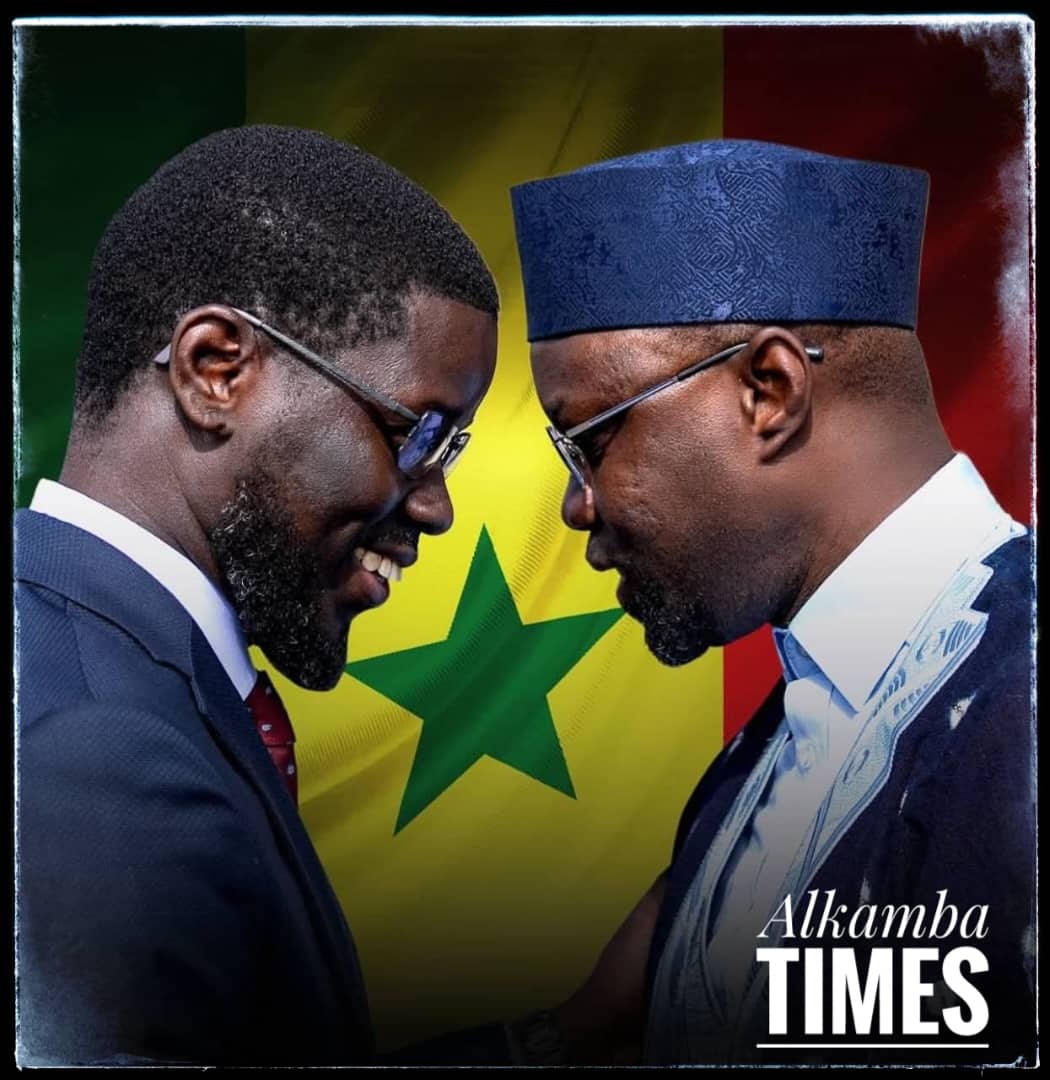
Senegal’s once-unbreakable political partnership between President Bassirou Diomaye Faye and Prime Minister Ousmane Sonko is fracturing under mounting tensions, raising fears of instability in one of West Africa’s most promising young democracies.
In a pointed address at the Annual General Meeting of the ruling coalition on Saturday, March 7, 2026, President Faye asserted that his decisive 2024 election victory was driven by the broad presidential coalition rather than PASTEF, the party he formerly served as general secretary. Faye emphasized that PASTEF had been dissolved during the presidential campaign, crediting the wider alliance for the landslide that ended the 12-year rule of former President Macky Sall.
The remarks ignited immediate controversy, coming just days after Prime Minister Sonko, who leads PASTEF, issued a stark warning in a March 2 live broadcast. Sonko declared he was prepared to withdraw PASTEF from the government and return the party to opposition ranks if Faye strays from its foundational vision of systemic reform, anti-corruption, and economic sovereignty. He described the current arrangement as a fragile “soft power-sharing” setup, cautioning that deeper disagreements could lead to a more adversarial cohabitation.
The duo’s alliance once symbolized hope for change. Sonko, a charismatic firebrand barred from the 2024 presidential race due to legal challenges under the previous administration, handpicked Faye—then his protégé and PASTEF’s general secretary—as a proxy candidate. Faye’s overwhelming win promised sweeping transformations, and he promptly named Sonko prime minister. PASTEF secured a strong parliamentary majority in November 2024, consolidating its control.
Cracks surfaced by mid-2025. In July, Sonko publicly criticized Faye for showing a “lack of authority” in defending party priorities against public criticism. Tensions escalated in November when Faye dismissed Aïda Mbodj, a close Sonko ally, as coordinator of the “Diomaye President Coalition,” replacing her with former Prime Minister Aminata Touré. PASTEF condemned the move as illegal and illegitimate, accusing Faye of overreach and attempting to sow division. Sonko rallied behind Mbodj at a Dakar event, insisting their personal bond remained intact while warning against efforts to fracture their unity.
By December 2025, Sonko told lawmakers, “I don’t work for Bassirou Diomaye Faye, I work for Senegal,” highlighting a growing power struggle in the country’s hyper-presidential system. Social media has amplified the discord, with party militants accusing Faye of betraying Sonko and the movement’s “martyrs” who endured repression under the old regime.
The political drama unfolds against severe economic headwinds. Revelations of over $11 billion in hidden debt inherited from the Sall administration damaged Senegal’s credit rating. The International Monetary Fund froze a $1.8 billion program in 2024 after the new government exposed discrepancies, and stalled negotiations have spooked investors, leading to volatility in the bond market. Violent university protests in February 2026, culminating in a student’s death, underscored youth frustration over funding shortages and broader debt pressures.
Analysts warn that a full rupture could plunge Senegal into governance chaos. PASTEF’s parliamentary dominance gives Sonko significant leverage, while Faye’s presidency holds executive authority. Observers suggest both men may be maneuvering ahead of the 2029 election, with Sonko’s stronger grassroots support challenging Faye’s position.
Political analyst Jessica Moody described the situation as perilous: “The schism threatens to metastasize into a broader crisis.” She noted Senegal’s history as a stable democracy in a turbulent region, but added that few prominent figures have publicly sided with Faye, with many viewing him as having betrayed Sonko’s trust.
President Faye has downplayed divisions, recently affirming his loyalty to PASTEF amid speculation. Yet the coming weeks could prove decisive. As rumors swirl through Dakar, Senegal watches anxiously to see whether its transformative leaders can mend their alliance or if the nation faces renewed political turbulence.