By Fatou Dahaba
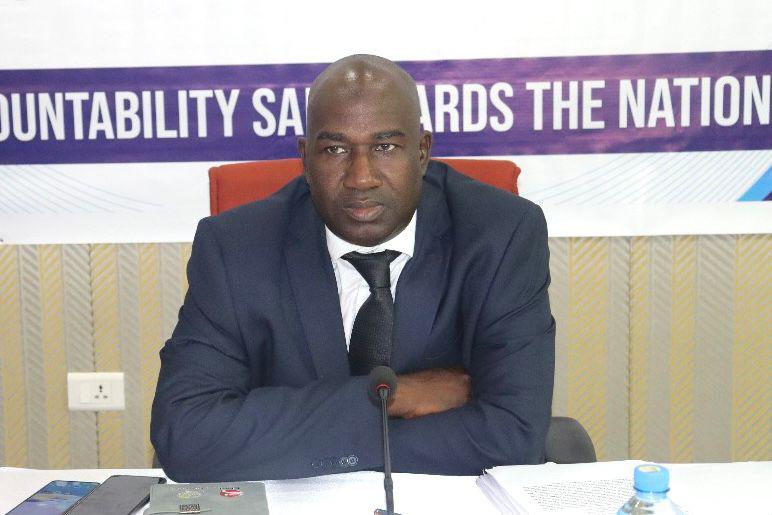
The National Assembly’s select committee on the sale and disposal of former president’s assets has issued a stern 24-hour ultimatum to Mr. Alieu Njie, Secretary to the Cabinet and Head of the Civil Service, to produce critical documents related to the Janneh Commission. The directive follows Njie’s failure to provide complete and relevant files during Monday’s hearing, raising concerns about transparency and compliance with parliamentary oversight.
The Janneh Commission, established to investigate the financial dealings of former President Yahya Jammeh, identified assets for disposal, and the select committee is now scrutinizing the handling of these assets. During the session, Njie presented a document he could not definitively classify as belonging to the Janneh Commission, the Truth, Reconciliation and Reparations Commission (TRRC), or another commission. This prompted the committee, led by Counsel Dibba, to request the entire file, including all preceding documents from 2017 to 2018 and ongoing files under the PR series.
“In effect, I am asking for a series of all files relating to the PR series,” Counsel Dibba stated. “We will want you to produce that file within 72 hours. If your office is too busy, the file can be brought to us immediately for inspection. In fact, I would apply that a 24-hour time be allocated rather than 72 hours.”
The committee requested specific documents, including the minutes of Cabinet meetings that established the ministerial committee linked to the Janneh Commission, membership details, and all related correspondence. Additionally, they sought minutes and reports from any technical committees, reports submitted to Cabinet, and any records about the ministerial committee’s activities. To ensure comprehensive disclosure, the committee also requested six inferential documents and a seventh category to cover any relevant materials.
Njie submitted a few documents from a closed file but admitted that his office could not locate others, citing their placement in confidential files beyond his immediate access. He claimed his team had spent two weekends searching for the documents, but to no avail. This explanation drew sharp criticism from Counsel Dibba, who noted that Njie’s office had been served a summons on June 10, 2025, and responded only on July 16, 2025.
“You had about 35 days to search for documents, not four days or two weekends,” Dibba said. “You could have asked for more time rather than coming almost empty-handed.” The lead counsel pressed Njie on whether he was attempting to conceal documents, warning that withholding material from a National Assembly committee could constitute a serious breach and a crime under Gambian law.
Njie denied any intent to obstruct, stating, “There is no way I can conceal. It’s not possible. That’s not me.” He clarified that not all requested documents were in closed files and acknowledged the existence of a task force under the Ministry of Justice for the Janneh Commission, though his office lacked its records. However, he confirmed having access to some reports submitted to the Cabinet, which were in confidential files.
The ultimatum underscores growing frustration with delays in accessing critical information about the Janneh Commission’s findings and the subsequent handling of assets. The select committee’s probe is part of broader efforts to ensure accountability in the disposal of assets linked to the former regime. Failure to comply within the 24-hour deadline could escalate tensions, with potential legal consequences for Njie and his office.
As the deadline looms, all eyes are on the Cabinet Secretary to deliver the requested files and demonstrate transparency. The outcome of this standoff will likely set a precedent for parliamentary oversight and the government’s commitment to accountability in The Gambia.