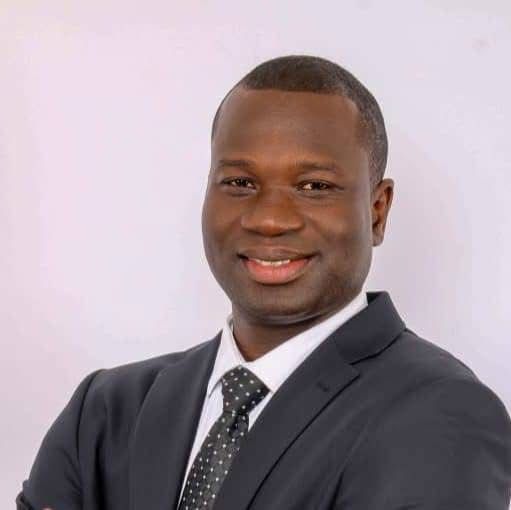
In the wake of a tragic bus accident involving The Gambia’s U16 Basketball team in Guinea, Minister of Youth and Sports Bakary Badjie has issued a statement addressing public criticism and clarifying the roles of the Ministry, the National Sports Council (NSC), and independent sports associations. The Minister emphasized that sports associations, not the Ministry, are responsible for managing their participation in international competitions and arranging their travel logistics, countering what he described as misplaced blame on the government.
The accident, which sparked widespread public outcry, prompted accusations directed at the Ministry and the government for alleged negligence. Minister Badjie firmly rejected these claims, stating, “Sports associations are not institutions of the Ministry and therefore not directly managed by the National Sports Council, nor the Ministry.”
He explained that these associations operate as private entities, answerable to their members and stakeholders, with the Ministry’s role limited to oversight, policy development, and providing funding when feasible. This structure, Badjie noted, aligns with international practices where governments allow sports associations to self-govern while focusing on broader responsibilities such as regulation, infrastructure, and, in regions like Africa and Asia, financial support due to limited corporate sponsorship.
Badjie highlighted the operational autonomy of sports associations, stating, “Every sports association in the country manages its participation at international competitions and makes their own travel arrangements—not the Ministry.” He clarified that the Ministry often learns of an association’s travel plans only when they submit funding requests to the NSC, sometimes at the last minute. In the case of the U16 Basketball team, the Gambia Basketball Association (GBA) submitted a budget of D1.2 million, not D2 million as some reports claimed. The Ministry provided D1 million, covering nearly the entire cost as per the GBA’s plan. “Blaming the Ministry and government is utterly unfair or a show of lack of knowledge of the roles and relationship between the Ministry and associations,” Badjie asserted.
The Minister also addressed the broader context of travel challenges in the region, noting that air travel between West African countries is often impractical due to limited flight availability, long transits, and exorbitant costs. “This is the reason why many people and associations, including those of sport, opt for road travel, and have done so successfully—be it Gambian associations or those of neighboring countries,” he explained. While acknowledging the risks, Badjie stressed that the choice of travel mode lies with the associations, not the Ministry, and no approval is required for their travel routes or methods.
In response to the accident, the Ministry is taking steps to strengthen oversight without undermining the autonomy of sports associations. Badjie announced that a National Sport Bill, recently finalized by the Attorney General’s Chambers, is ready for submission to the National Assembly in its next session. The proposed legislation aims to address weaknesses in the current regulatory framework by mandating sports associations to submit annual plans to the NSC.
These plans will include details of participation in regional competitions and travel arrangements, allowing the NSC to assess and approve or deny financial support and foreign travel. “This will henceforth help the NSC to determine whether to approve or deny financial support and bar foreign travels if necessary,” Badjie said, emphasizing that the measures aim to enhance safety and preparation.
The Minister expressed regret over the incident, describing it as a “lesson” for the Ministry and the government. He underscored the government’s commitment to supporting the sports sector, particularly in a context where corporate financing is scarce and infrastructure development remains a priority.
Badjie also refuted claims that the Ministry denied funding for air travel due to budget constraints, reiterating that the GBA’s request was met with substantial support. He called for greater public understanding of the distinct roles of the Ministry and sports associations, urging stakeholders to focus on collaborative solutions rather than blame.
The accident has sparked a broader conversation about the state of sports governance in The Gambia, with many calling for improved coordination and safety measures.