By: Alieu Ceesay
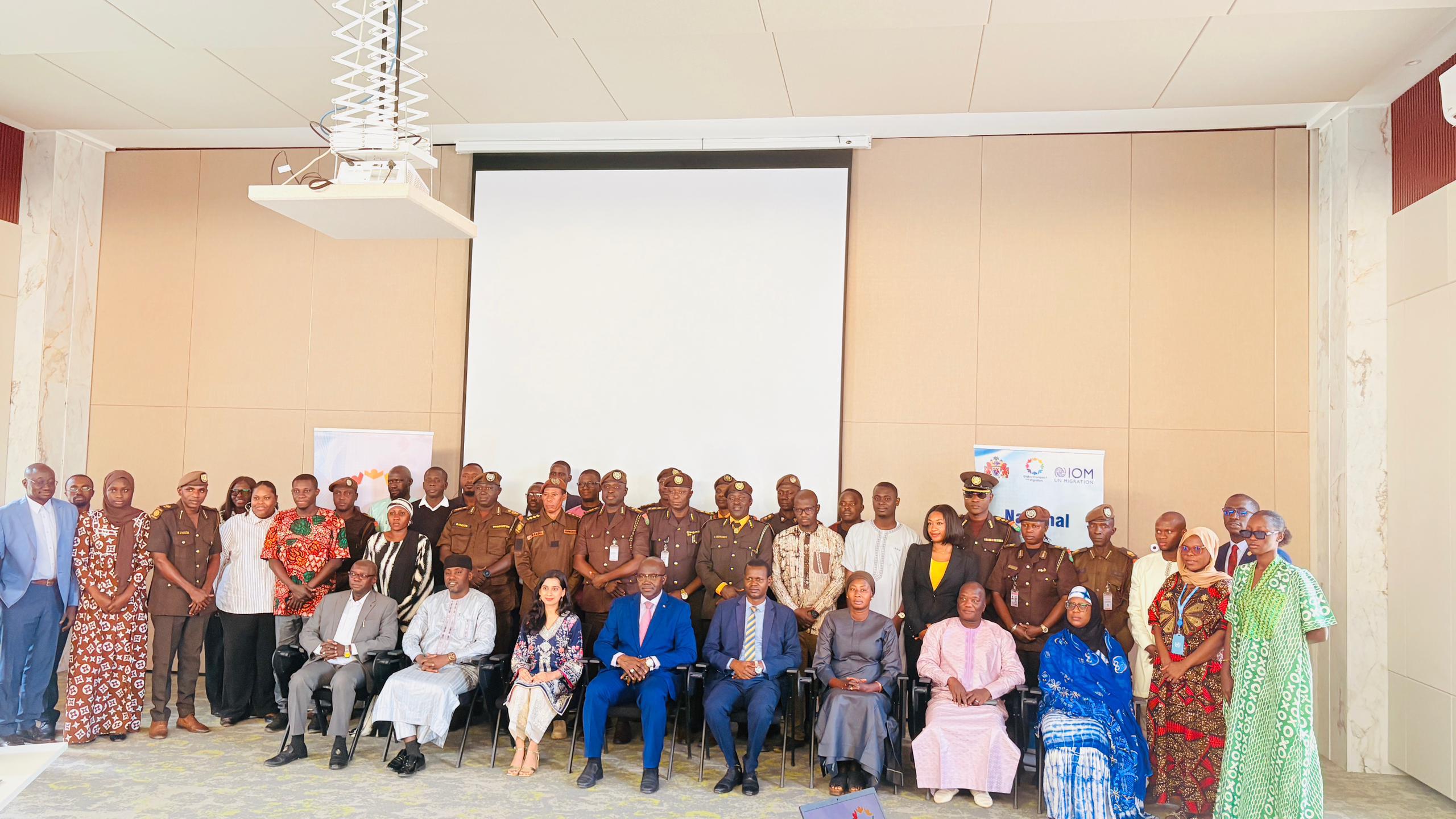
Gambian migration stakeholders gathered for a two-day quarterly meeting of the National Coordination Mechanism on Migration (NCM), focusing on preparations for the 2026 International Migration Review Forum (IMRF). The forum serves as a key global platform for evaluating progress under the Global Compact for Safe, Orderly and Regular Migration (GCM).
The meeting brought together regional governors, officials from the Gambia Immigration Department, representatives from the Ministry of Foreign Affairs, and partners, including the International Organization for Migration (IOM). Discussions centered on reviewing national achievements, addressing implementation gaps, and clarifying roles, responsibilities, and timelines ahead of the IMRF.
Ambassador Lang Yabou, Permanent Secretary at the Ministry of Foreign Affairs, emphasized the NCM’s pivotal role in advancing the process. “The National Coordination Mechanism remains central to the success of this process,” he stated. “Over the coming months, our collective priorities must include strengthening inter-ministerial coordination to ensure coherence in migration policy implementation.”
He urged participants to candidly assess progress and gaps while positioning the IMRF as a catalyst for better governance. “The IMRF process should serve as a catalyst for improving governance frameworks, enhancing the protection of migrants’ rights, expanding regular migration pathways, and maximising the developmental impacts of migration for our country and for the wider region,” Ambassador Yabou added.
The Voluntary National Review for the IMRF goes beyond routine reporting, rooted in an inter-governmentally agreed progress declaration. It allows Member States to celebrate successes, confront challenges openly, and influence the future of global migration governance.
Sibgha Djaz, IOM Chief of Mission in The Gambia, highlighted ongoing pressures facing the country, including irregular migration, limited legal pathways, socioeconomic vulnerabilities, and climate-induced mobility. She stressed the need for robust data systems to inform evidence-based policies.
“As IOM, we are proud to support this process—technically, operationally, and logistically,” Djaz said. “We will continue working closely with the Government to facilitate inclusive consultations, provide data and analysis, and assist in drafting a national GCM report that reflects the full spectrum of Gambian perspectives. Our role is not only to accompany the process, but to help ensure it reflects the country’s realities, priorities, and aspirations.”
The meeting occurred amid heightened national attention on migration risks, following the tragic capsizing of a migrant boat off Niumi (also referred to as Nuimi) in the North Bank Region on New Year’s Eve 2025/January 1, 2026. The incident, involving a vessel carrying over 200 people attempting to reach the Canary Islands, resulted in dozens of deaths—reports indicate the toll rose to 39—with many others rescued or still missing.
Ambassador Yabou extended condolences to the families of the victims of the disaster, underscoring the human cost of irregular migration routes.
The gathering reinforced The Gambia’s commitment to transforming migration management into a driver of development, with enhanced coordination and international support playing key roles in the lead-up to the 2026 IMRF.