By: Sainabou Sambou
In a high-stakes constitutional showdown with far-reaching implications for the independence of key oversight institutions, Gambia’s Supreme Court on Wednesday, February 25, 2026, heard exhaustive arguments in a case accusing President Adama Barrow of circumventing mandatory constitutional safeguards to remove former Auditor General Modou Ceesay.
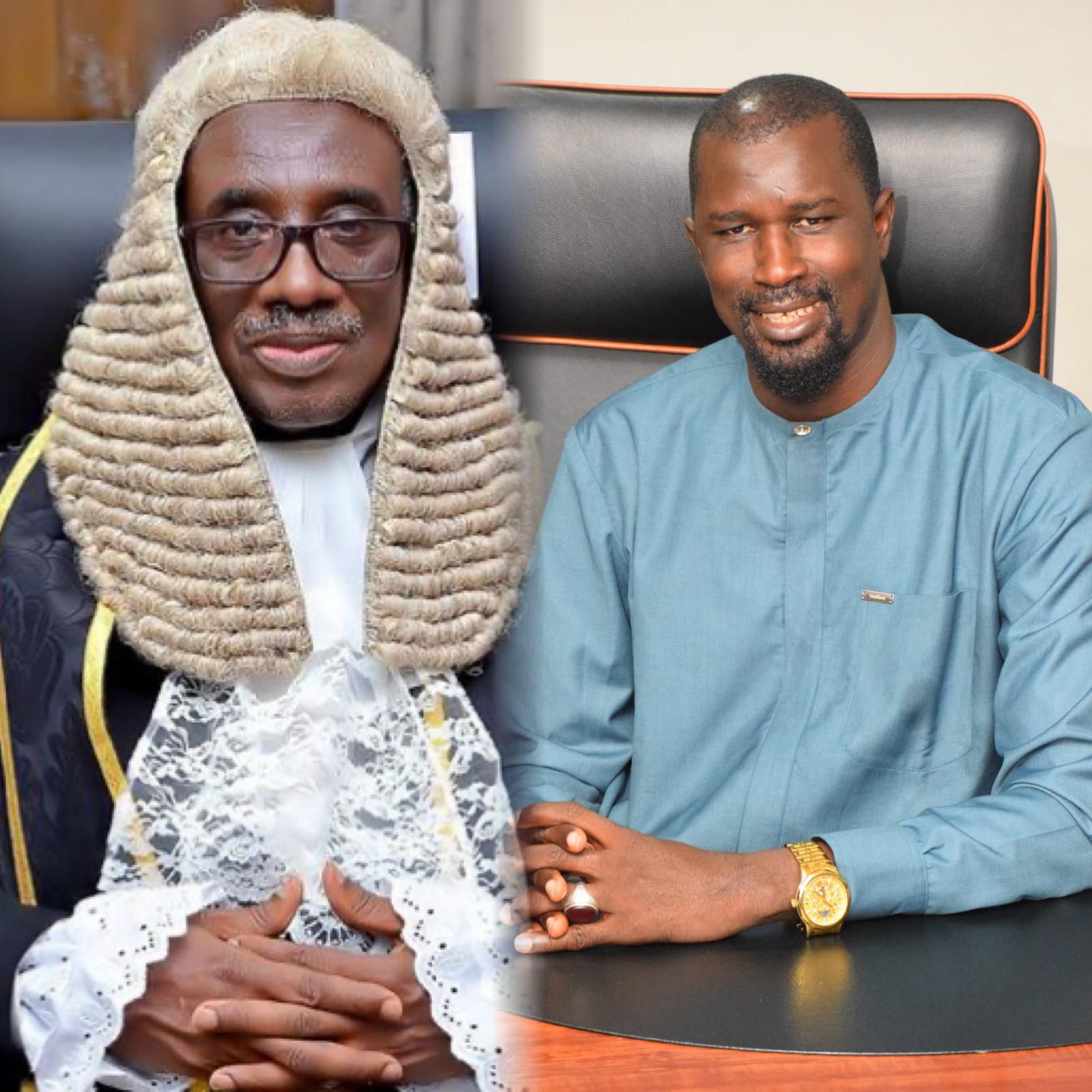
Presided over by Chief Justice Hassan B. Jallow alongside fellow justices, the full-day session centered on claims that the president engineered an “artificial vacancy” in the constitutionally protected office by offering Ceesay a ministerial post he explicitly rejected—then proceeded to install a replacement and enforce his removal with police intervention.
Lead counsel Lamin J. Darboe, representing the plaintiff (former Auditor General Ceesay), argued forcefully that the executive branch flagrantly violated the Constitution. He emphasized that Sections 158 to 160 of the 1997 Constitution, together with Section 16 of the National Audit Office Act, establish a rigorous, mandatory process for removing an Auditor General—limited to grounds of inability, misbehavior, or incompetence, and only after a formal tribunal investigation affording the officeholder a full opportunity to be heard.
“None of that happened here,” Darboe told the court. “No tribunal was constituted, no formal allegations were presented, and no chance to defend was given.”
Instead, Darboe contended, the president invoked Section 71—empowering appointments to ministerial positions—to offer Ceesay the role of Minister of Trade, Industry, Regional Integration, and Employment in what the plaintiff described as a deliberate maneuver to vacate the Auditor General post without triggering removal protections.
Ceesay, Darboe stressed, never accepted the appointment. A sealed letter was delivered at the State House, but Ceesay promptly returned it and followed up the next day with a formal written refusal. “Acceptance is the cornerstone of any valid appointment,” Darboe submitted. “Without it, no vacancy was lawfully created.”
Despite the documented rejection, authorities announced a successor—Cherno Amadou Sowe—and police officers physically removed Ceesay from the National Audit Office premises in September 2025, an action Darboe branded as “direct interference with a constitutionally shielded office.”
“The Auditor General cannot be removed at the pleasure of the Executive,” Darboe declared, warning that such executive overreach erodes the separation of powers and public trust in independent accountability mechanisms.
Representing the Attorney General and the state, senior private Lawyer, Ida Drammeh countered that no unlawful removal occurred at all. She maintained that Ceesay vacated the office upon the president’s ministerial appointment under Section 71, rendering the Auditor General position vacant regardless of his subsequent refusal.
Drammeh pointed to “admitted facts,” including alleged expressions of appreciation from Ceesay upon receiving the offer, to argue for an implied or initial acceptance. Once a successor was named, she said, Ceesay lacked any lawful claim to remain in post.
“The police presence was not an unlawful eviction but enforcement of the new reality,” Drammeh submitted. She insisted the burden of proof lay with the plaintiff, who failed to demonstrate any constitutional breach or direct presidential misconduct regarding the police action.
The state further argued that the president acted squarely within his constitutional authority and that the removal provisions were irrelevant because, from the government’s perspective, no formal removal occurred—only a lawful transition following the appointment.
Appearing as amicus curiae, counsel Abdoulie Fatty underscored the broader constitutional stakes. He reminded the court that the Auditor General’s independence—both institutional and functional—is explicitly enshrined in Sections 158–160, which shield the office from direction or control by any person or authority.
“Where the Constitution prescribes a specific mode of removal, strict compliance is non-negotiable,” Fatty argued. Bypassing that process through indirect means, he warned, sets a perilous precedent: it could allow future executives to sidestep safeguards for other protected offices, weakening democratic checks and balances.
Fatty invoked the fundamental principle of audi alteram partem—the right to be heard—stressing that no tribunal ever investigated allegations against Ceesay or gave him a chance to respond. Permitting such circumvention, he concluded, risks eroding confidence in the very institutions designed to ensure fiscal transparency and executive accountability.
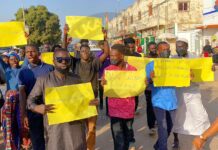
The controversy traces back to September 2025, when President Barrow offered Ceesay the trade ministry portfolio amid a wider reshuffle. Ceesay’s refusal—making him the first known Gambian to publicly decline such an appointment—sparked immediate tension. Police enforcement of the successor’s installation drew widespread criticism and youth-led protests, with critics alleging retaliation linked to ongoing audits that could be embarrassing to the administration.
The Supreme Court has now adjourned the matter for judgment, with observers anticipating a ruling that could clarify the boundaries of executive power over independent constitutional offices.
Legal analysts say the outcome will test the judiciary’s role in upholding the post-2017 democratic transition’s emphasis on institutional independence. A decision favoring the plaintiff could reinforce protections for oversight bodies; a ruling for the state might expand presidential latitude in personnel matters.
The case has already drawn national and international attention, highlighting ongoing tensions between executive authority and constitutional checks in one of Africa’s youngest democracies.