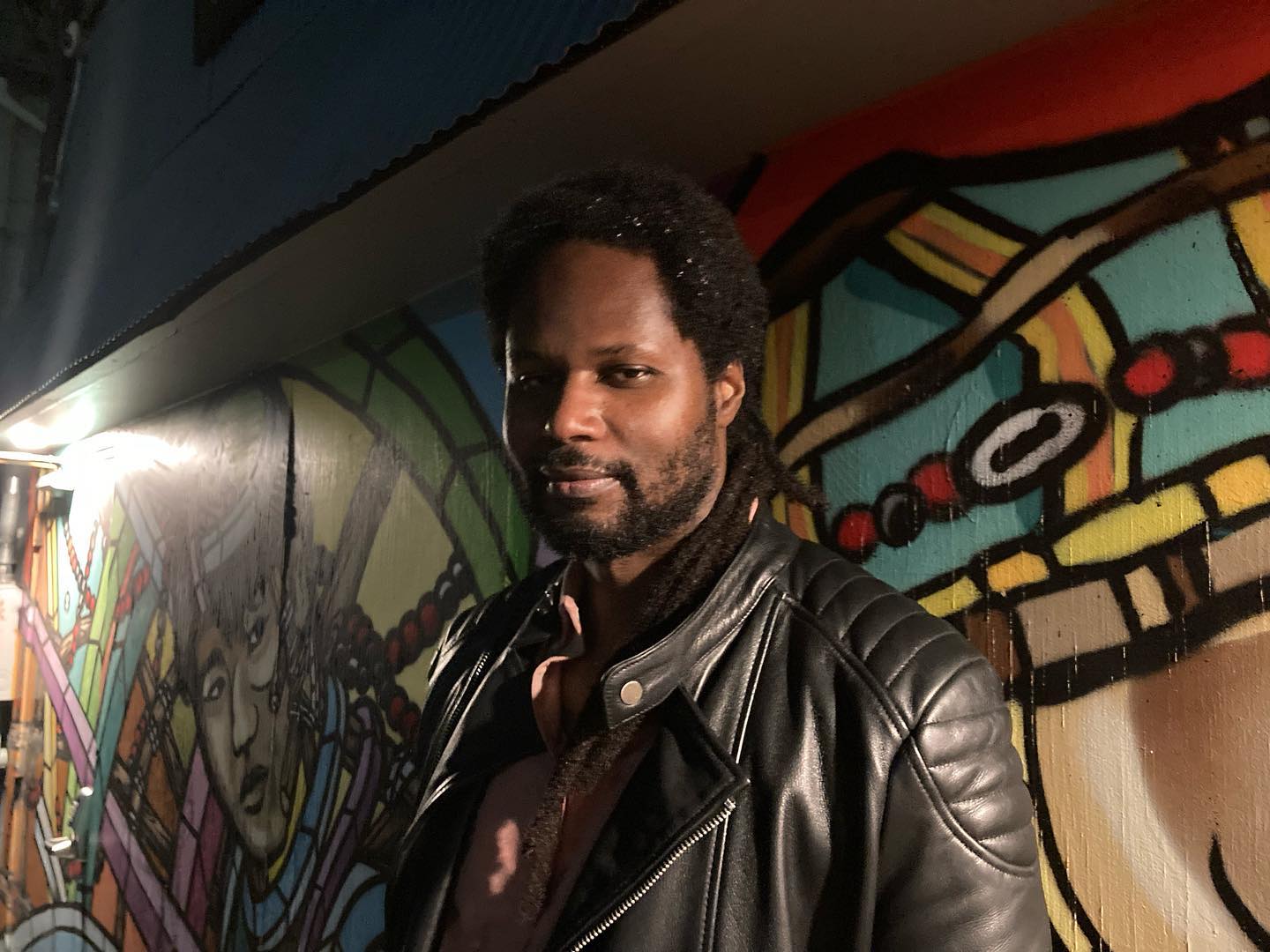
In the quiet of a small Gambian town, a young eMalick Njie gazed at the starlit sky, his mind buzzing with questions about life and death. Around him, illnesses struck without warning, often leaving no answers, no diagnoses, and no cures. Those early moments of wonder, born in a place where medical mysteries usually ended in silence, have propelled Dr. Njie to the forefront of a scientific revolution in Silicon Valley. Today, as a neuroscientist and tech entrepreneur, he leads Ecotone AI, a company harnessing artificial intelligence to unlock the secrets of rare genetic diseases and rewrite the future of medicine.
Dr. Njie’s journey from a curious boy in The Gambia to a trailblazing innovator is a story of bridging worlds—between ancestral wisdom and cutting-edge technology, between overlooked communities and global biotech, between unanswered questions and groundbreaking solutions. His company, Ecotone AI, is not just another Silicon Valley start-up; it’s a bold mission to make cures for rare diseases faster, cheaper, and more accessible, offering hope to the estimated 800 million people worldwide living with these conditions.
A Childhood Fueled by “Why?”
Growing up between The Gambia and the United States, Njie was shaped by two distinct realities. In The Gambia, he was surrounded by lush forests and vibrant biodiversity, sparking his curiosity about the natural world. Yet he also witnessed the toll of undiagnosed and untreated illnesses, sporadic diseases that left families in despair. “I was always asking questions,” Njie recalls. “Why do some children never get a diagnosis? Why do cures feel like miracles instead of science?”
These questions became the foundation for Ecotone AI, a company named after the ecological term for transition zones between ecosystems—a fitting metaphor for Njie’s vision of bridging disciplines, cultures, and possibilities. His mission is clear: to transform the way we understand and treat rare genetic diseases by treating the human genome as a language that can be read, understood, and corrected.
Decoding Life’s Language with AI
At the heart of Ecotone AI is a revolutionary approach called LifeLanguage, which views DNA, RNA, and proteins as the fundamental languages of life. Just as AI language models like those powering chatbots can parse text, Ecotone’s proprietary AI models—named dnaSORA, Seq2KING, and the Hawaiian Diamond platform—analyze entire human genomes to pinpoint the single faulty DNA “token” responsible for a disease. This approach is a radical departure from traditional drug development, which can take seven years, cost billions, and rely on vast datasets for each disease.
Ecotone’s AI-driven method significantly reduces these timelines, delivering insights in months or even weeks at a fraction of the cost. By treating the genome as structured, readable code, Ecotone bypasses the slow, disease-by-disease grind of conventional research. “This isn’t just about speed,” Njie emphasizes. “It’s about accessibility. We want to move from a handful of $2-million therapies to hundreds of affordable ones.”
The implications are staggering. Rare diseases, which collectively affect one in ten people globally, are often neglected by the pharmaceutical industry due to their small patient populations and high development costs. Ecotone’s scalable, AI-powered platform could change that, offering a repeatable system to target these conditions efficiently and equitably.
A Gambian Vision for Global Impact
Although based in San Francisco, Njie’s heart remains tethered to The Gambia, the smallest country on the mainland of Africa. His mission is deeply personal, rooted in the desire to ensure that children in places like his hometown see themselves as part of the global innovation story. “I want African children to know that innovation doesn’t only come from abroad,” he says. “Africa can lead. Africa can build. And we can heal our people.”
Njie’s vision extends beyond technology to equity. He envisions a world where cutting-edge treatments aren’t reserved for the wealthy or those in developed nations. By reducing the cost and time required to develop therapies, Ecotone aims to democratize access to genetic medicine, ensuring that cures reach those who need them most, regardless of their geographical location or socioeconomic status.
Seizing a Historic Moment
The timing for Ecotone’s mission couldn’t be more perfect. In 2022, scientists completed the mapping of the entire human genome, unlocking all 3 billion base pairs of DNA. In 2023, the FDA approved the first CRISPR-based gene-editing therapy, proving that precise genetic interventions are possible. These milestones have set the stage for a new era in medicine—one that Ecotone is poised to lead.
What sets Ecotone apart is its ability to combine precision, speed, and inclusivity. Traditional approaches to rare disease research often treat each cure as a one-off, requiring bespoke solutions for each condition. Ecotone’s AI platform, by contrast, offers a scalable framework that can be applied across thousands of diseases, fundamentally changing the economics of genetic medicine. “Humanity is co-evolving with technology,” Njie says. “But if that evolution isn’t inclusive, we risk leaving billions behind.”
A Dreamer from a Small Nation
Ecotone AI has already caught the attention of biotech and AI leaders worldwide, with its LifeLanguage approach heralded as a game-changer. Yet for Njie, the mission remains deeply personal. The boy who once stared at the Gambian sky, wondering why so many suffered in silence, is now ensuring that no one else has to. With a team of engineers, scientists, and visionaries, he is proving that the future of medicine belongs not to one nation or institution, but to those who dare to imagine it differently.
In a world where rare diseases have long been overlooked, Ecotone AI is a beacon of hope. From its San Francisco headquarters, the company is building a future where cures are not miracles but science—accessible, affordable, and universal. And it all began with a curious boy from The Gambia, asking “why?”
About Ecotone AI
Founded by Gambian neuroscientist Dr. eMalick Njie, Ecotone AI is a San Francisco–based company pioneering the LifeLanguage approach, treating the human genome as programmable data. Using advanced AI models like dnaSORA, Seq2KING, and the Hawaiian Diamond platform, Ecotone accelerates the discovery of cures for rare genetic diseases by identifying the precise DNA errors behind them. With a mission to make genetic medicine faster, cheaper, and more equitable, Ecotone is redefining the future of healthcare for millions worldwide.