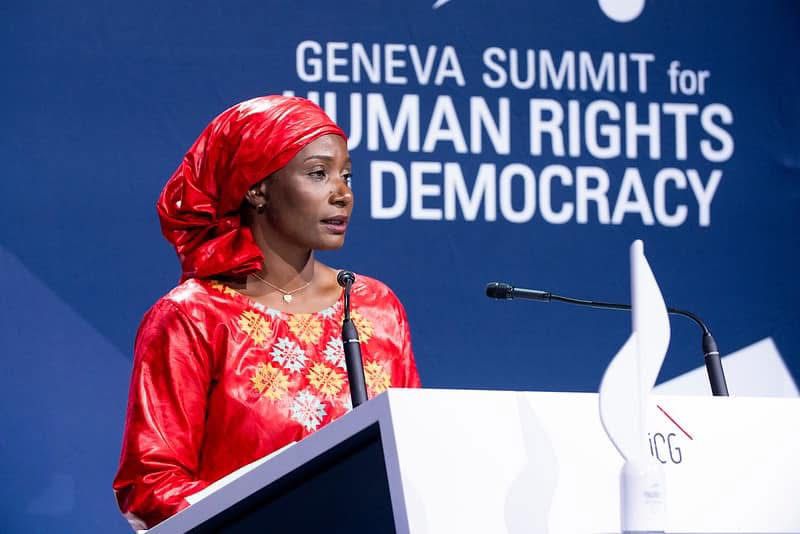
Fatou Baldeh MBE, survivor, founder, and Executive Director of Women in Liberation & Leadership (WILL), and one of The Gambia’s most prominent international voices against female genital mutilation (FGM) and gender-based violence, has shared her powerful personal journey and vision for women’s rights in an exclusive interview with The Alkamba Times.
In this International Women’s Day special edition, Baldeh opens up about the moment she transformed her own experience into national and global advocacy, the collective triumph in defending The Gambia’s 2015 FGM ban in 2024, the holistic strategies shifting cultural attitudes, and her message to young Gambian girls aspiring to lead.
Baldeh never planned to become a leading advocate. Like many Gambian girls, she grew up viewing FGM as simply the norm. Her early interest in women’s health—driven by the stark realities of maternal mortality, HIV, and other challenges—led her to study health and psychology, followed by a master’s in sexual and reproductive health and rights in the UK.
It was during those studies that she first encountered documented evidence of FGM’s harms. “I struggled to accept it, because no one had ever told me this growing up,” she recalled. Conversations with survivors, friends, and family resonated deeply. “Reflecting on their stories and my own made it impossible to stay silent.” That realization birthed WILL—a platform to turn personal understanding into collective advocacy, healing, and leadership for women and girls.
The 2024 campaign to defend the FGM ban, when parliament considered repeal, was one of her defining moments. Baldeh emphasized it was a collective victory: “Neither I nor WILL could have secured that outcome alone.” The greatest challenge was confronting a deeply rooted social norm tied to culture and identity. Success came through survivor mobilization, alliances with religious leaders, culturally sensitive dialogue with policymakers, and evidence from WILL’s nationwide health impact study. “Consistent advocacy, collaboration, and a united message, backed by evidence and lived experience,” she said, ultimately preserved the law.
Through WILL, Baldeh creates safe spaces for adolescent girls to learn about sexual and reproductive health rights, facilitates intergenerational dialogues to break taboos across generations, and engages men and boys in positive masculinity training. These holistic efforts are gradually reshaping attitudes: communities are becoming more open to discussing women’s rights, questioning harmful practices, and supporting girls’ empowerment. “Change cannot happen if we leave half the population behind,” she stressed.
Her work has earned global acclaim—including features in TIME’s influential lists and an MBE—but Baldeh sees international recognition as most valuable when it amplifies the voices of grassroots Gambian women. “Global attention creates visibility, protection, solidarity, and resources,” she explained. It reinforces that FGM is a human rights violation, not merely a cultural debate, and validates locally led solutions while building networks across Africa and beyond.
Despite the ban’s survival, enforcement remains inconsistent, with some authorities still viewing FGM as “tradition.” Baldeh noted encouraging signs—police investigations, arrests, and healthcare reporting—but called for practical steps: consistent training for frontline authorities on the law and health consequences, improved community education, better confidential reporting channels, and stronger civil society–state collaboration.
On International Women’s Day, her message to young Gambian women and girls is clear and empowering: “Your voice matters, and your leadership starts right where you are… Real change begins in communities, in conversations, and in the courage to question harmful norms… The Gambia needs your ideas, your energy, and your leadership. You are part of a growing movement of young African women shaping futures rooted in dignity, justice, and freedom.”
Baldeh credits her Gambian heritage for fueling her vision. Raised by women who held families together with limited resources and led quietly but powerfully, she carries forward values of resilience, community, and collective responsibility. “Being Gambian fuels my belief that African women are not just beneficiaries of change—we are the leaders, innovators, and visionaries shaping it,” she said. Her ongoing PhD work, she added, is dedicated to serving Gambian women and contributing to broader African movements for justice and equality.
As The Alkamba Times honors trailblazing Gambian women this March 8, Fatou Baldeh MBE stands as a beacon of courage, strategic leadership, and unyielding commitment to ending FGM, advancing women’s rights, and building a future where every Gambian girl can thrive in safety, dignity, and power.