by Assan Jatta
Women football advocate and football administrator
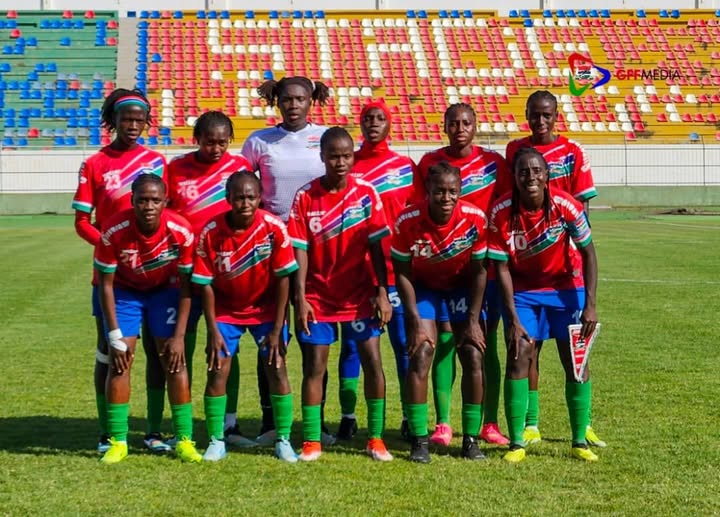
Another qualifier, another exit. As the dust settles on our WAFcon qualifiers, it’s time for a candid, respectful conversation about the real issues plaguing our senior female national team.
We all bleed for The Gambia, and we celebrate every win. But if we are truly observant, we must look beyond the score lines. Wins against Niger and a victory over Sierra Leone in WAFU exposed a deeper problem: we are struggling to dominate games tactically, even when we win.
So, why do we consistently fall short against seemingly bigger nations?
1. The foundation is broken
The technical and tactical level of our domestic league remains a significant challenge. While we have passionate players, the environment isn’t yet competitive enough to consistently produce players with the high-level game intelligence required internationally.
The level of our league and the poor training facilities make it impossible to build a competitive national team. In one of my famous “KOTOS” voice, “we are trying to build a skyscraper on sand”.
2. The Systemic Failure: Lack of Support
A lack of consistent, high-quality support from both the GFF and the government in funding, infrastructure, and long-term planning is a massive anchor holding women football back.
The preparation towards this qualifier was reportedly better than usual. Yet, we still fell short. Why? Because last minute camps cannot fix years of neglect.
3. The Individual vs. The System: A Recurring Theme
Granted, we needed the presence of all our foreign based players especially those established squad members’ but, we must stop the fantasy that simply having all players available would solve our problems. The issue isn’t just who is on the pitch, but how they are made to play.
Look at Manyima Stevelmans for example, who recently captained her club Riga FC to win the Latvian Cup. You can see the glimpses of her quality, yet she struggles to replicate that dominant club form for the women Scorpions. Ola Buwaro and Penda Bah, they excel at their clubs abroad but come into a national setup where the same tactical structure isn’t present. Same goes to the magnificent Fatou Kanteh. Even a player of her calibre cannot single-handedly overcome a collective tactical disconnect.
Let’s be clear, the talented players who couldn’t make the trip—the Mbasseys, Ruggies, Catherines (Determine Girls), Kaddy Jarjues, Salimata Saidykhans (Shaita Angels), and Ellen Gais (Ladystrikers)—as good as they are, would NOT have been saviours under the current systemic circumstances.
The Solution: This requires a unified, long-term strategy and a Football Revolution. We must:
1. Invest in Infrastructure and improve league standard: As the gap between our women scorpions and other nations widens, we must confront the uncomfortable. Our recent struggles are not a mystery, they are the direct result of a broken system. We expect our girls to compete against nations with established structures while we train on poor pitches with inadequate facilities. We demand technical excellence when the basic infrastructure for development is missing. The reality is, we need a national plan to build training pitches and facilities across the country. Also to seriously invest in and improving the standard of our leagues. This is non-negotiable.
2. It’s time for a paradigm shift. We must stop celebrating “BIM-BAM” football – relying on individual moments of skill or physicality for instant, fleeting success. This approach has failed our long term objectives for years.
We therefore should acknowledge and support coach Education. Credit must be given to the GFF’s Technical Department for the work already begun to improve coaching standards. This work is vital and must be intensified, better funded, and made continuous. Elevating our coaches is the fastest way to elevate our players
As we push for a brighter future for Gambian women’s football, one of the most powerful levers for change is investing in our women football club coaches.
It’s time for clubs across our leagues from the top divisions to grassroots academies, to actively encourage and support their coaches to enrol in CAF and FIFA coaching courses. This too, is non-negotiable simply because:
⮞Formal coaching education provides the tactical knowledge, sports science understanding, and leadership skills needed to develop players holistically.
⮞ A coach with a higher license can identify and correct technical flaws, design smarter training sessions, and instil a deeper game intelligence in players from a young age.
⮞ Helps close the knowledge gap as our players like Manyima, Fatou Kanteh, Ola and Penda reach higher levels abroad, they return to a tactical environment that must be able to challenge and support them. Our coaches need to be on that same journey of growth.
This isn’t just about getting a certificate. It’s about systematically raising the standard of our entire domestic game. When a coach learns modern training methods, his/her entire squad benefits. When he/she understands advanced tactics, the whole team’s performance improves.
I will use this as an opportunity to call on clubs to facilitate and fund their coaches’ participation in these crucial courses. Coaching education should not be seen as an expense, but as the most important investment in your club’s long-term success. Also create a Pathway to develop a culture where continuous learning is expected and celebrated.
3. A Relentless Focus on Grassroots: We need a nationwide, structured youth development program that identifies and nurtured talent from a young age, focusing on technical mastery and tactical understanding. Also establish a national football philosophy (The Gambian way of play). This will be a share style of play and principles that is thought from the U15 level (A real U17) all the way to the senior team. This will create cohesion and clear identity.
The evidence is clear. Nations with less history are achieving more through sheer will and proper planning. We have the passion and the raw talent. What we lack is proper planning, investment, a clear vision and the decisive action from the authorities to build a modern football structure.
The Most Painful Proof is our neighbours’ progress (Not Senegal, “nyo nyu dunj sunj class”)
Let’s use Capo Verde for example, they played their first official women’s international game in November 2018. Remember, players like Sainey Sissohore, Penda Bah, Mariama Bojang, Fatou Darboe, Metta Sanneh and others had already represented The Gambia at a U17 World Cup years before in 2012. Yet, Capo Verde has now qualified for the 2026 WAFCON and is building steadily.
Mauritania also only played their first international women’s national team match on July 2019. They are now on a clear upward trajectory, having successfully hosted and participated in tournaments from school football all the way to WAFU zones.
Their success is not magic. It is the direct result of proper planning, investment, and a clear vision.
Our Systemic Failures Hold Us Back. Women football deserve more than just cheers. They deserve a legacy. The tine for building may be long overdue but we can still start and get it right.