By: Alieu Ceesay
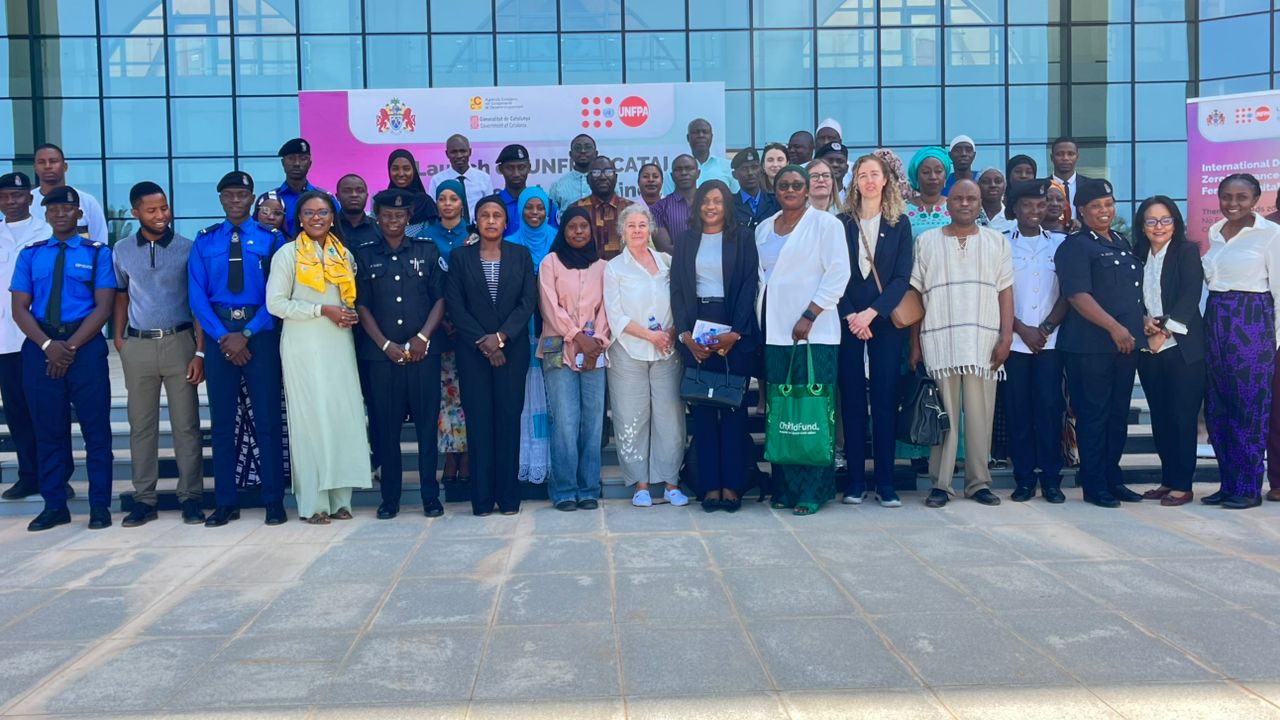
The United Nations Population Fund (UNFPA), in collaboration with partners including ChildFund and the Government of Catalonia, has initiated a specialized training program for personnel of the Gambia Police Force (GPF) focused on Sexual and Gender-Based Violence (SGBV), with particular emphasis on Female Genital Mutilation (FGM).
The training aims to deepen participants’ understanding of gender-based violence, equipping officers with the knowledge and tools to better respond to cases, especially those involving FGM. It aligns with the commemoration of the 2026 International Day of Zero Tolerance for Female Genital Mutilation, observed annually on February 6. This year’s global theme, “Towards 2030: No End to FGM Without Sustained Commitment and Investment,” underscores the urgent need for ongoing political will, funding, and multi-sectoral action to eradicate the practice by 2030, in line with Sustainable Development Goal targets.
The event brought together police officers, civil society representatives, and government officials in a display of shared commitment to safeguarding women and children from harmful practices. Speakers emphasized collective responsibility in challenging social norms and protecting vulnerable groups.
Musu Kuta Komma, Executive Director of The ChildFund, highlighted her organization’s dedication to child protection, women’s empowerment, and eliminating harmful traditional practices like FGM. “We believe that every child, especially every girl child, has the right to grow up safe, healthy, empowered, and secure to reach her full potential,” Komma said. She noted that, through the UNFPA-Catalonia project on FGM, ChildFund collaborates with communities to raise awareness, shift harmful norms, and build the capacity of influencers, including traditional and religious leaders, youth networks, caregivers, and women’s groups.
Assistant Inspector General of Police Amie Nyass called for increased community support in combating FGM and SGBV. She stressed the importance of creating safe spaces for survivors to share experiences and contribute to solutions. “Together we can make sure that future generations grow up in a world free from FGM, where they will be empowered to make choices about their bodies, their futures, and their lives as women and girls,” Nyass declared.
Eva Subira, a Police Inspector from the Catalonia Police Force and one of the moderators, reinforced that ending FGM is a shared duty. “We deeply believe that by sharing best practices and working together, we move closer to our common goal of ending FGM and creating a future where women can live without violence,” she stated.
Ndey Rose Sarr, UNFPA Representative in The Gambia, emphasized the critical role of investment. “In The Gambia and in many countries across Africa, we don’t even have a line budget for fighting FGM… It requires sustained commitment and investment from all sectors and stakeholders.” She cited alarming global figures: over 230 million girls and women have undergone FGM, with an estimated 23 million more at risk without accelerated efforts.
Other speakers included Hon. Touma Njie, Banjul South lawmaker, and representatives from the Ministry of Gender and Children.
Funded by the Government of Catalonia, UNFPA, and the Government of The Gambia through ChildFund, the initiative reflects a broader push to strengthen law enforcement’s role in prevention and response. As The Gambia continues efforts amid ongoing debates on FGM legislation and enforcement, such trainings represent a vital step toward building institutional capacity and fostering a society free from gender-based harm.