By: Ebrima Mbaye
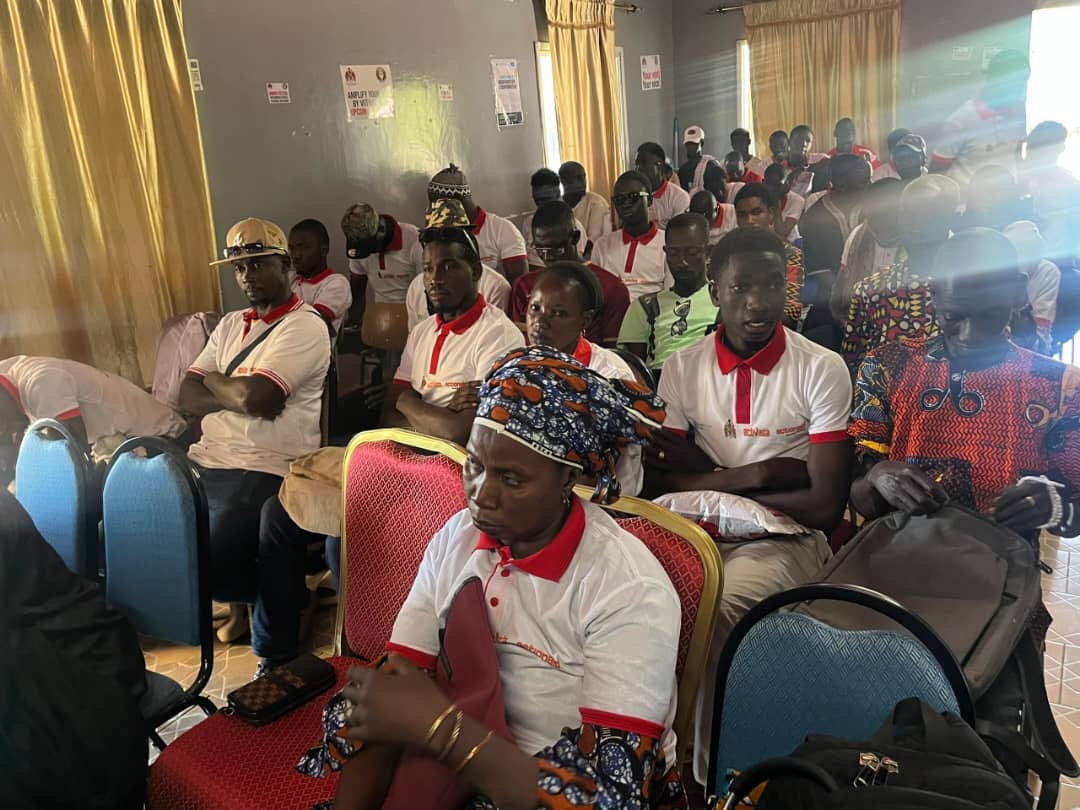
An intergenerational dialogue on civic space and youth inclusion unfolded at the Governor’s Office in Mansakonko, drawing young people, community leaders, and policymakers to explore the vital role of youth in governance and national development.
Organised by ActionAid The Gambia in partnership with local stakeholders, the event formed part of broader initiatives to boost youth participation and foster inclusive civic spaces nationwide. With young Gambians making up over 60 percent of the population, speakers stressed that sustainable progress hinges on their active involvement.
Delivering the keynote address, Landing B. Sanneh, Chairman of the Mansakonko Area Council, declared: “Anything for the youth, without the youth, is not for the youth.” He emphasised meaningful participation for those aged 15 to 35 and highlighted his council’s inclusive approach. Although the law requires a youth representative, the council allowed young people to elect their own representative, demonstrating a commitment to participatory governance. Young people now dominate council membership and hold seats on structures including the district tribunal, where both youth and women have a voice.
Governor of the Lower River Region (LRR), Seedy Lamin Bah, commended the initiative and warned that the country cannot develop without its youth. “The participation of young people cannot be overemphasized,” he said, calling for gender-sensitive inclusion that empowers both young men and women to assume leadership roles.
The open session saw participants praise the Mansakonko Area Council’s efforts in youth development, especially education, while urging bigger change. Several speakers argued that simply selecting a young person is insufficient; appointments must prioritise competence and genuine representation of youth interests.
Sarjo E. Ceesay from Jarra East advocated stronger government-citizen collaboration and called for the inclusion of youth in Village Development Committees (VDCs). He also urged awareness campaigns against irregular migration, known locally as the “backway.” Kabiro Dampha of Jarra Central highlighted how youths are mobilised for community labour yet sidelined from decision-making, demanding merit-based selection and societal support for young leaders.
Lamin Fadera from Kiang Central pointed to structural flaws in VDCs, such as the lack of term limits.
Nenneh Dukureh lauded ActionAid The Gambia for a timely and impactful forum. Binta Jarju of Jarra West raised gender inequality concerns, noting that societal norms often confine women to domestic roles.
“Women need to be included in all sectors. Development cannot be achieved if young women are left out,” she declared.
In a related development at the event, women from the Lower River Region renewed calls on National Assembly Members (NAMs) to pass the 2015 Women’s Bill, which aims to promote higher female representation in the legislature. Honourable Michelle Mende, councillor for Esaau Ward, stated firmly: “Our call to them is that let them pass it. We voted them in to make these laws. And the laws that don’t favour them, they will not be ready to pass. Because they are insecure.”
The gathering underscored ActionAid The Gambia’s ongoing dedication to amplifying young voices, bridging generational divides, and building inclusive governance structures that drive equitable national development. Organisers hope such platforms will translate dialogue into concrete policy action and greater youth and women’s leadership across The Gambia.