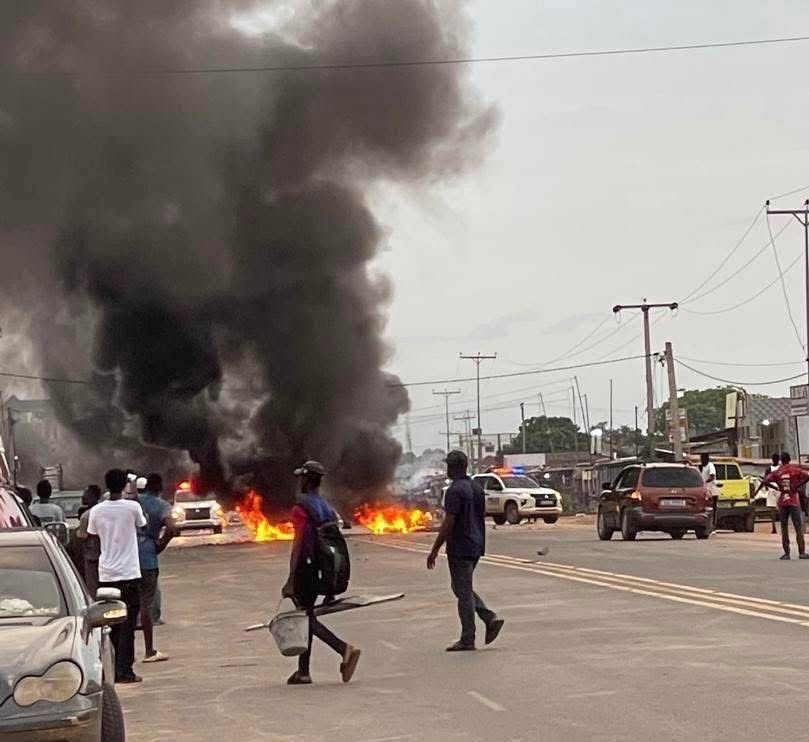
Tensions erupted in Sukuta-Jabang on Thursday, September 18, 2025, as youths took to the streets, setting tyres ablaze to protest a long-standing land dispute gripping the community. The demonstration, which disrupted traffic and heightened local unrest, underscored deep-seated frustrations over land ownership and allocation processes in the area. As black smoke billowed and stones littered the streets, the protest turned chaotic, with clashes between young demonstrators and the Police Intervention Unit (PIU) leaving residents reeling from alleged police brutality.
The unrest stems from ongoing conflicts over land rights in Sukuta-Jabang, where residents have repeatedly demanded transparency and fairness in the government’s land allocation policies. Community leaders have called for calm and urged dialogue to resolve the dispute peacefully, but the situation escalated as protesters voiced their grievances through fiery demonstrations. Police were deployed to restore order, but their response has drawn sharp criticism, particularly from journalist Kadijah Bokum of Gambia Radio and Television Service, who recounted a harrowing ordeal involving her family.
In a widely circulated statement, Bokum described a disturbing encounter with PIU officers who stormed her family’s compound during the protests. “They fired tear gas into compounds indiscriminately,” she said, detailing how officers threw tear gas into rooms occupied by her sister-in-law and her two young children, aged two years and ten months. Bokum herself faced a terrifying moment when officers forced open her door and pointed a gun at her and her son. “What kind of democracy points a gun at a toddler?” she asked, condemning the officers’ actions as unprofessional and abusive.
Bokum further alleged that PIU officers assaulted her brothers, dragged her family from their home, and forced them onto a police pickup truck. She was released only after being recognized by an officer, but not before property was destroyed, money stolen, and her family left traumatized. “My nephew is still not responding to treatment,” she added, highlighting the lasting impact of the violence. Bokum accused some officers of removing their badges to avoid accountability, raising questions about the conduct of those tasked with protecting civilians.
The clashes have sparked outrage, with residents and activists decrying what they describe as systemic police brutality in The Gambia’s “New Democracy.” Many are questioning whether this is the democracy Gambians fought for, pointing to a disconnect between the government’s promises and the reality on the ground.
Police have made several arrests, including teenagers and elderly community members. Although the police have not confirmed the exact number, sources suggest that around a dozen arrests were made.
As Sukuta-Jabang grapples with the aftermath, community leaders and residents are pressing for urgent dialogue to address the land dispute and prevent further escalation. The government has yet to issue an official response to the allegations of police misconduct, but the incident has reignited debates over land rights and the role of law enforcement in managing public unrest. For now, the streets of Sukuta-Jabang are quiet, with families like Bokum’s left to pick up the pieces amid calls for accountability and reform.