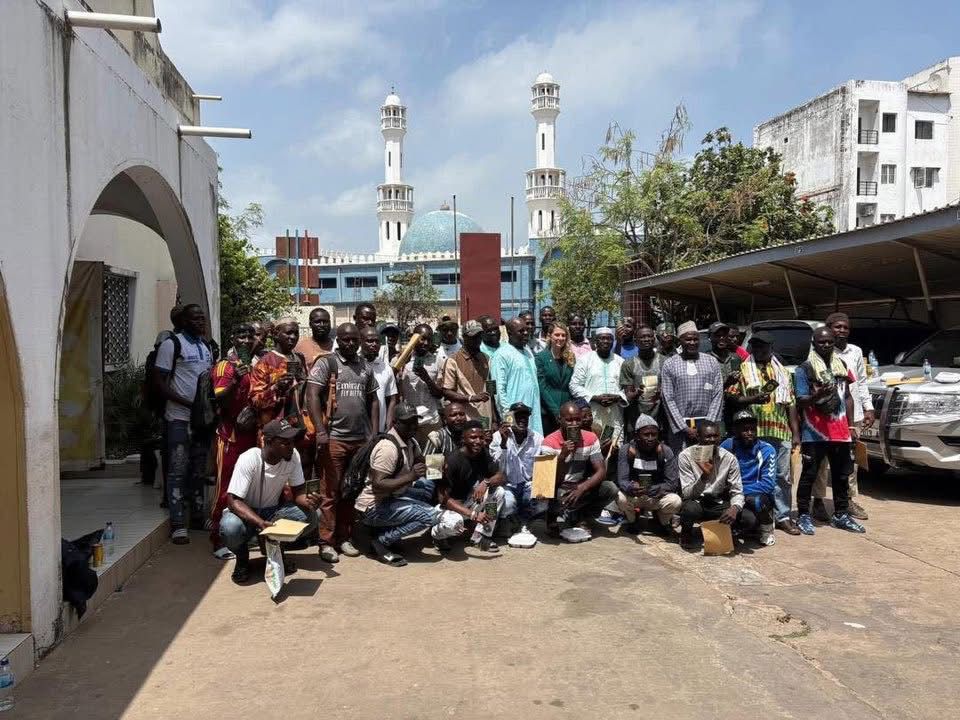
The Gambian government is reeling from international humiliation after 31 young men, sent to Spain under a seasonal labor program, vanished into Europe instead of returning home, exposing deep-rooted issues of youth unemployment and migration in the small West African nation.
Under a government-sponsored initiative designed to provide legal work opportunities, 37 Gambian youths were flown to Spain to work on farms for a three-month seasonal labor scheme. The program, intended to offer safe and organized employment, was seen as a model to curb the dangerous illegal migration routes many Gambians take across the Sahara and Mediterranean. However, when the contracts ended, only four of the 37 workers boarded the return flight to Banjul, leaving officials stunned and the nation’s reputation tarnished.
The Ministry of Trade and Employment issued a statement acknowledging the debacle: “Out of 37 Gambians expected to return after completing the seasonal work program in Spain, only four have arrived home.” Permanent Secretary Mod Secka confirmed that 31 workers absconded, while two others missed their return flight. Authorities are now working to locate and repatriate the missing pair, but the whereabouts of the 31 others remain unknown.
The incident sparked outrage in The Gambia, where unemployment and lack of opportunity have long driven young people to risk their lives for a better future abroad. Critics argue the mass abscondment highlights the desperation among Gambian youth, who saw the program not as a temporary job opportunity but as a rare chance to enter Europe legally. “This is a national embarrassment,” said Fatou Jallow, a local activist. “It shows how little faith our youth have in the future here. They’d rather disappear into Europe than come back to nothing.”
The Gambia has grappled with a mass exodus of its young population for years. Thousands undertake perilous journeys annually, often falling prey to human traffickers or drowning in the Mediterranean. The seasonal labor scheme offered a safer alternative, providing structured employment while boosting The Gambia’s international partnerships. Instead, the program’s failure has affected the country’s image, raising questions about the government’s ability to address the root causes of migration.
Officials are now scrambling to contain the fallout. The Ministry of Trade and Employment has vowed to tighten oversight of future programs, but the damage is done. The story has drawn attention from European partners, who may reconsider similar labor agreements. “This undermines trust,” said a Spanish embassy official, speaking anonymously. “Such programs rely on mutual accountability.”
For many Gambians, the incident is a stark reminder of a bitter reality: without meaningful job creation and economic hope at home, young people will continue to flee, regardless of the risks or the opportunities provided. One parent, whose son was among the absconders, said, “They see no future here. What else can we expect?”
The government now faces the daunting task of restoring confidence in its migration policies while addressing the systemic issues driving its youth away.