By Fatou Dahaba
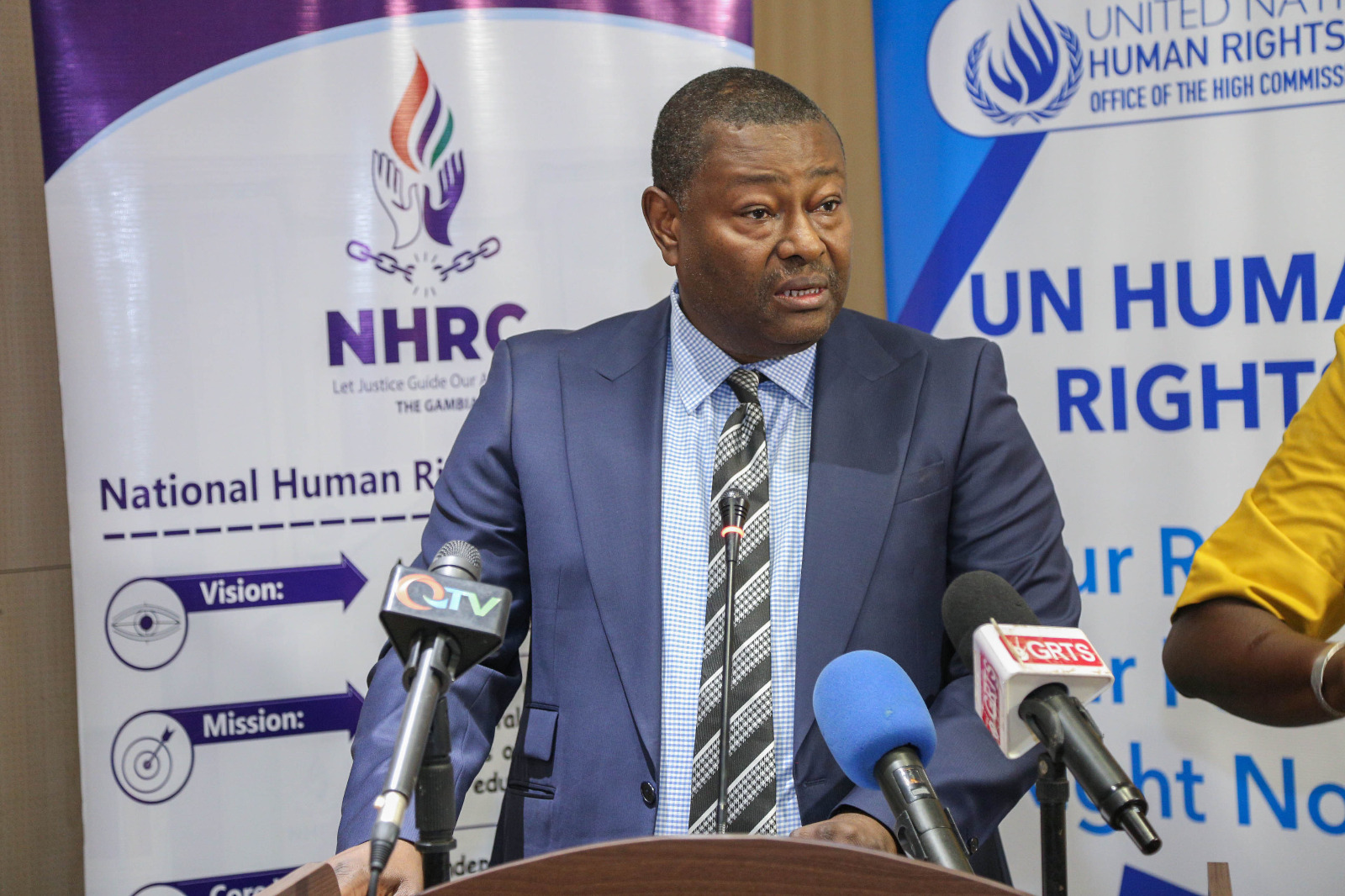
The chairperson of the National Human Rights Commission, Emmanuel D. Joof, has stated that corruption is one of the most deeply entrenched impediments to realizing human rights, good governance, and sustainable development.
He added that it undermines every Sustainable Development Goal, diverts resources from essential services, erodes public trust, and perpetuates inequality and injustice.
The NHRC chairperson made these remarks during the opening of the African Regional Workshop on the Strategic Use of the United Nations Human Rights Mechanisms for Anti-Corruption and Human Rights, which took place on Wednesday, April 23rd, at the Sir Dawda Kairaba Jawara International Conference Center.
“Corruption is a global phenomenon, and it exists in nearly all societies, regardless of economic or political systems, thriving in both the public and private spheres, albeit in varying degrees,” Chairman Joof stated.
Chairman Joof also highlighted that corruption cannot violate any single human right. It damages society’s political, economic, social, and environmental fabric.
‘Politically, it weakens democracy and the rule of law. Economically, it depletes national wealth, shifting resources to unproductive ventures at the expense of education, health, and rural development. Socially, it breeds public cynicism and disenchantment with political leadership and sometimes drives away the best and brightest minds from public service. Environmentally, corrupt systems allow for unchecked degradation from deforestation to pollution due to a lack of enforcement or deliberate neglect of environmental regulations,’ Commissioner Joof elaborated.
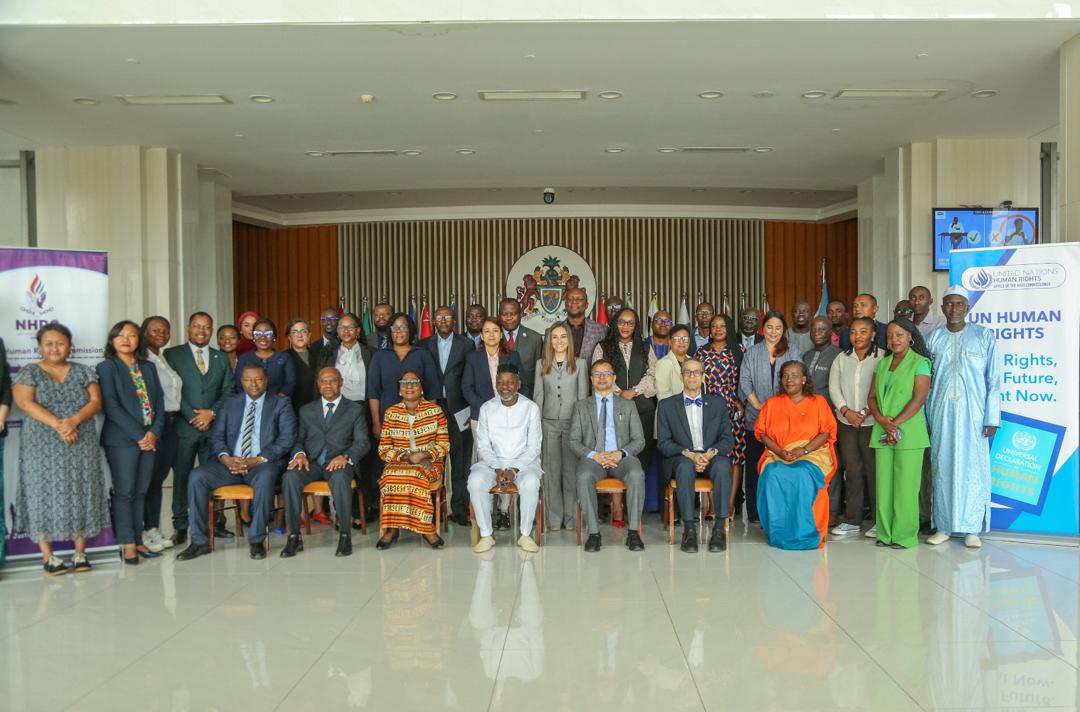
He disclosed that the Commission has taken significant steps to firmly position the fight against corruption on the human rights agenda. ‘Notably, in December 2023, the NHRC convened a National Conference on Corruption and Human Rights. The aim was to deepen national understanding of the relationship between corruption and human rights, and to encourage multi-stakeholder dialogue on issues such as: How does corruption impact the realization of human rights?
Mr. Karl Frederick Paul, United Nations Resident Coordinator to The Gambia, highlights how corruption diverts resources from essential services and hampers efforts to build resilient and inclusive societies.
‘This workshop is therefore both timely and strategic. It provides a critical platform to explore how human rights mechanisms can be leveraged as tools to address corruption from a human rights-based perspective.’
Mr. Pradeep Wagle, a Representative from the Office of the United Nations High Commissioner for Human Rights, stated that their goal is to promote a holistic, human rights-based approach to anti-corruption in which all relevant stakeholders cooperate in the establishment and implementation of anti-corruption strategies, policies, and legal frameworks.
He added that the African Union highlights that Africa loses more than $140 billion annually to corruption.
According to him, corruption is one of those structural barriers. Combating illicit financial flows is a cornerstone of the human rights economy and of building more fair and resilient societies that invest in human dignity, human rights, and justice.
The workshop’s purpose is to promote the use of United Nations human rights mechanisms in the field of anti-corruption and human rights, share best practices and lessons learned, and strengthen networks among and between States, National Human Rights Institutions (NHRIs), and human rights and anti-corruption CSOs to foster a conducive environment for cooperation and promote synergy.