By Fatou Dahaba
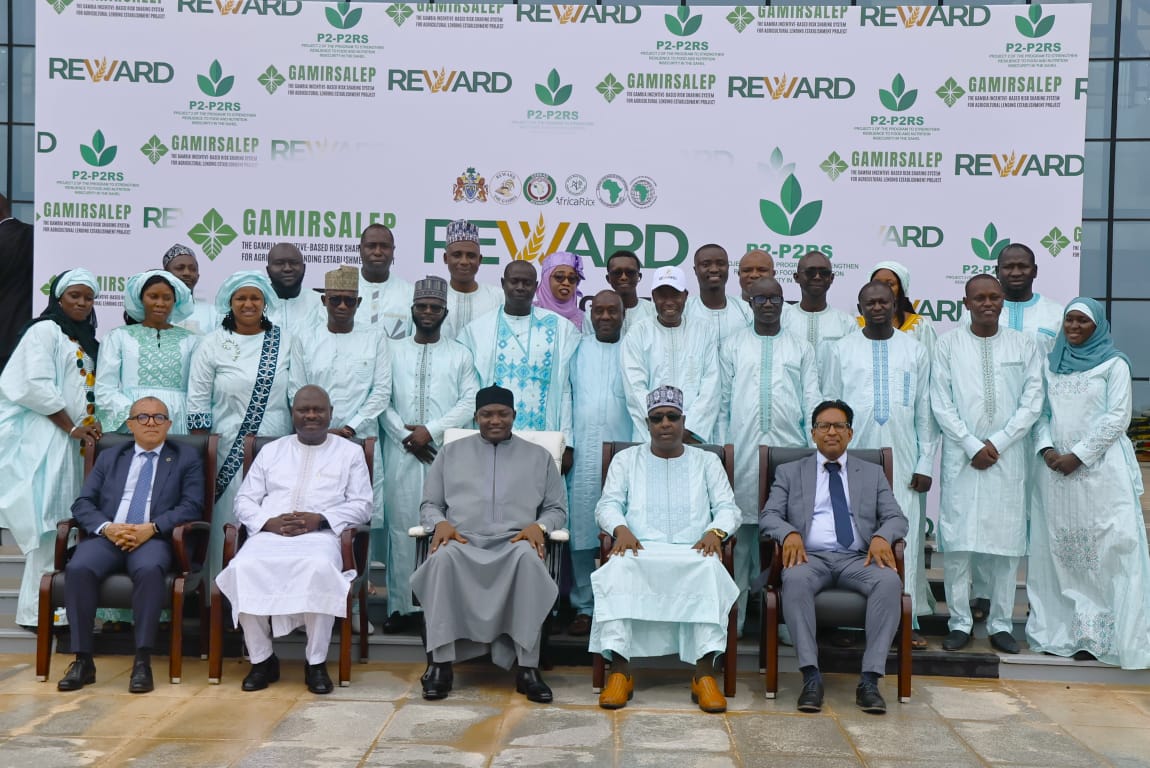
President Adama Barrow officially launched three transformative agricultural projects valued at $68.4 million on Tuesday, July 15, 2025, at the Sir Dawda Kairaba Jawara International Conference Center in Bijilo. The initiatives, funded by the African Development Bank (AfDB), aim to advance The Gambia’s food security, enhance agricultural productivity, and improve access to finance across the agricultural value chain, marking a significant step toward achieving the nation’s National Development Plan (NDP) and regional integration goals.
The flagship projects include the Programme to Strengthen Resilience to Food and Nutrition Insecurity in the Sahel (P2-P2RS), the Gambia Incentive-Based Risk Sharing System for Agricultural Lending Establishment Project (GAMIRSALEP), and the Regional West Africa Resilient Rice Value Chain Development Project (REWARD). These initiatives are designed to drive agricultural transformation, promote food sovereignty, and build climate resilience, aligning with The Gambia’s vision for sustainable development.
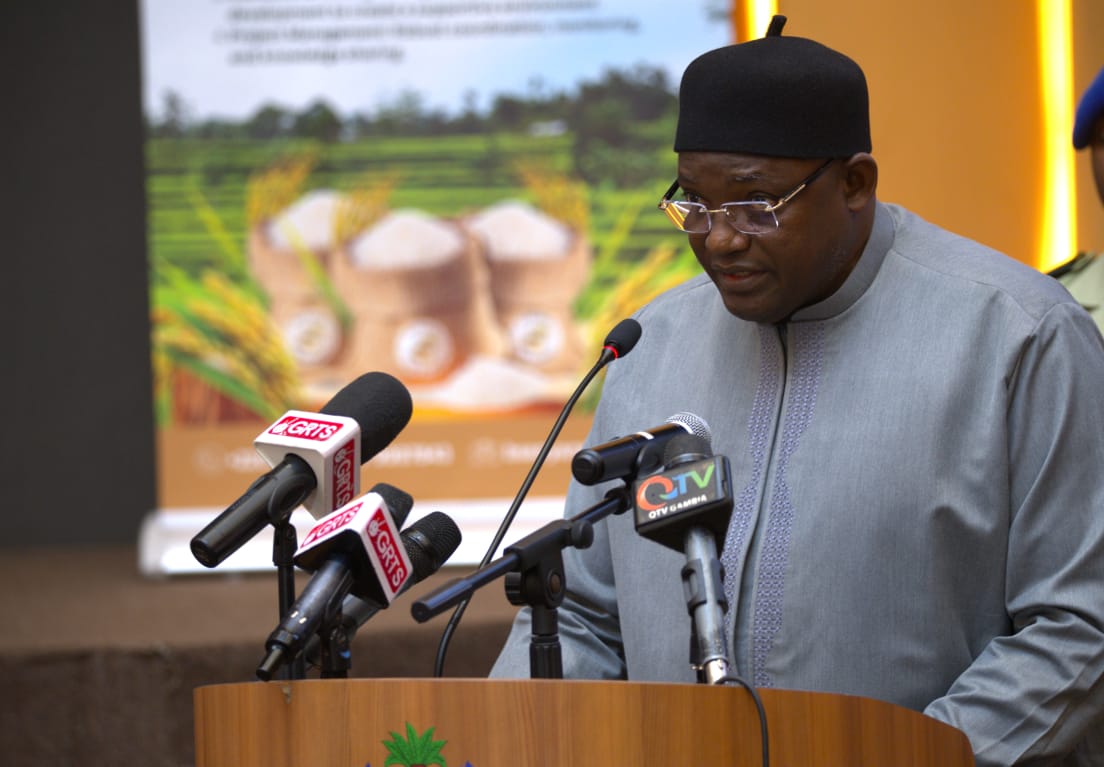
In his keynote address, President Barrow described the projects as a turning point in the nation’s quest for agricultural transformation. “These projects, with an aggregated value of over $68.4 million, reflect real development cooperation, ensuring national ownership and shared success,” he stated. He emphasized their potential to create jobs, enhance food security, and foster sustainable agriculture, particularly for Gambian farmers, youth, and women. Barrow challenged project management units to ensure tangible impacts, urging them to move beyond paperwork to deliver meaningful outcomes for communities.
The P2-P2RS, a five-year regional program, targets 67,200 direct and indirect vulnerable households in the Lower River Region, Central River Region, and West Coast Region. It focuses on building resilience through infrastructure development, including the rehabilitation of gardens and rice fields, the provision of climate-smart seeds and fertilizers, and the distribution of small ruminants and poultry. The project also includes machinery to enhance productivity, addressing the challenges of climate change and food insecurity in the Sahel.
GAMIRSALEP, a three-year initiative, aims to revolutionize agricultural financing by introducing innovative risk-sharing mechanisms with financial institutions. By mitigating the risks associated with agricultural lending, the project seeks to unlock greater investment in the sector, enabling farmers and agribusinesses to access the capital necessary to scale their operations and enhance productivity.
The REWARD project aims to enhance rice self-sufficiency and regional food sovereignty through strategic public-private partnerships. Targeting 8,000 households and over 120,000 indirect beneficiaries across seven agricultural regions, REWARD will provide modern irrigation infrastructure, advanced seed systems, mechanization services, and improved market access. The initiative promotes sustainable, private sector-led integrated rice production processes, positioning The Gambia as a key player in West Africa’s rice value chain.
Mr. Hatem Fellah, the AfDB representative, reaffirmed the bank’s commitment to its Feed Africa strategy, which seeks to unlock agriculture’s potential to create wealth, generate jobs, and strengthen food and nutritional security while enhancing resilience to climate change. “Each of these projects plays a distinct but complementary role in advancing transformative development objectives and Africa’s sustainable development goals,” Fellah said. He highlighted their potential to improve the quality of life across the continent.
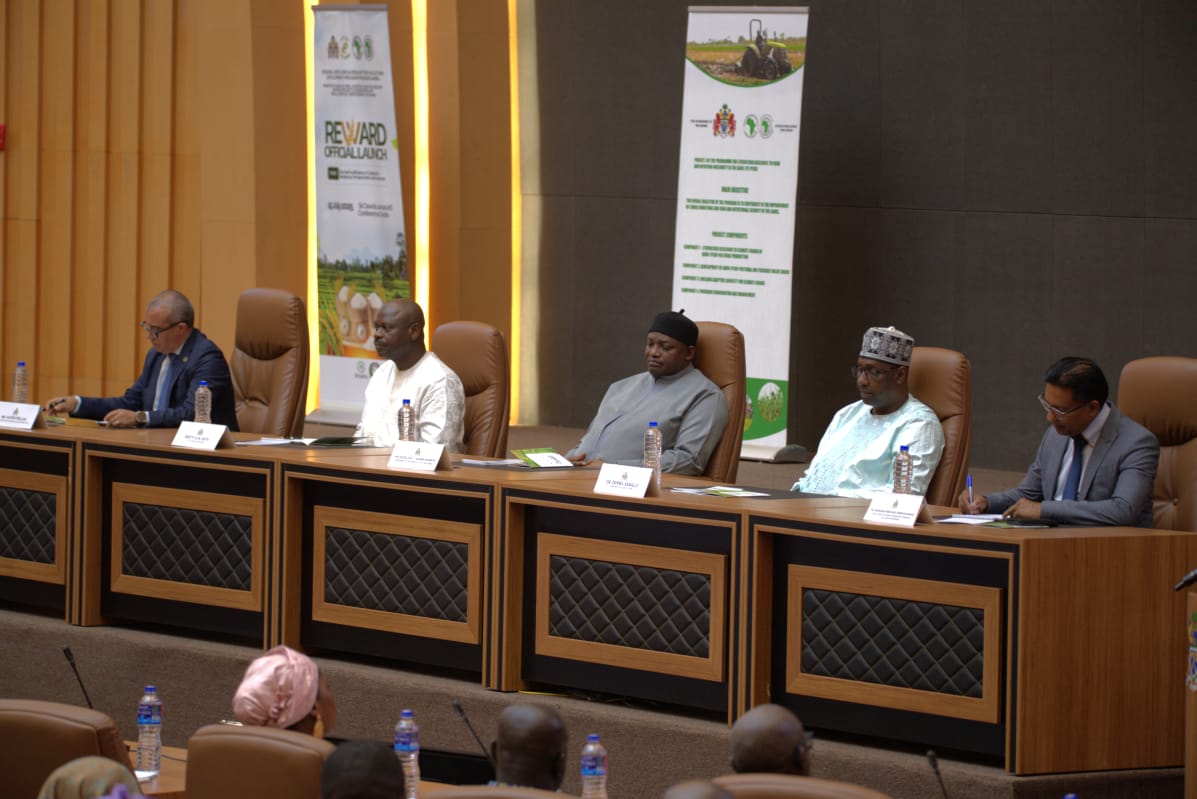
Mr. Bindraban Premchand Soebhaschander, Deputy Director General of Africa Rice, urged the government to prioritize agriculture with substantial investments. “If agriculture is not a government’s priority, achieving development will be challenging,” he noted. “It requires the involvement of the entire population, working together, and cannot be achieved with minimal investment like constructing a road.”
The launch of these projects, according to officials, underscores The Gambia’s commitment to empowering farmers, engaging youth in agribusiness, and ensuring the full participation of women in productive activities. By addressing critical challenges such as food insecurity, limited access to finance, and climate vulnerability, the initiatives align with the NDP’s goals of fostering inclusive growth and sustainable development.
President Barrow reiterated his vision for a future where Gambian agriculture thrives, driven by innovation and inclusivity. “These projects are not just about farming; they are about transforming lives, creating opportunities, and building a resilient economy,” he said. With the support of the AfDB and regional partners, The Gambia is poised to take significant strides toward food self-sufficiency and economic empowerment, setting a model for agricultural transformation in the Sahel and beyond.
As the projects roll out, stakeholders are optimistic about their potential to transform The Gambia’s agricultural landscape, ensuring a brighter and more sustainable future for its people.