By Fatou Dahaba
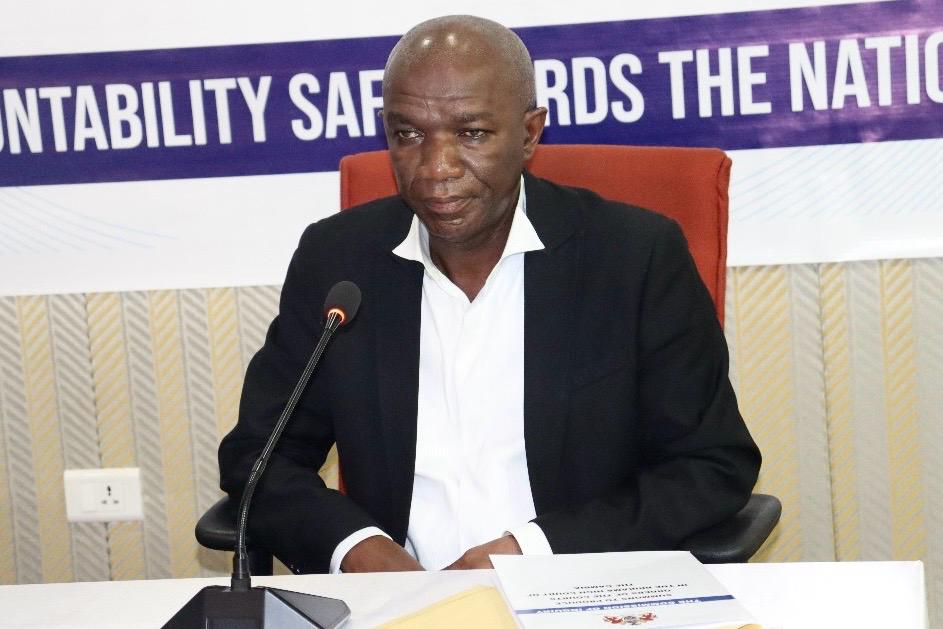
In a startling revelation before the Special Select Committee on Thursday, July 31, 2025, former High Court Sheriff Justice Sheriff B. Tabally admitted that his office failed to comply with a court order mandating the valuation of livestock assets linked to former President Yahya Jammeh before their sale. The assets were part of a disposal process ordered by the Janneh Commission, which investigated financial misconduct during Jammeh’s regime.
Justice Tabally, under intense questioning, acknowledged that his office neglected to conduct the required valuation of the livestock, as stipulated in a High Court ruling dated January 3, 2018. The court order explicitly directed the Sheriff’s Office to coordinate with the Gambia Livestock Marketing Agency (GLMA) to assess the value of the livestock before any sale could proceed. “There was no valuation conducted by the Sheriff… I accept responsibility for that,” Tabally stated, conceding that his office failed to adhere to Paragraph 4 of the court’s directive.
The former Sheriff revealed that at the time the order was issued, he was absent from the office for personal reasons and endorsed the execution of the sale over the phone without reviewing the court’s instructions. “I was merely informed by telephone,” he said. “I endorsed that… Yes, I take responsibility for my actions.” Tabally further noted that he relied on assurances from then-Registrar General Alieu Jallow, who claimed to have contacted the GLMA. However, Tabally admitted that his office failed to follow up formally, describing the oversight as “an anomaly.”
The 2018 court order required the Sheriff to sell the livestock and deposit the proceeds into an interest-bearing account pending the Janneh Commission’s findings or further court instructions. Crucially, the order mandated that a valuation be conducted with GLMA’s assistance and that the judgment debtor, former President Jammeh, be notified of the pending sales. Tabally’s office, however, proceeded with the sale without fulfilling either requirement.
Defending his actions, Tabally cited the urgency of the situation and the need to preserve the assets, noting that the livestock could deteriorate if not sold promptly. “This is a very exceptional case,” he told the committee, adding that it was the first time during his tenure that the Sheriff’s Office had handled livestock sales. He argued that the unique nature of the case, combined with his office’s lack of expertise, contributed to the procedural lapses.
Committee members expressed dismay at the breach of due process, with one member emphasizing, “The court was very definitive in its order.” They pressed Tabally on why his office failed to inform the court of its limitations in handling the valuation and sale, to which he admitted that not doing so was a misstep. “We lacked both the capacity and expertise to handle such sales,” he said, acknowledging that his office should have sought further guidance from the court.
The revelations have raised concerns about accountability and transparency in the handling of assets tied to the Janneh Commission, which was established to investigate financial dealings under Jammeh’s 22-year rule. The committee’s inquiry into Tabally’s actions is part of a broader effort to ensure compliance with legal processes in the disposal of seized assets.
As scrutiny intensifies, Tabally’s admission of responsibility has sparked debate about the mechanisms in place to enforce court orders and the capacity of public institutions to manage complex asset sales. The Special Select Committee is expected to continue its investigation, with further hearings likely to explore how such lapses can be prevented in the future.
The case underscores the challenges of implementing the Janneh Commission’s recommendations and highlights the need for robust oversight in handling high-profile asset disposals. For now, Justice Tabally’s testimony serves as a cautionary tale about the consequences of bypassing due process, even in exceptional circumstances.