By Fatou Dahaba
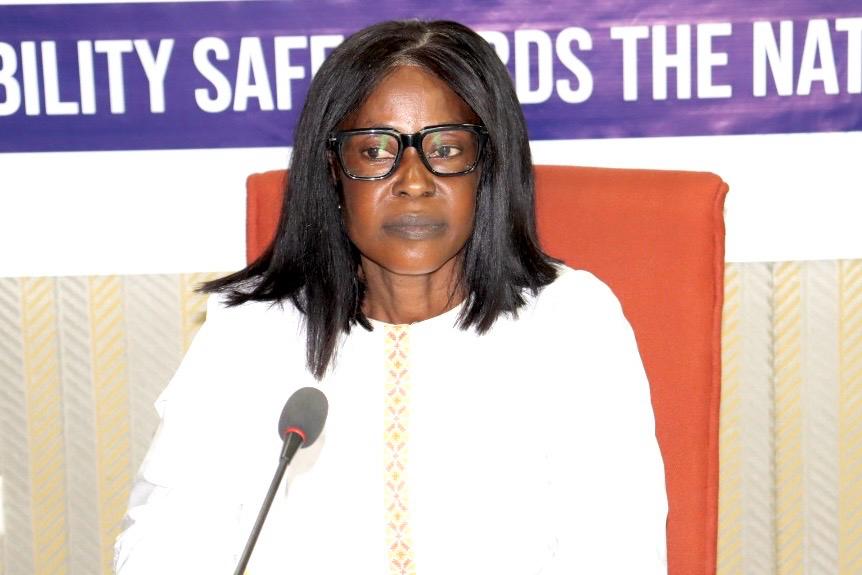
In a startling revelation before the special select committee investigating the sale and disposal of assets linked to the former president, Ramatoulie Sarr, former Secretary of the Janneh Commission, confirmed that the Ministry of Justice (MoJ) exerted significant influence over the commission’s operations. The testimony, delivered on Monday, August 18, 2025, has raised serious questions about the independence of the Janneh Commission, established to probe financial misconduct under the previous regime.
Sarr, who previously served as Permanent Secretary at the MoJ, admitted to the committee that the ministry interfered in the commission’s administrative functions, including correspondence, record-keeping, and even staff salaries. When pressed by Counsel Dibba, who asked if the commission was a “puppet” with the MoJ as its “puppet master,” Sarr agreed, affirming that the ministry’s influence extended to critical decisions shaping the commission’s trajectory.
“Most of the decisions and needs of the commission were forwarded to the Ministry for consideration, and their suggestions often prevailed over the commission’s own,” Sarr testified. However, she stopped short of calling the commission micromanaged, clarifying, “I cannot say the MoJ was managing the commission. But our decisions, not just administrative but also those determining the direction of the commission, were often sent to the ministry.”
The testimony exposed significant procedural irregularities during Sarr’s tenure. She admitted that her appointment as Secretary lacked a formal appointment letter, a Terms of Reference (ToR), or a documented transfer of duties. As a seasoned administrator, Sarr was questioned on why she accepted verbal directives without demanding proper documentation. “No ToR was issued to guide my duties,” she confessed, acknowledging the oversight.
Further irregularities came to light as Sarr revealed that letters intended for the commission were frequently sent directly to the Legal Counsel’s office, bypassing the Secretariat entirely. Despite raising verbal complaints to the commission’s Chairman, Sarr was excluded from a key meeting where the issue was reportedly resolved. When Counsel Dibba questioned her absence, asking, “Why were you not in the meeting? It’s abnormal for a Secretary to be excluded,” Sarr responded uncertainly, stating she was “not invited” and had “other administrative tasks.”
Sarr’s testimony also shed light on her role as deputy Secretary under Alhagie Mamadi Kurang, during which she was based at the MoJ and reported directly to the former Solicitor General and the Attorney General, who appointed her. Tasked with facilitating salary payments and handling administrative duties, Sarr admitted she had limited knowledge of the commission’s day-to-day operations or the activities of the commissioners. While the president appointed Kurang, Sarr’s appointment by then-Attorney General Tambadou was informal, lacking both an appointment letter and a clear ToR.
The revelations have sparked concerns about the Janneh Commission’s autonomy and its ability to independently investigate the financial dealings of the former president’s regime. Critics argue that the MoJ’s influence may have compromised the commission’s findings and recommendations, particularly regarding the disposal of assets. The committee’s inquiry aims to uncover the extent of external interference and ensure accountability in the handling of recovered assets.
As the investigation continues, Sarr’s testimony has cast a shadow over the Janneh Commission’s legacy, raising questions about whether it operated as a truly independent body or as an extension of the MoJ’s agenda. The committee is expected to call additional witnesses to clarify the full scope of the ministry’s role and its impact on the commission’s work.