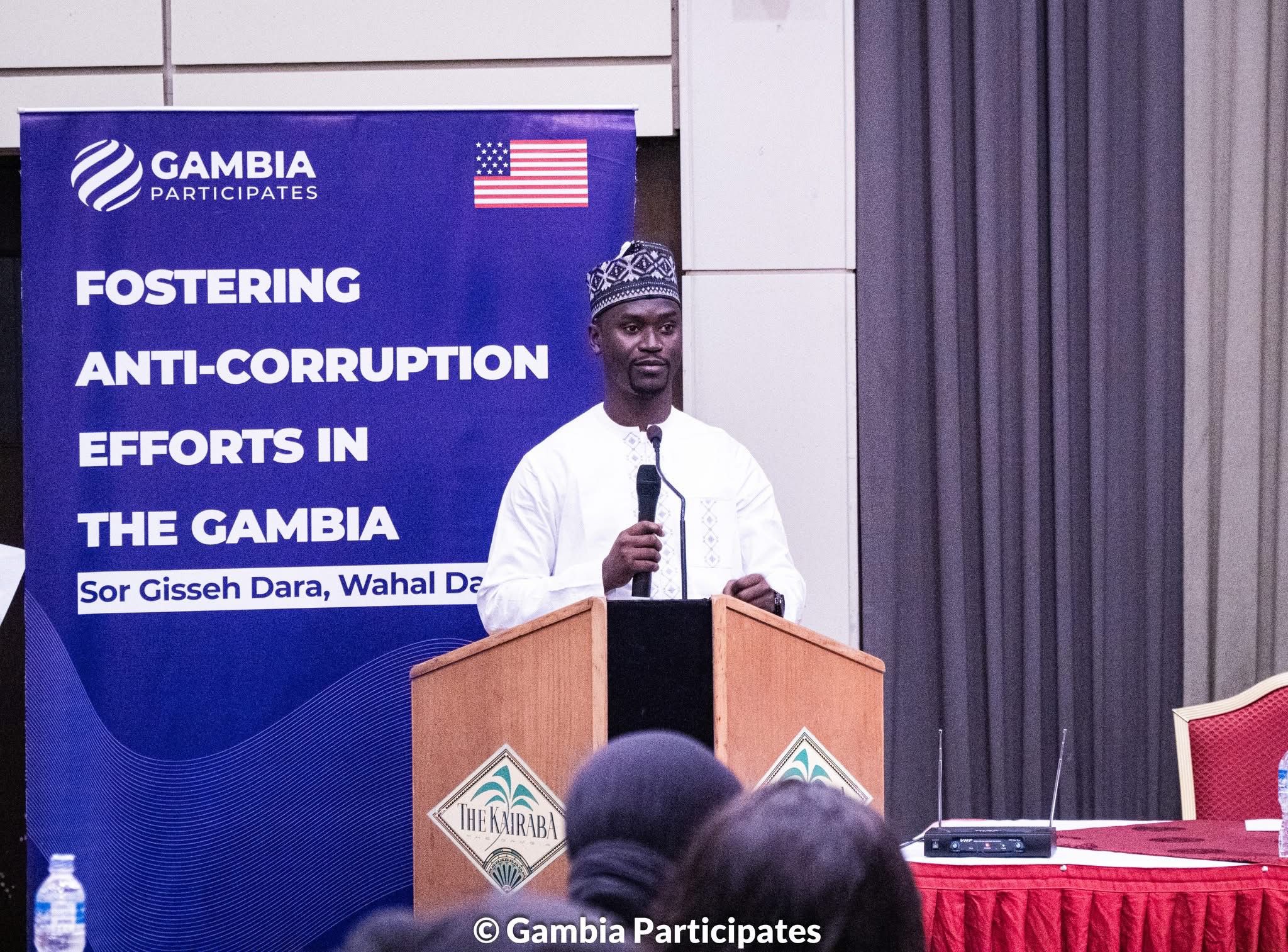
Marr Nyang, Executive Director of Gambia Participates, emphasized the critical role of stakeholder training in combating corruption to foster a just society during a day-long workshop held at a local hotel in Banjul. The event, attended by civil society advocates and journalists, aimed to equip participants with the knowledge and skills to identify and challenge corrupt practices in public governance.
Nyang highlighted that corruption extends beyond the theft of public funds, encompassing conflicts of interest and creating biased laws and policies that favor specific groups. “Corruption is not just about stealing public money,” Nyang stated. “It includes designing favorable laws and policies to satisfy one section of society against another.” He stressed that the training is designed to deepen participants’ understanding of the complex dynamics of corruption, enabling them to scrutinize public officials’ actions and policies effectively.
The workshop is part of Gambia Participates’ ongoing efforts to empower journalists and civil society organizations in their anti-corruption work. Nyang revealed that the organization has supported numerous advocates and plans to provide financial assistance to select participants to further their anti-corruption initiatives. “We are hopeful that with this pool of knowledge and expertise, we can build a society that will resist corruption,” he said. “We want a society that will not condone corruption but will rebel against it correctly.”
Nyang pointed out the evolving nature of corruption, noting a shift from covert practices to “blatant corruption” embedded in policy directives and legislative frameworks. He cited examples such as medical importation policies that disadvantage certain groups while benefiting others, underscoring the need for advocates to understand these systemic issues. “You need to have the reasoning capacity and expertise to say, ‘This is not right,’ and investigate who benefits from these policies or laws,” he explained.
The training featured insights from prominent resource persons, including a representative from Transparency International and leading Gambian investigative journalist Mustapha Darboe. Their expertise provided participants with practical strategies to detect and report corruption. Nyang urged attendees to take the training seriously, emphasizing its role in equipping them to challenge corrupt practices and contribute to a fairer society.
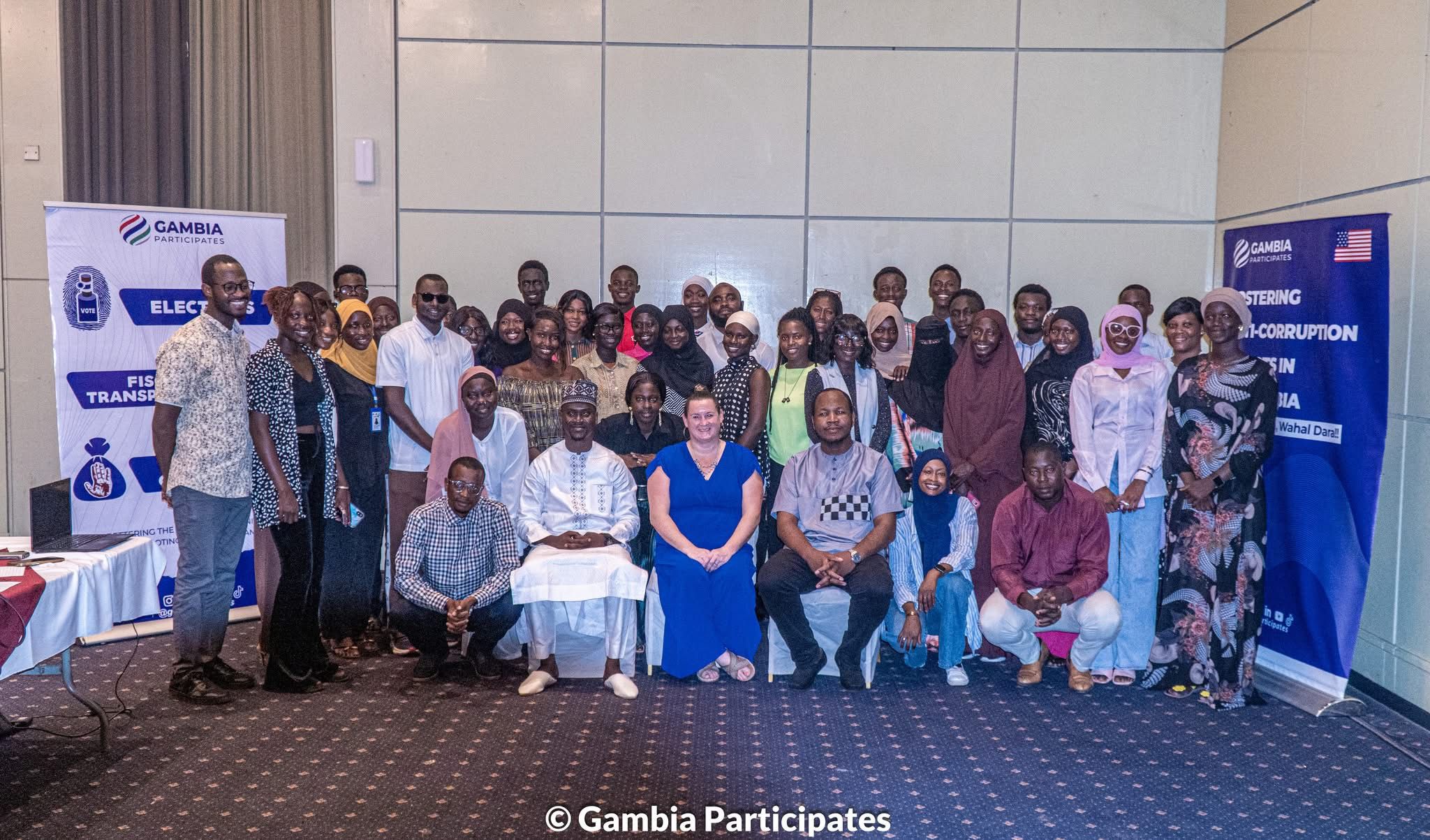
Lenisa Gomez, a participant from the School of Journalism at the University of The Gambia, expressed her enthusiasm for the training, noting its impact on her understanding of corruption. “I feel so glad and privileged to be part of this training, which has broadened my knowledge on corruption and the strategies I can use to report it,” Gomez said. She described her deep concern about corruption’s direct and indirect effects on society and was committed to applying the skills learned in her aspiring journalism career. Gomez also called on her peers to share the knowledge gained with others who could not attend, amplifying the training’s impact.
The workshop reflects Gambia Participates’ broader mission to strengthen civil society’s capacity to hold public officials accountable. The organization aims to create a robust resistance to corruption by fostering a network of informed and empowered advocates. Nyang’s vision is clear: a society where corruption is challenged and systematically dismantled through informed advocacy and investigative journalism.