Amid rising concerns over illicit financial flows crippling West African economies, the Inter-Governmental Action Group against Money Laundering in West Africa (GIABA) has convened a three-day training workshop for 40 journalists from across the Economic Community of West African States (ECOWAS).
Held in Bissau from September 22 to 24, the session equips media professionals with investigative tools to expose economic and financial crimes, fostering a stronger alliance between the press and anti-money laundering efforts.
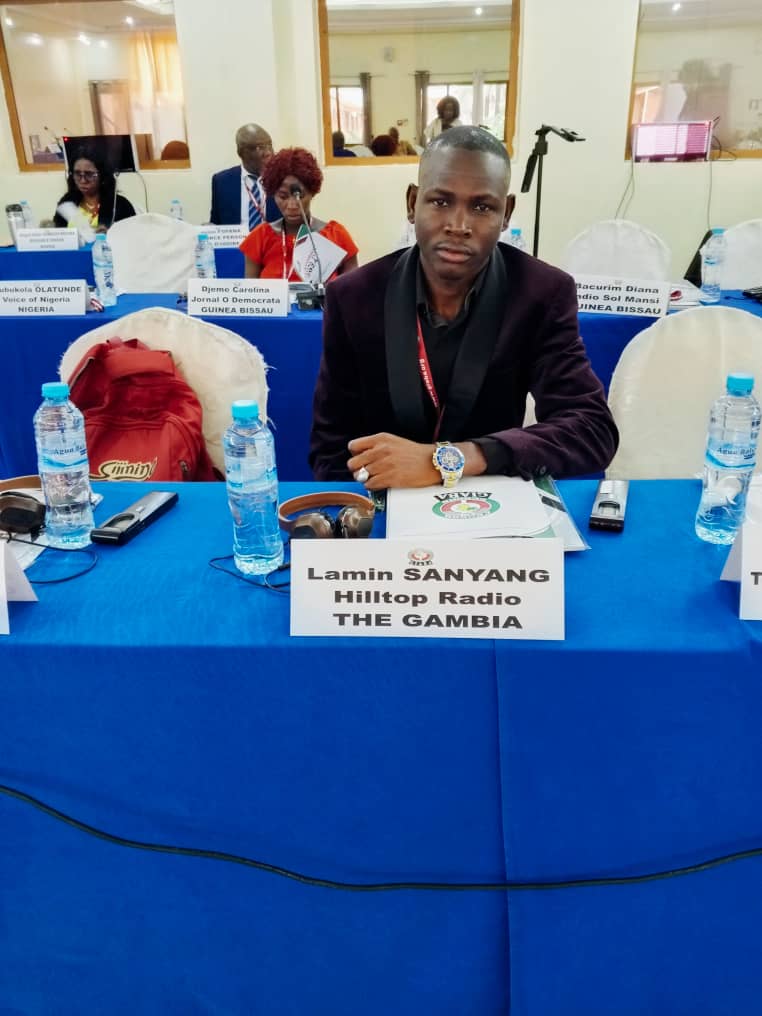
Among the participants is Lamin Sanyang, a renowned Gambian broadcast journalist celebrated for his Mandinka-language news reading and incisive current affairs analysis on Hill Top Radio and Reality TV.
Sanyang, whose work has long illuminated socio-economic issues for rural and urban audiences alike, expressed profound enthusiasm for the opportunity. “I feel so glad to be part of this training because the importance of such capacity building cannot be overemphasized,” Sanyang told The Alkamba Times via phone from Bissau. “It enables me to gain a deep understanding of how criminal syndicates operate in West Africa.”
He underscored the workshop’s potential to transform his reporting. “This training will no doubt have a great impact on my work by honing my skills in investigating economic and financial crimes,” Sanyang added. “It will enhance my reportage and help me simplify complex terms in Mandinka for the benefit of our audiences and listeners at Hill Top Radio and Reality TV.”
For Sanyang, whose broadcasts reach thousands in The Gambia’s diverse linguistic communities, the skills acquired could demystify anti-money laundering (AML) and counter-financing of terrorism (CFT) concepts, empowering citizens to demand accountability.
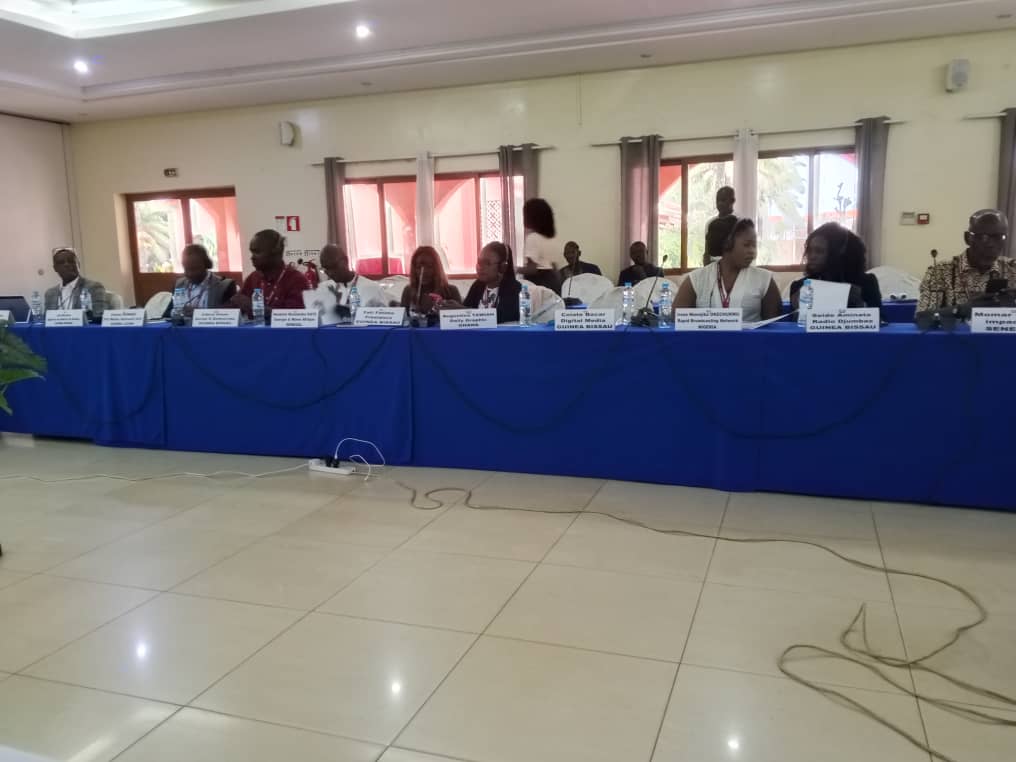
GIABA, a specialized ECOWAS institution established in 2000 and headquartered in Dakar, Senegal, views the media as indispensable in the battle against corruption and terrorism financing. The workshop, drawing from print, electronic, and online media across 15 member states, aims to forge a “solid alliance” for disseminating AML/CFT information and informing journalists on regional initiatives.
According to Acting Principal Officer for Communication and Advocacy, Timothy Melaye, the program provides hands-on techniques for information gathering and investigation.
“The media plays critical roles in promoting good governance, ensuring optimal deployment of state resources, facilitating the protection of citizens’ rights, and exposing corrupt officials and practices,” he said in the communique shared with the participants. “As a change agent and anti-corruption crusader, the media’s importance in disseminating AML/CFT messages cannot be overemphasized.”
Traditionally led by law enforcement and regulators, AML/CFT efforts now encompass non-traditional stakeholders like journalists for a holistic approach. GIABA recognizes that editors often determine the prominence of money laundering and terrorist financing (ML/TF) stories, making media training essential for proactive exposure of these threats.
This initiative builds on GIABA’s legacy of media engagement, including the 2010 formation of the Regional Network of Journalists on Economic and Financial Crimes in Freetown, Sierra Leone. Previous programs have similarly empowered reporters from countries like Ghana, Nigeria, and The Gambia to dissect syndicates undermining financial institutions, eroding government revenue, and fueling insecurity.
Delivered by GIABA Secretariat experts and practitioners, the workshop features plenary presentations, case studies, experience-sharing sessions, syndicate group exercises, and role plays. It also seeks to nurture an internal culture of ML/TF investigations and strengthen journalist networks for broader AML/CFT advocacy. The event was officially opened by Guinea-Bissau’s Minister of Social Communications, Maria De Conceicao Evora, who decried illicit flows’ societal toll and called for sub-regional unity. As West Africa grapples with FATF grey-list pressures— with nations like Nigeria eyeing an October exit—the training arrives at a critical juncture, amplifying the media’s role in transparent governance.
For participants like Sanyang, the workshop is more than skill-building; it’s a call to action. “By equipping us to investigate and report effectively, GIABA is arming the media to safeguard our region’s future,” he reflected.