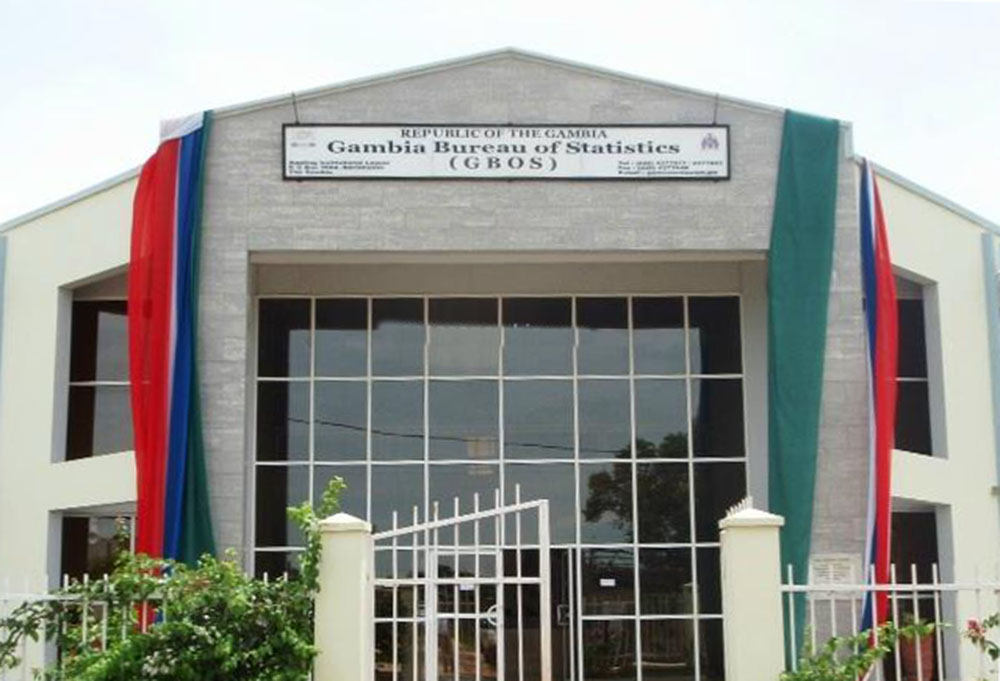
The Gambia SDGs Survey 2025, conducted by the Gambia Bureau of Statistics, provides a comprehensive assessment of the country’s progress toward the United Nations Sustainable Development Goals (SDGs). Released today, the survey reveals advancements and persistent challenges in areas such as bribery, violence, public safety, and inclusive governance, emphasizing the need for targeted interventions to address disparities, particularly for women and rural populations.
Bribery Persists in Public Interactions
According to SDG 16.5.1, the survey revealed that 14.6% of Gambians who interacted with public officials reported being asked for or paying a bribe. Men (22.0%) were nearly three times more likely than women (8.2%) to encounter bribery. The highest rates involved police officers (24.8%), immigration officers (10.6%), and public utilities officers (8.2%). The Gambia Bureau of Statistics recommends reducing bribery opportunities, fully operationalizing the Anti-Corruption Commission, strengthening oversight, and expanding integrity training for public officials, particularly in high-risk sectors such as law enforcement and immigration.
Violence on the Rise, Reporting Lags
The survey’s data on SDG 16.1.3 shows a 9-point increase in physical violence since 2021, with 12.9% of respondents affected in the past year. Psychological violence impacted 15.5%, and sexual violence affected 2.4%. Women were twice as likely as men to experience psychological violence. Reporting remains low (SDG 16.3.1), with only 25% of physical violence, 22% of sexual violence, and 6% of psychological violence cases reported to authorities. The Gambia Bureau of Statistics urges improved access to reporting channels and greater public trust in justice systems to ensure victim protection and accountability.
Safety Perceptions Decline, Gender Gap Widens
According to SDG 16.1.4, only 53.2% of Gambians feel safe walking alone in their neighborhoods after dark, down from 58.6% in 2021. Men (65.9%) feel significantly safer than women (42.2%). High crime rates (66%) and poor street lighting (34%) were significant concerns. The survey recommends monitoring safety perceptions by gender, age, and region, alongside targeted community interventions, improved public lighting, and localized policing to enhance safety, particularly for women.
Harassment Rates Increase
The survey reports a rise in overall harassment (SDG 11.7.2) from 14.3% in 2021 to 17.8% in 2025, driven by a more than twofold increase in non-sexual harassment (10.7%). Sexual harassment affected 11.8%, with women (13.2%) more impacted than men (10.2%). Rural areas reported higher harassment levels. The Gambia Bureau of Statistics recommends awareness campaigns on harassment, legal rights, and safer public spaces, along with improved lighting and enhanced transport security.
Public Services Show Mixed Satisfaction
Satisfaction with public services (SDG 16.6.2) remains high for primary education (90.3%), secondary education (88.9%), and health services (77.9%). However, overall satisfaction with government services, such as obtaining identification documents or civil registration, stands at 55.3%, with affordability and accessibility as key challenges. Investments in education affordability, fair service delivery, and digital solutions are needed to boost public confidence.
Governance and Dispute Resolution Challenges
Only 31.1% of Gambians believe decision-making is inclusive and responsive (SDG 16.7.2), with men (34.0%) more optimistic than women (28.6%). Access to dispute resolution (SDG 16.3.3) improved significantly, rising from 46.4% in 2021 to 66% in 2025, with gains for rural populations and women. Informal pathways, such as community and religious leaders, remain vital, although formal judicial systems are underutilized. Strengthening links between informal and formal systems and raising awareness of options are priorities.
Discrimination Declines, Rural Areas Lag
Discrimination or harassment (SDG 10.3.1) dropped from 23.6% in 2021 to 15.7% in 2025. However, rural respondents are nearly twice as likely to face discrimination, primarily due to age and socio-economic status. The Gambia Bureau of Statistics calls for enforcing legal protections and mainstreaming the “Leaving No One Behind” principle, especially for persons with disabilities.
The Gambia SDGs Survey 2025, conducted by the Gambia Bureau of Statistics, underscores the nation’s progress toward inclusive development while highlighting the need for focused efforts to address bribery, violence, and safety disparities to achieve a more equitable society by 2030.