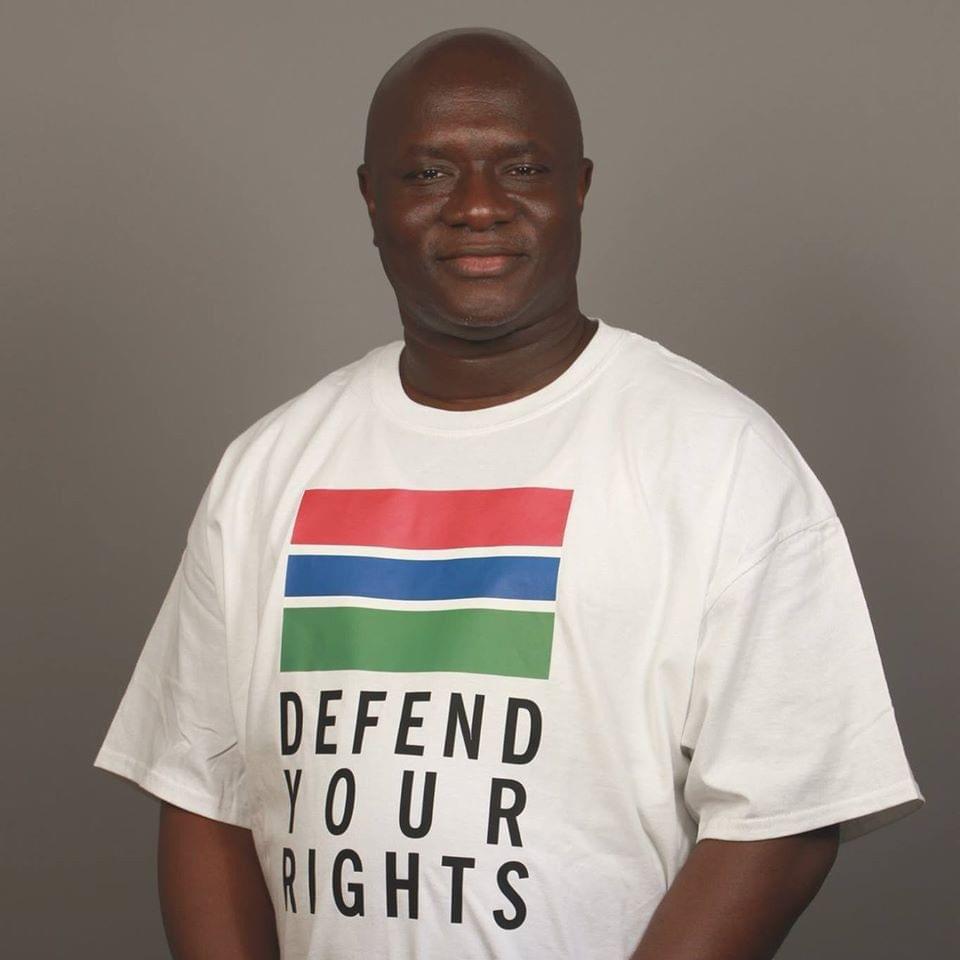
In a scathing statement, Madi Jobarteh, a prominent human rights activist and founder of the Edward Francis Small Center for Rights and Justice, has declared that The Gambia is “drowning” under President Adama Barrow’s leadership.
Jobarteh’s statement paints a grim picture of a nation plagued by deepening poverty, rampant corruption, and eroding public trust, urging the president to act decisively or risk leading the country to ruin.
Jobarteh’s statement comes amid a series of crises that have gripped The Gambia, exposing systemic governance failures. He cites recent reports, including the National Human Rights Commission (NHRC) survey on hate speech, which highlights a deeply divided nation, and the Gambia Participates’ Corruption Index 2025, which reveals pervasive graft across government levels. The 2024 Afrobarometer survey further underscores the public’s disillusionment, with most Gambians distrusting public institutions and many young people taking perilous journeys across the desert and Mediterranean Sea in search of better opportunities abroad.
“Public services are collapsing,” Jobarteh stated, describing them as unreliable, inaccessible, and costly when available. He pointed to government audit reports for 2021, 2022, and 2023, which expose “staggering mismanagement and corruption” with billions of dalasi unaccounted for. “This is not just financial malpractice; it is national betrayal,” he declared, accusing Barrow’s administration of turning public institutions into sources of frustration rather than hope.
Jobarteh argues that the real threat to The Gambia is not its youth or protesters but the government itself. “People are not on the streets because they want chaos; they want bread, safety, justice, and a predictable life,” he said. He listed recent incidents that highlight the government’s failures: the Mandinari and Jabang tragedies, Gunjur land disputes, Sukuta-Salaji demolitions, anti-corruption protests, the unconstitutional removal of the Auditor General, and the shooting of Police Intervention Unit officers in 2024. “These are not isolated events; they are symptoms of a system unraveling,” he warned.
Criticizing Barrow’s recent presidential address, Jobarteh called it a missed opportunity to unite the nation and address pressing issues, such as corruption and abuse of power. Instead, he described it as “defensive, detached, and dangerously out of touch” with the realities Gambians face. He accused Barrow of being “hijacked and misguided” by a cabinet and advisors serving narrow interests rather than the public good, leaving the president seemingly blind to the nation’s derailment.
Drawing a historical parallel, Jobarteh referenced former President Yahya Jammeh, who “never came to terms with reality” until his ousting, now living “in delusion” in Equatorial Guinea. He cautioned that Barrow risks a similar fate unless he acts with courage, humility, and a commitment to justice. “The Gambia needs a leader who can rise above partisan interests, reject corruption, and restore faith in public institutions,” Jobarteh urged.
The activist emphasized that the country’s youth and protesters are not the cause of its woes. “If Barrow fails, it will not be protesters or the youth who bring down this country. Rather, it will be himself and his government, through their incompetence, corruption, and failure to govern,” he stated. Calling The Gambia a “sinking ship,” Jobarteh urged Barrow to decide whether he will be the captain who saves it or the one who goes down with it.