By Ebrima Mbaye
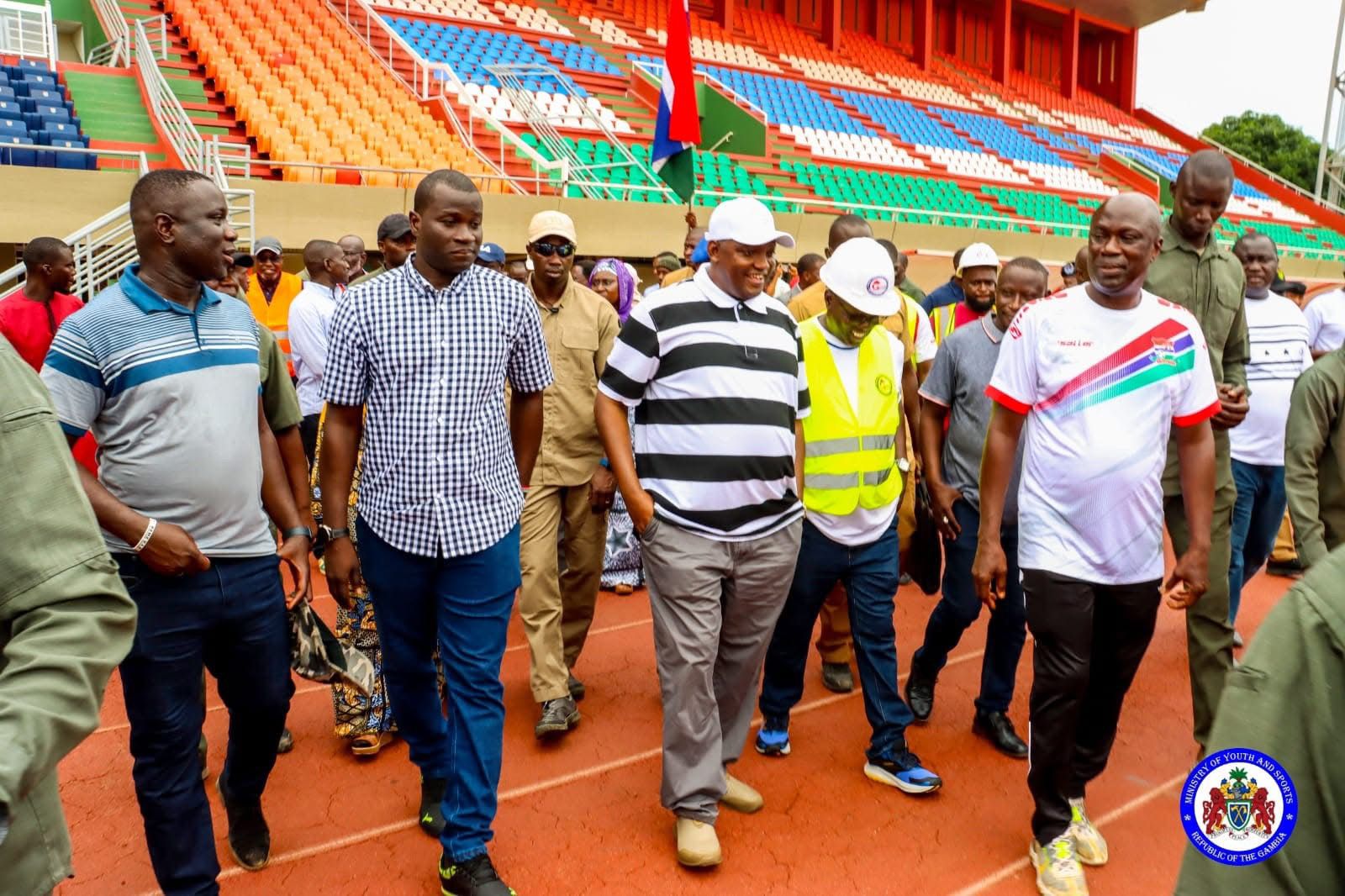
A scathing 2023 Audit Report has uncovered serious irregularities in the multimillion-dalasi rehabilitation of The Gambia’s Independence Stadium, highlighting procurement violations, missed deadlines, and the failure to fully implement Confederation of African Football (CAF) recommendations, leaving the nation’s premier sports facility below international standards.
The report reveals that despite CAF’s repeated warnings and bans on the stadium between 2018 and 2022, the Ministry of Youth and Sports (MOYS) and its partners pursued renovations in a fragmented manner, bypassing standard tendering procedures. Auditors warned that this approach compromised transparency and exposed public funds to risks of fraud and mismanagement.
Following a 2022 CAF inspection that demanded a comprehensive overhaul, the Ministry opted for a phased approach, splitting the project into Phases I, II, and III. However, extensions for Phases II (GMD 153.1 million) and III (GMD 83 million) were awarded without competitive bidding or approval from the Gambia Public Procurement Authority (GPPA), thereby violating procurement laws. The audit described these undocumented contract variations as a significant risk to accountability.
MOYS defended the phased approach, citing budget constraints and claiming it was a cost-saving measure. However, auditors criticized the sidelining of critical CAF recommendations, which prolonged the stadium’s subpar condition and delayed its return to international standards.
The report also highlighted delays in Phase I, which commenced in November 2022 but was delayed by at least three months due to slow fund disbursements from the Ministry of Finance and limited local supplier capacity. More alarmingly, some progress reports were found to be plagiarized from unrelated projects, casting doubt on the quality of supervision and the accuracy of the reported progress.
Further scrutiny revealed GMD 10 million in single-sourced works, including scoreboards, CCTV systems, sprinklers, and lawnmowers, which were executed without GPPA approval. MOYS justified this by noting that the funds were a 2020 subvention to stadium management, separate from the main rehabilitation contract. Auditors, however, deemed this a breach of procurement regulations, emphasizing the lack of transparency.
The audit paints a troubling picture of a project central to The Gambia’s football ambitions. Despite significant expenditure, poor procurement practices, contract mismanagement, and weak monitoring have undermined the rehabilitation effort. Key CAF recommendations were either delayed or ignored, raising serious questions about value for money.
The findings have sparked concerns among stakeholders, with calls for greater accountability in the management of public projects. As The Gambia aspires to host international matches and elevate its football profile, the audit underscores the need for stricter oversight and adherence to procurement standards to ensure public funds deliver tangible results.
The Ministry has yet to issue a formal response to the audit’s findings, as pressure mounts for corrective measures to address the lapses and bring the Independence Stadium up to CAF’s required standards.