By Aja Beyai
In a landmark move to dismantle entrenched gender disparities in public administration, The Gambia unveiled the UNDP Gender Equality Seal for Public Institutions on Monday, a groundbreaking framework poised to revolutionize how government bodies operate and serve their citizens. The initiative, championed by the United Nations Development Programme (UNDP), promises to foster accountability, inclusivity, and excellence, marking a pivotal chapter in the nation’s pursuit of equitable development.
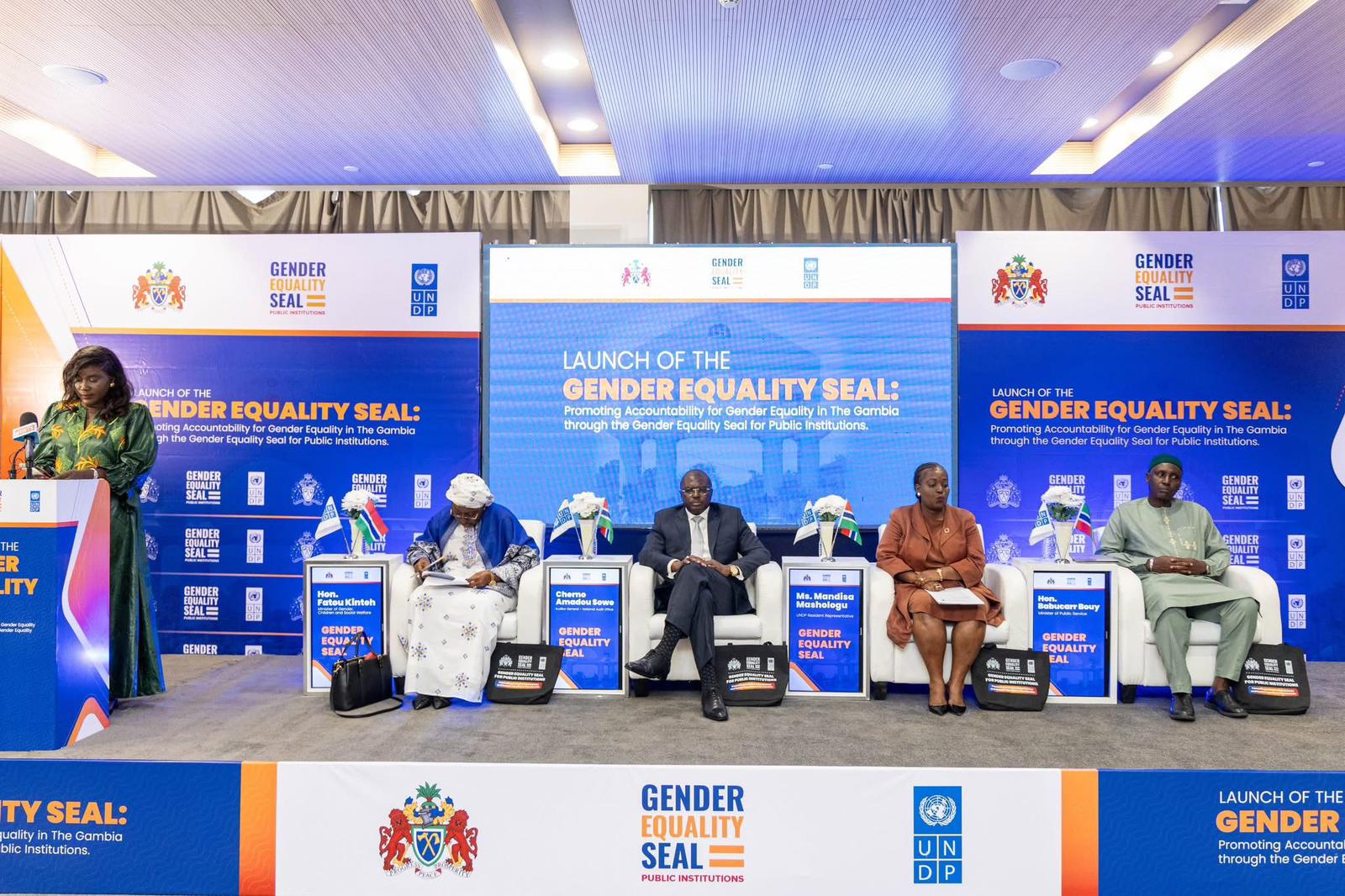
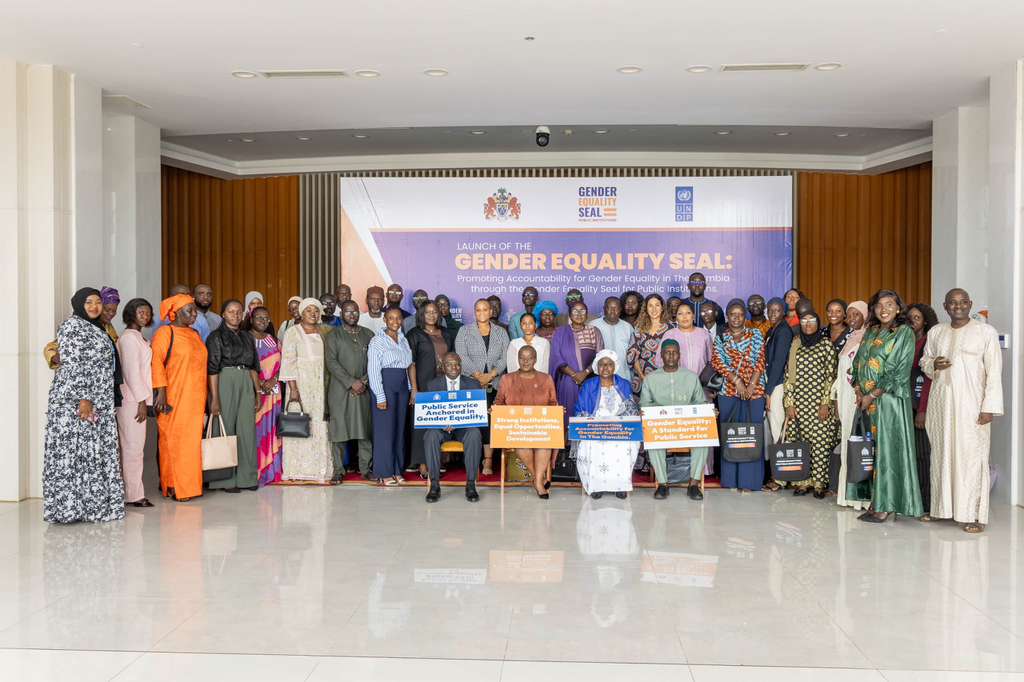
The launch ceremony drew an eclectic crowd of dignitaries, including high-ranking government officials, development partners, civil society leaders, and journalists. It symbolized a policy rollout and a collective vow to weave gender equality into the bedrock of Gambian governance. As women constitute over half of the country’s 2.7 million population yet hold fewer than 40% of senior civil service roles—and even slimmer shares in political arenas—the Seal emerges as a beacon of reform.
“This is a bold step forward, a commitment to embed gender equality into the very fabric of our public institutions,” declared UNDP Resident Representative Mandisa Mashologu, her voice resonant with optimism amid applause. She highlighted the Seal’s role as a “practical framework for reform, accountability, and recognition,” awarding bronze, silver, or gold certifications based on institutions’ strides in gender-responsive policies, inclusive practices, and enhanced service delivery.
Echoing this sentiment, Honourable Fatou Kinteh, Minister of Gender, Children and Social Welfare, framed the launch as a “turning point in how we approach governance.” In her keynote address, Kinteh emphasized, “This initiative represents more than addressing long-standing disparities—it’s about strengthening accountability and service delivery for every Gambian. The Gender Equality Seal is not merely a certification tool but a commitment, a mirror, and a roadmap that will guide us as we transform our public institutions into more inclusive, accountable, and gender-responsive spaces.”
The government’s enthusiasm was palpable, with three flagship institutions volunteering as pilots: the Ministry of Gender, Children and Social Welfare; the Ministry of Public Service, Administrative Reform, Policy Coordination and Delivery; and the National Audit Office (NAO). These entities will kick off the program with an intensive three-day training session led by the UNDP Regional Gender Team. The workshop will arm newly formed Gender Equality Committees with essential skills, tools, and methodologies to audit and overhaul internal practices, from hiring protocols to decision-making processes.
Honourable Babucarr Bouy, Minister of Public Service, underscored the human capital angle, noting, “Harnessing the expertise of both men and women is key to optimal public service performance.” He pledged unwavering support for the committees, vowing to cultivate a “citizen-centered public service that prioritizes gender equality.”
The NAO’s involvement added a layer of institutional pride. Auditor General Cherno Amadou Sowe beamed as he detailed his office’s proactive steps toward parity, boasting near-equal gender representation in its workforce—a rarity in the sector. “This aligns seamlessly with our mandate to promote inclusivity and accountability,” Sowe said. The NAO has already conducted internal assessments and is advancing policies on diversity. Through the Seal, Sowe aims to “validate our strengths and pinpoint areas for growth,” reaffirming the office’s dedication to gender equity as a public good.
Once the pilot phase concludes, the Seal will extend its reach nationwide, inviting other public bodies to join. “Every institution has a role to play in advancing gender equality,” Mashologu affirmed, painting a vision of cascading impact. This phased rollout ensures scalability, with UNDP’s technical backing to monitor progress and celebrate milestones.
The initiative resonates deeply with The Gambia’s broader aspirations. It dovetails with the National Development Plan, the African Union’s Agenda 2063, and global pacts like the Beijing Platform for Action and the Sustainable Development Goals (SDGs). At its core, the UNDP Strategic Plan 2026–2029 positions gender equality as the linchpin of sustainable development, governance resilience, and inclusive prosperity. By adopting the Seal, The Gambia aligns with a global vanguard: over 100 public institutions across 30 countries have harnessed it to accelerate women’s empowerment and dismantle systemic barriers.
Critics and advocates alike hail the timing. In a nation where cultural norms and resource constraints have long sidelined women’s leadership, the Seal introduces measurable benchmarks—think gender audits, bias training, and equitable resource allocation—to drive tangible change. Civil society representatives at the event, including voices from women’s rights groups, lauded the move as a “game-changer.” However, they cautioned that sustained funding and political will would be crucial to avoid it becoming mere symbolism.