By Fatou Dahaba
The Registrar of Companies at the Ministry of Justice has attributed the destruction of vital archives to a leaking roof, resulting in key documents being left in a state of partial ruin and disarray. The admission, made during a parliamentary inquiry into asset recoveries from the Janneh Commission, has drawn sharp criticism from lawmakers who say such negligence undermines the fight against corruption.
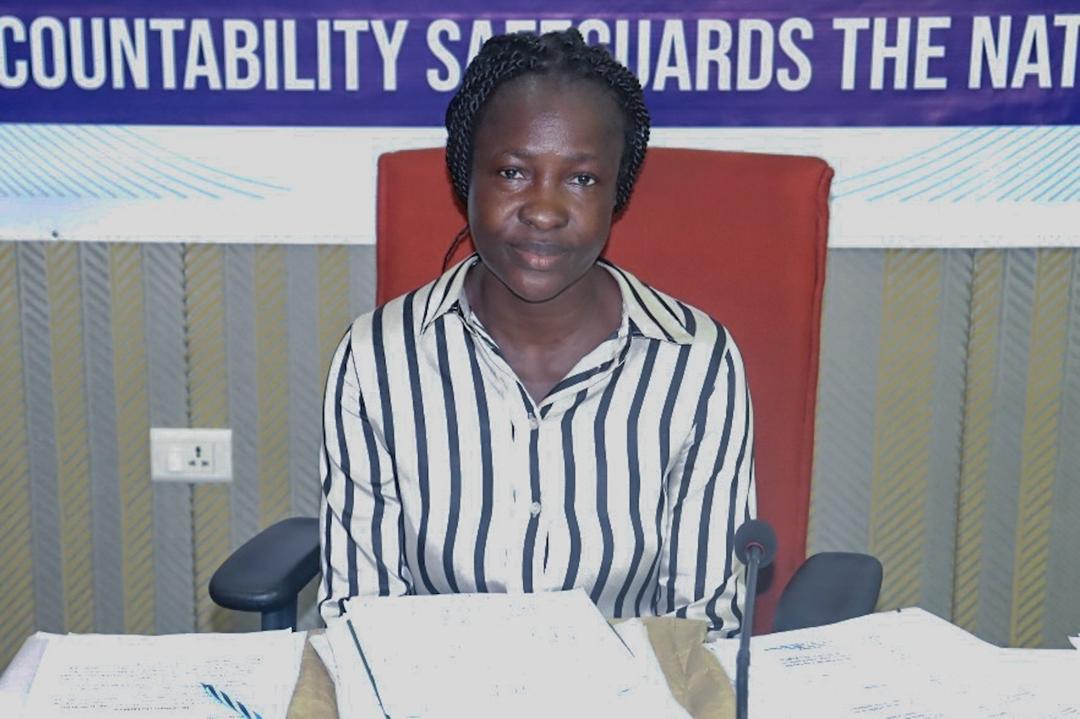
Ms. Marie Therese Gomez, the Registrar of Companies, appeared for the second time before the special select committee on the sale and disposal of assets flagged by the Janneh Commission – a landmark 2017 probe into former President Yahya Jammeh’s assets.
On Monday, Gomez updated the panel on a roster of companies handed to her office for scrutiny, detailing their status and progress in liquidation. But her testimony quickly veered into crisis mode.
“A leaking roof has destroyed our archive,” Gomez confessed, her voice steady but the implications dire. “Some documents are partially damaged, while others are in complete disarray.” She assured the committee that records do exist but remain unorganized, with her office now scrambling to reorganize files and “put our house in order.” This follows her debut appearance a few weeks ago, during which she failed to produce the requested documents, citing an inability to locate them.
The companies identified by the Attorney General’s Chambers in 2017 were slapped with freezing orders and placed under custodial control by a receiver, Augustus Prompt Firm. At the end of receivership, they were transferred to the Ministry of Justice, which appointed another receiver. According to the Janneh Commission’s recommendations, the ministry appointed liquidators to wind down operations and recover misappropriated assets. All pertinent documents were forwarded to Gomez’s office for registration and monitoring.
Yet, Gomez revealed gaping holes in the system. “The appointment of the receiver has not been filed,” she said, explaining that under standard procedures, such notifications are monitored, assigned to staff, scanned, and uploaded. “Unfortunately, in our system, there isn’t. Some companies are still active; they haven’t been struck off. Many had assets, most of which have been sold.”
Pressed on whether sales – some dating back to 2019 and 2020 – were reflected in the register, Gomez admitted, “I have not come across anything in the database.” The current system, she noted, shows only initial registrations, with no subsequent filings. This stems from a rocky transition: When the “single window” digital platform launched, pre-existing manual records were migrated, but the archiving process remains analog mainly.
Committee members, visibly frustrated, emphasized the gravity of their office’s mandate. “Your role is pivotal to the economy – record-keeping and monitoring are non-negotiable,” one lawmaker chided. “The leaking roof could have been avoided. As Registrar, you should know exactly why we’re probing these firms.”
The Janneh Commission revealed billions of looted state funds during Jammeh’s 22-year rule, resulting in the seizure of assets worth millions of dollars.