By Jali Keeba
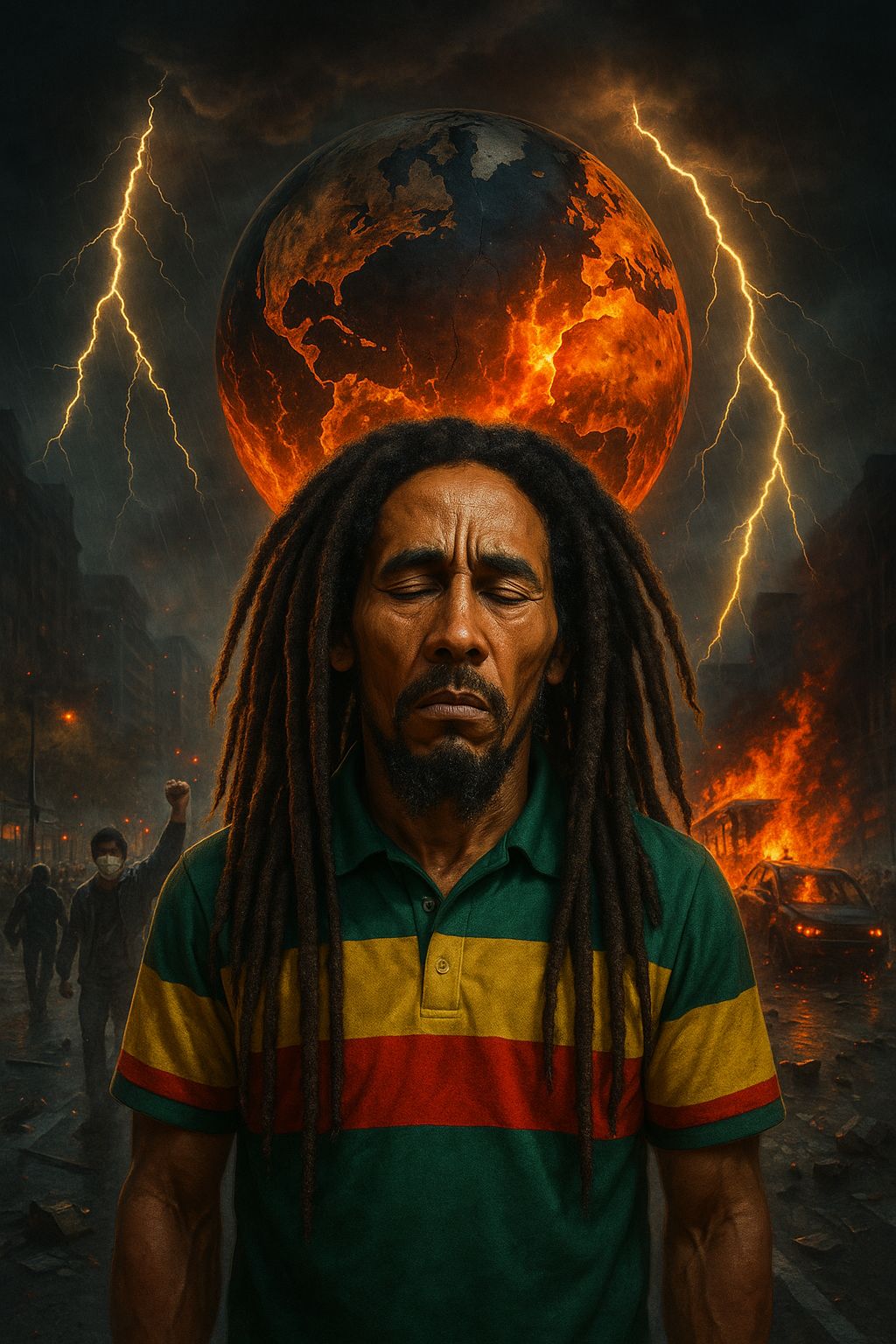
When Bob Marley released “So Much Trouble in the World” in 1979, the headlines were filled with Cold War rivalries, African liberation struggles, and global inequality. Nearly half a century later, those words still ring true. The song’s refrain—“So much trouble in the world”—isn’t just a lament from another era; it’s a mirror reflecting our own.
Marley’s voice carries both pain and purpose. His message was clear then, and it remains urgent now: if the world is full of trouble, it’s because humanity has lost its balance between progress and compassion.
A Message Born in Turbulence
“So Much Trouble in the World” opens Marley’s 1979 album Survival, one of his most politically charged works. The album cover itself—decorated with the flags of 48 African nations—was a statement of unity and defiance against oppression.
At the time, Africa was still battling colonial legacies and apartheid, and much of the developing world was caught between superpower rivalries. Marley wrote not from the comfort of distance, but from the heart of global struggle. His lyrics echoed the cries of the poor, the exploited, and the forgotten.
“So much trouble in the world,
All you got to do is give a little.”
Those two lines hold a quiet wisdom. The world’s troubles may seem vast, but Marley reminds us that the remedy begins with small acts of generosity, kindness, and conscience. Change, he suggests, doesn’t start in boardrooms or parliaments—it begins with people.
Ego Trips and Modern Parallels
“You see men sailing on their ego trip,
Blast off on their spaceship,
Million miles from reality.”
Marley’s metaphor could easily describe our own century. The “men on their ego trip” are now billionaires launching rockets into space while the planet below burns with war and despair. The “million miles from reality” has taken new forms—detachment through power, technology, and indifference.
Today’s world faces even deeper fractures: wars in Gaza, Ukraine, and Sudan; persecution of the Rohingya in Myanmar; and the spread of terrorism and instability across the Sahel. These are not distant headlines—they are the embodiment of Marley’s warning. Humanity’s “ego trip” continues while ordinary people bear the cost of power, greed, and moral blindness.
Our age of digital connection has made these crises visible in real time, yet it has not necessarily made us more compassionate. We scroll, we sympathize briefly, and then we move on—“million miles from reality,” as Marley foresaw.
A Prophet’s Vision of Responsibility
To understand Marley’s urgency, we must understand his faith. As a Rastafarian, he saw the world divided between Babylon—the corrupt system of greed and oppression—and Zion—the place of spiritual awakening and justice.
“So Much Trouble in the World” is not just a protest song; it’s a moral sermon disguised as music. When he sings, “All you got to do is give a little,” he’s calling for a spiritual awakening. The lyric is both invitation and indictment.
In today’s world of economic extremes, social fragmentation, and environmental crisis, that call feels louder than ever. Giving “a little” might mean listening more, consuming less, or standing up when silence feels easier. Marley’s message transcends politics—it’s about responsibility.
Trouble Then, Trouble Now
Marley’s refrain—“Check out the real situation, nation war against nation”—reads like a breaking-news headline. The global map of conflict today resembles the same pattern of suffering he sang about decades ago. The war in Ukraine has redrawn borders and destabilized economies. The humanitarian catastrophe in Gaza continues to claim innocent lives. Sudan has descended into chaos, with millions displaced. In the Sahel, extremist violence tears through fragile communities. And in Asia, the Rohingya people remain stateless, persecuted, and forgotten.
The “real situation,” as Marley called it, is that humanity still hasn’t learned how to coexist with justice and empathy. We continue to build weapons faster than we build peace.
Our “troubles” now extend to the planet itself. Climate change, mass migration, and environmental destruction deepen the moral crisis. Yet Marley’s music reminds us that despair is not destiny. His tone is not one of rage, but of weary hope—a belief that awareness can lead to awakening.
The Gentle Power of a Rebel
Marley’s brilliance lay in how he delivered hard truths with calm grace. The rhythm of “So Much Trouble in the World” is steady, almost meditative. There’s no shouting, no rage—just truth carried on melody.
This was Marley’s genius: to confront power without becoming bitter, to resist oppression without losing faith in humanity. His music offered a different kind of revolution—one rooted in conscience, not violence.
“One good thing about music,” he said, “when it hits you, you feel no pain.”
But his music didn’t just hit; it healed.
Through harmony and rhythm, Marley reached hearts that politics and ideology could not. He made reflection as urgent as resistance.
Why His Message Still Matters
We live in an age of unprecedented connection—and yet, isolation, mistrust, and inequality persist. Marley’s song reminds us that the world’s troubles are not merely political or economic—they’re spiritual. Humanity’s sickness is a loss of empathy, and its cure begins in the heart.
If Marley were alive today, he might not be surprised by the troubles we face. But he would still urge us to look within, to “give a little,” and to live as though our small choices matter—because they do.
Closing Reflection: The Song That Won’t Fade
More than forty years after its release, “So Much Trouble in the World” remains both prophecy and plea. It speaks across generations and borders, reminding us that progress without compassion is hollow.
The trouble Marley sang about still surrounds us—but so does the hope he carried in his voice. His message endures because it was never just about music; it was about conscience.
Maybe the world is still troubled because we haven’t yet taken his advice to heart. But as long as Bob Marley’s voice keeps echoing through speakers and souls alike, there’s still time to listen—and to give a little.