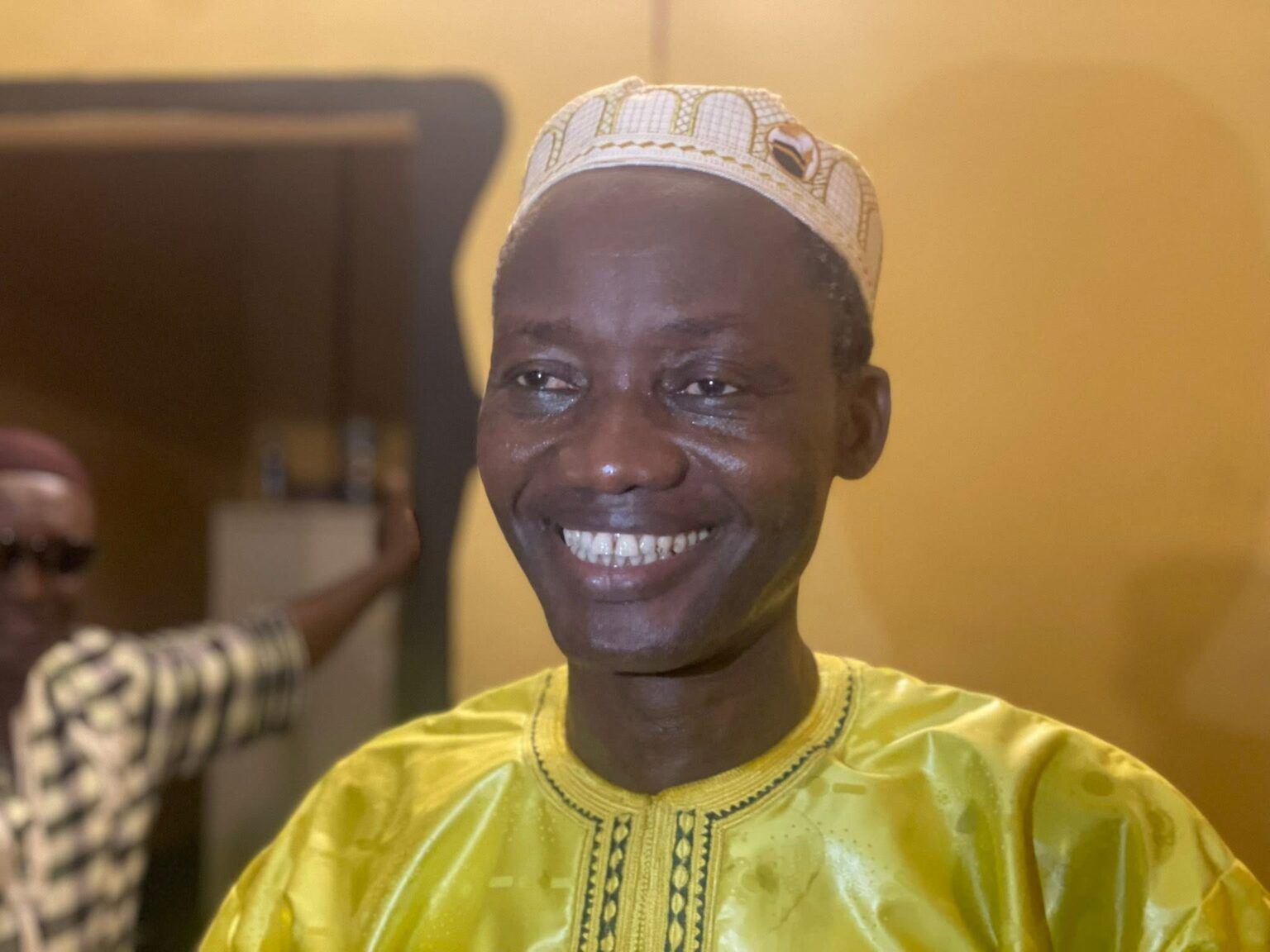
The United Democratic Party (UDP) has strongly condemned the summoning of its National Executive member, Mr. Borry S. Touray, to Kairaba Police Station for questioning, describing it as a deliberate act of political intimidation triggered by a distorted campaign from the ruling National People’s Party (NPP) and state broadcaster GRTS.
In a press statement issued today, the UDP said the police invitation came only after the NPP publicly misrepresented Mr. Touray’s remarks at a recent political gathering. The party accused GRTS of further amplifying the distortion through “defamatory and misleading” coverage that stripped the comments of their original context and presented them in a “false and politically charged light.”
The opposition party described the sequence of events as evidence of “the creeping politicization of state institutions”. It warned that law-enforcement agencies risk being turned into tools of suppression ahead of the 2026 elections.
“The UDP will closely monitor the handling of this matter and urges the Gambia Police Force to remain professional, impartial, and resistant to any attempts by political operatives to misuse law-enforcement agencies,” the statement read.
While reaffirming its commitment to the rule of law and peaceful democratic practice, the UDP invoked The Gambia’s past experience under the former regime, when state security institutions were routinely weaponized against opposition figures.
“The UDP will not be indifferent to any action that threatens political freedoms. We will not tolerate the weaponization of state institutions against our members, supporters, or the broader democratic space,” the party declared.
Meanwhile, the National People’s Party (NPP) has strongly condemned comments made by lawyer Borry S. Touray, labeling them as “reckless, dangerous, and divisive.”
In a statement, the NPP accused Touray of inciting violence and insulting President Adama Barrow, as well as Gambians who do not support the United Democratic Party (UDP), calling them “non-halal dingos.”
According to the NPP, Touray also urged his supporters to “come out and die,” which the party described as an endorsement of lawlessness and a threat to national peace.
The NPP demanded that the UDP publicly disassociate itself from Touray’s remarks and called for Touray to issue an unconditional apology and retract his statements.
The party emphasized that Gambians must reject “the politics of violence, intimidation, insults, and division.”
This incident occurs amid rising political tensions as parties ramp up their mobilization efforts for next year’s presidential election.