By: Sainabou Sambou
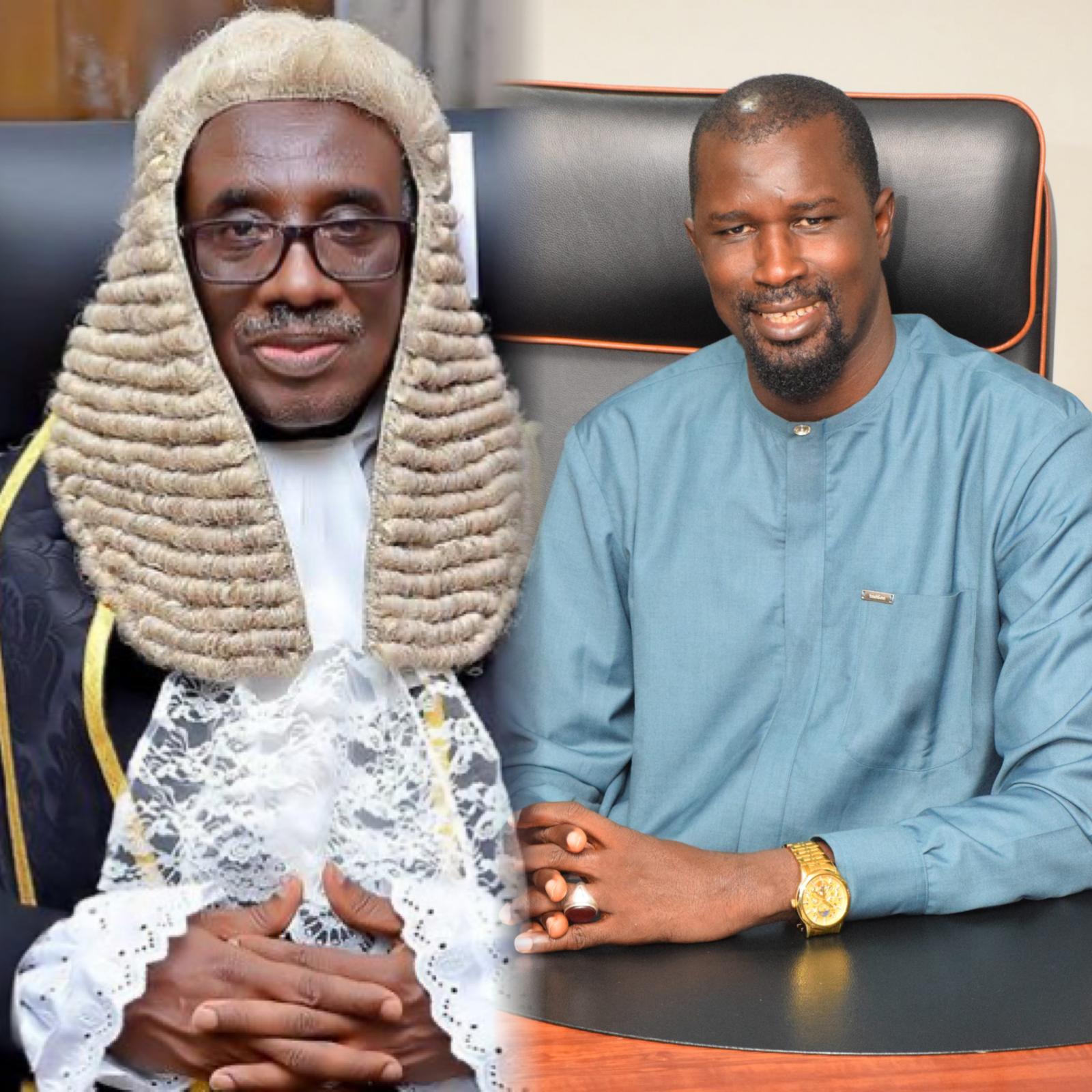
In explosive testimony before a five-member Supreme Court panel headed by the Chief Justice, former Auditor General Modou Ceesay alleged that President Adama Barrow personally pressured him to delay or halt critical audits, citing concerns that findings could damage the president’s re-election prospects.
Ceesay, a highly qualified accountant with a BSc in Economics, ACCA certification, MSc in Public Management and International Cooperation, and Certified Information System Auditor status, took the stand in his lawsuit challenging the legality of his dismissal in September 2025. He claims his abrupt removal stemmed from his refusal to comply with requests to postpone audits involving key government entities, including the National Food Security Processing and Marketing Corporation (NFSPMC), the Ministry of Lands, the Central Bank of The Gambia (CBG), and the Government Consolidated Fund.
The former Auditor General detailed multiple meetings with President Barrow, often attended by the Chief of Staff, where the timing of audits was questioned. Regarding the NFSPMC, Ceesay testified that after initiating a special audit, he was summoned to the State House. “They raised concerns over the timing of the audit and that it is sensitive because it concerns farmers,” he said. “They requested that the audit be delayed until 2026,” adding that the rationale was that the results “may come before the election.”
Similarly, a compliance audit of the Ministry of Lands, focusing on compliance with the law in land allocations, prompted another summons after Ceesay requested outstanding information. He was advised to delay the report due to ongoing land-related court cases. Ceesay maintained his stance on independence, noting that whistleblowers could leak information if recommendations were ignored. The report was eventually submitted to the National Assembly after his removal.
On the Central Bank audit, outsourced to private firm PJF, Ceesay described delays driven by “fear about the timing.” The probe examined the accuracy of findings, dividends, investments, and NFSPMC loans, with his office demanding receipts. For the 2023-2024 Consolidated Fund audit, his team sought database extracts from the Gambia Revenue Authority (GRA) via systems such as Gamtax Net and the Gambia Single Window to verify transaction completeness.
GRA refused, claiming the data was “proprietary information and intellectual property belonging to private citizens.” Ceesay countered that only copies for backup were needed. On September 8, 2025—just days before his removal—he sent a final demand letter invoking Section 160 of the Constitution and Section 16 of the National Audit Act. In a subsequent presidential meeting, he defended the request, noting that the denial was tied to the timing of the audit.
Ceesay then recounted his dismissal sequence. On September 10, he was invited to the State House and offered the position of Trade Minister. He thanked the president but promised to respond later. After consultation, he declined that afternoon, emphasizing his expertise suited the audit role and his commitment to sincere service. The president reportedly said the appointment was already published.
On September 11, Ceesay formally rejected the request in a letter, copying relevant officials. That evening, a National Assembly member appealed on the Chief of Staff’s behalf; the following day, Finance Minister Seedy Keita called for a meeting, urging acceptance in light of the president’s irreversible decision and personal ties. Ceesay held firm, stating a third unwanted option loomed. The minister reiterated cabinet approval, but Ceesay deferred to executive communication.
His counsel, J. Darboe, tendered the appointment letter (Exhibit D1), noting a paragraph requiring acknowledgment, which Ceesay rejected.
On September 11, successor Cherno Sowe visited, requesting a handover; Ceesay refused without official notice. The next day, amid media inquiries, he held a press conference interrupted by police, led by an officer named Jawo, who escorted him out amid staff resistance.
Under cross-examination by state counsel Ida Drammeh, Ceesay denied applying for GRA positions, requesting personal data, or failing constitutional report submissions—blaming delays on the Accountant General. He insisted no presidential interference occurred in other areas but affirmed it here, rejecting suggestions of acceptance, withdrawal, or social media leaks.
Drammeh tendered exhibits, including rejection letters (P2), acceptance precedents (P3), Sowe’s appointment (P4), and media releases (P5). Ceesay maintained consistent rejection and presidential pressure to delay audits for electoral reasons.
The hearing adjourned for continued cross-examination on Tuesday, December 16, 2025