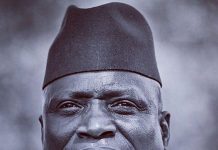
In a sharply worded open letter, Baba Galleh Jallow, the former Executive Secretary of The Gambia’s Truth, Reconciliation and Reparations Commission (TRRC), has urged President Adama Barrow to abandon his bid for a third term in the 2026 presidential election, describing it as constitutionally permissible but ethically indefensible.
Jallow, a respected academic and journalist who played a key role in documenting abuses under former dictator Yahya Jammeh, framed his letter as “well-meaning advice” motivated by concern for the nation’s democratic progress. He argued that while the 1997 Constitution – the same document that enabled Jammeh’s 22-year rule – allows Barrow to seek re-election without term limits, pursuing it would betray the promises that brought Barrow to power in 2016.
“You have the constitutional right to seek re-election,” Jallow wrote, “but you lack the moral right to do so.” He reminded Barrow of his initial pledge, as the Coalition 2016 candidate, to serve only a transitional period and to enforce term limits, assurances that helped end Jammeh’s self-perpetuating regime. Many Gambians, including Barrow himself, endured hardship or exile opposing Jammeh’s indefinite rule, Jallow noted, warning that a third term risks “jeopardizing our national wellbeing” and inviting political chaos.
The letter draws parallels to Jammeh’s downfall, pointing out that the exiled former leader ignored similar advice and now “languishes in miserable exile.” Jallow criticized opportunistic supporters who once championed term limits but now justify Barrow’s ambitions, suggesting their motives are self-serving rather than national.
Addressing Barrow’s concern that his young National People’s Party (NPP) might collapse without him, Jallow compared it to a family or child thriving after a parent’s departure. He urged the president to select a trustworthy successor, campaign for them, and retire gracefully, securing a legacy as a “courageous and wise leader” who prioritized moral obligations over legal entitlements.
Barrow’s third-term intentions, confirmed earlier this year, have ignited widespread debate amid stalled constitutional reforms. Attempts to introduce a new constitution with two-term limits failed in 2020 and again in 2025, leaving the 1997 framework intact. Critics, including opposition parties and civil society, accuse Barrow of backtracking on early promises to enact term limits. Recent polls show mixed public sentiment: a majority oppose a third term, yet Barrow leads hypothetical 2026 matchups because opposition is fragmented.
The Independent Electoral Commission has scheduled the presidential vote for December 5, 2026.
As tensions rise, Jallow’s intervention underscores fears that clinging to power could erode hard-won democratic gains in Africa’s smallest mainland country.
In closing, Jallow pleaded: “What’s morally wrong is wrong, however legal, however constitutional.” Whether Barrow heeds the call remains uncertain, but the letter has reignited national discourse on leadership, legacy, and the fragile transition from dictatorship.