The People’s Democratic Organisation for Independence and Socialism (PDOIS), one of The Gambia’s longstanding opposition parties, has postponed its national congress after failing to achieve the required quorum for electing new leadership.
Only 194 delegates attended the gathering, short of the 211 needed from the party’s 400 registered members to proceed with elections under its constitution. The congress has been rescheduled for January 24, 2025, where members will vote on the Central Committee and other executive positions critical to steering the party toward the 2026 presidential and legislative elections.
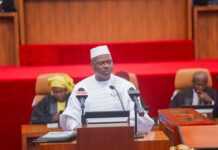
Veteran opposition figure Halifa Sallah, PDOIS Secretary General and a prominent voice in Gambian politics for decades, addressed the delegates, framing the postponement as a principled stand. “We are simply adjourning, not because of our will, but we are sure that when we respect the law, we become equal under the law,” Sallah said. He stressed that bypassing constitutional rules, even for convenience, would undermine the party’s commitment to equality and nation-building.
“That is why it is emphasised that even if one person is missing and proceeding will break the law, that one person matters and we’ll wait for that person to join us,” he added, underscoring PDOIS’s rigid adherence to internal democracy—a hallmark that distinguishes it from other parties but has also limited its electoral success.
The decision highlights ongoing debates within PDOIS about leadership renewal. Some delegates urged Sallah to remain as party leader and potential flagbearer, praising his experience.
Delegate Samba Touray argued, “Halifa would never step down at this time because he’s not that old… If Halifa Sallah and Sidia Jatta resigned from politics, that won’t be good for this country.”
Others signaled a desire for change, though such matters must await a proper vote. Safion Drammeh, Chairman of the PDOIS Italy Chapter, clarified that Sallah’s role as Secretary General is up to delegates, but the current congress focuses solely on electing the Central Committee for a four-year term, not selecting a presidential candidate.
“Halifa’s position as secretary general is a political position whereby it depends on the delegates to maintain him or to change him,” Drammeh said. He added that flagbearership would be Sallah’s personal decision later, noting, “This is not a congress to select a flag bearer.”
West Coast Regional Coordinator Fatou Janneh echoed the party’s democratic ethos: “As a concerned party member, I cannot decide for others. The majority carries the vote… Our constitution gave us that right.”
The postponement comes as The Gambia prepares for the pivotal 2026 elections, where PDOIS aims to position itself as an ideological alternative emphasizing socialism, anti-corruption, and equitable development. With President Adama Barrow’s National People’s Party in power and opposition fragmented, the party’s internal unity and leadership choices could influence its strategy.
Critics view PDOIS’s strict quorum rules as overly rigid, potentially hindering momentum, while supporters see it as modeling the rule of law that the party advocates nationally. As delegates reconvene in January, the outcome may signal whether PDOIS opts for continuity under Sallah or embraces a generational shift.