By: Kebba Ansu Manneh
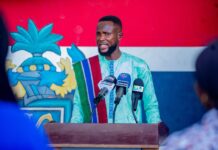
Samba Darboe, a prominent UK-based Gambian environmentalist and founder of Simply Decarbonisation, has announced comprehensive plans to combat carbon emissions in The Gambia through nature-based solutions, technological innovation, and community engagement.
In an exclusive interview with The Alkamba Times (TAT), Darboe decried the ongoing destruction of the country’s forest cover, highlighting the lack of adequate reforestation efforts to replace lost trees. “We are losing our natural heritage at an alarming rate,” he said, urging immediate action to reverse the trend.
Simply Decarbonisation, a non-governmental organisation founded by Darboe, focuses on environmental protection and climate change mitigation. The initiative aims to engage individuals, households, communities, NGOs, educational institutions, policymakers, local governments, and industries in addressing these critical issues.
“The core mission is to bring the natural world’s challenges to our doorsteps, fostering knowledge and prompting effective action against global warming, deforestation, carbon emissions, and biodiversity loss,” Darboe explained. He emphasised decarbonising energy systems, transportation, cultural practices, lifestyles, commerce, and industries through training, education, and advocacy, with the goal of securing intergenerational equity – a healthier planet for future generations.
The organisation’s efforts align with the United Nations Sustainable Development Goals. Darboe warned that human activities since the Industrial Revolution have drastically altered Earth’s composition, driving anthropogenic carbon emissions that have pushed atmospheric CO2 levels above 400 parts per million and raised global temperatures by over 1 degree Celsius above pre-industrial levels.
“Matters have reached a tipping point,” he stressed, citing the tragedy of the commons and the urgent need for decisive mitigation to avert catastrophe.
Central to Simply Decarbonisation’s objectives is restoring ecological balance by reintroducing native and indigenous plant species. This approach promotes biodiversity conservation, carbon sequestration, and climate change mitigation. Darboe noted that reviving these plants would enhance birdlife (avifauna), crucial for The Gambia’s reputation as a “birdwatchers’ paradise” and its tourism sector.
The initiative also targets conservation of remaining primates – including vervet monkeys, red patas, red colobus monkeys, and dog-faced baboons – as well as mammals like waterbuck, antelope, duiker, West African sitatunga, and warthog. Additional benefits include sustaining traditional medicinal practices, boosting food diversity for improved nutritional security, and building systemic resilience.
Darboe highlighted the role of other greenhouse gases, such as methane (25 times more potent than CO2), nitrous oxide, and chlorofluorocarbons, in accelerating global warming and ozone depletion. Sources include natural gas leakages, wetlands, landfills, fertilisers, and agriculture. He described climate change as an existential threat manifesting in biodiversity loss, droughts, famines, sea-level rise, heatwaves, and floods worldwide.
To bolster efforts, Simply Decarbonisation plans to introduce the En-ROADS Climate Interactive Simulator, a cutting-edge tool developed by Climate Interactive and MIT Sloan. Backed by data from the IPCC, IEA, NASA, and others, En-ROADS models policy impacts on global warming. Darboe noted its use in international negotiations, including the recent COP29 in Baku, Azerbaijan, to limit warming to under 2 degrees Celsius – preferably 1.5 degrees – by 2100.
He advocated reducing fossil fuel dependency through afforestation, improved waste management, sustainable agriculture, water conservation, urban planning, and renewable energy, such as solar and wind. Grassroots training, advocacy, disaster preparedness, and community ownership are key to success.
A flagship project involves restoring near-extinct native wild fruits and herbs, which are vital to ecosystems, food security, and cultural heritage. These provide habitat for fauna and humans, rich in antioxidants and nutrients. Many, imported from Casamance in southern Senegal and Guinea-Bissau, include species like Grey Fig (Soto-koyo), Wild Mango or Dika (Wulakono Duto), and Indian Jujube (Tonborungo).
Plans include collecting seeds and seedlings from regional sources and reserves such as Abuko Nature Reserve, establishing nurseries, and undertaking rewilding efforts. Long-term, the organisation aims to create community forests across The Gambia’s six regions, collaborating with the Ministry of Environment and Climate Change. Communities will select preferred species combinations.
Darboe concluded with a call to action: “Government and citizens must engage in massive tree planting to combat climate change and restore lost forests.” He expressed concern about threats to protected sites, including Salagi Forest, Abuko Nature Reserve, and Tanbi Wetlands.
Simply Decarbonisation’s holistic approach offers hope for The Gambia’s environmental future, blending tradition, science, and community action.