By Sainabou Sambou
In a country where litter often mars streets and public spaces, Bai Mustapha Bojang, a Biology student at the University of The Gambia, is proving that one person’s initiative can spark widespread change. The young resident of Farato has founded “Clean the Gambia,” a volunteer-led association that recycles discarded car tires into trash cans and transforms waste into practical solutions, all in an effort to combat littering and promote environmental awareness.
Bojang, who is also an author and passionate environmental advocate, insists that his work is far from a profit-driven venture. “Recycling is not a business but a voluntary service that I do for the country,” he told reporters. “What inspired me to start it is to help keep the country clean. If you observe The Gambia, you normally see litter all over the place, which does not look well for the country.”
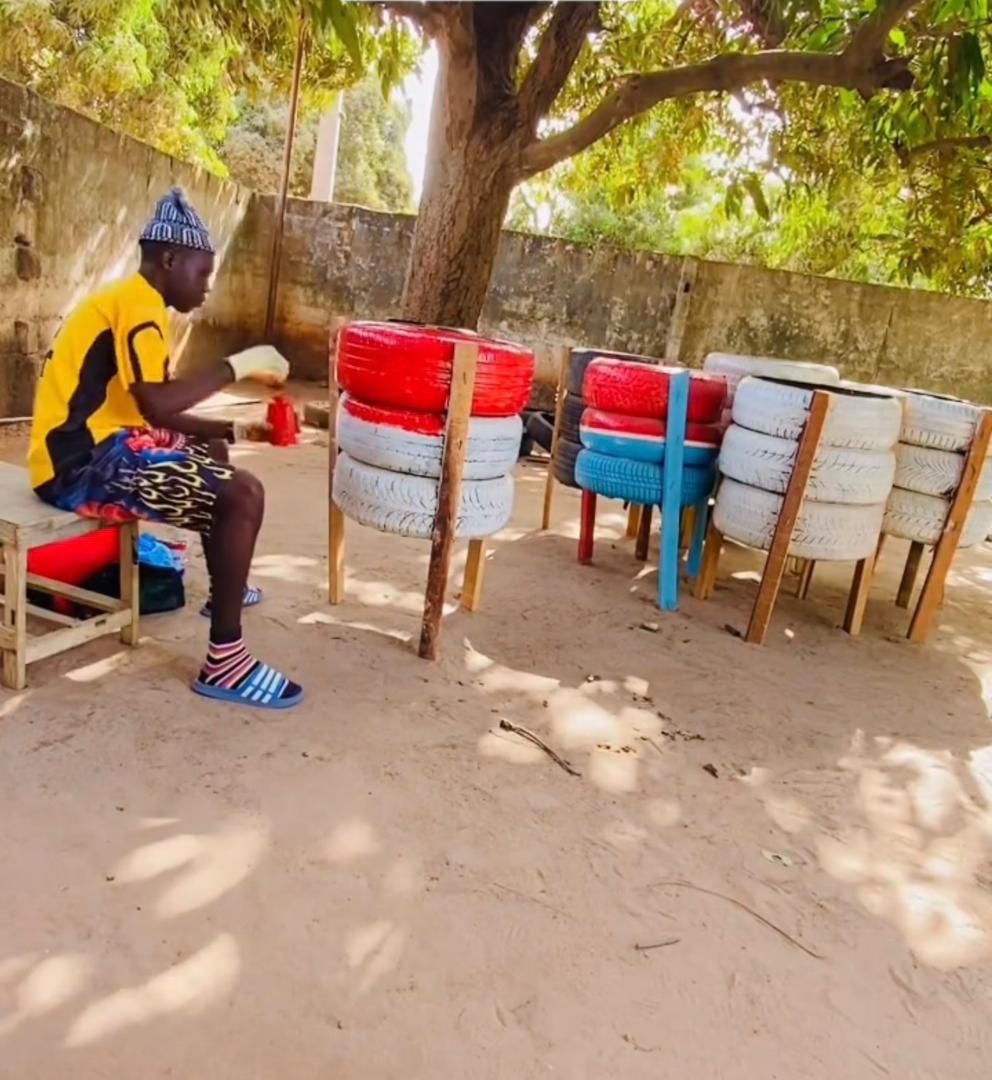
The initiative traces its roots to casual conversations among friends. Bojang shared his vision of forming an association to raise awareness about the dangers of littering and the benefits of a clean environment. “I approached my friends and told them about the idea of creating an association aimed at raising awareness about the dangers of littering and the importance of keeping the environment clean. That’s how we formed and named the association ‘Clean the Gambia,’” he explained.
To address the root cause, the group conducted informal research and discovered a key issue: the lack of accessible trash disposal options. “We realized that people throw trash in the environment because there are no available trash cans where they can dispose of it properly,” Bojang said. This insight led to an innovative solution – repurposing abandoned car tires into durable trash cans.
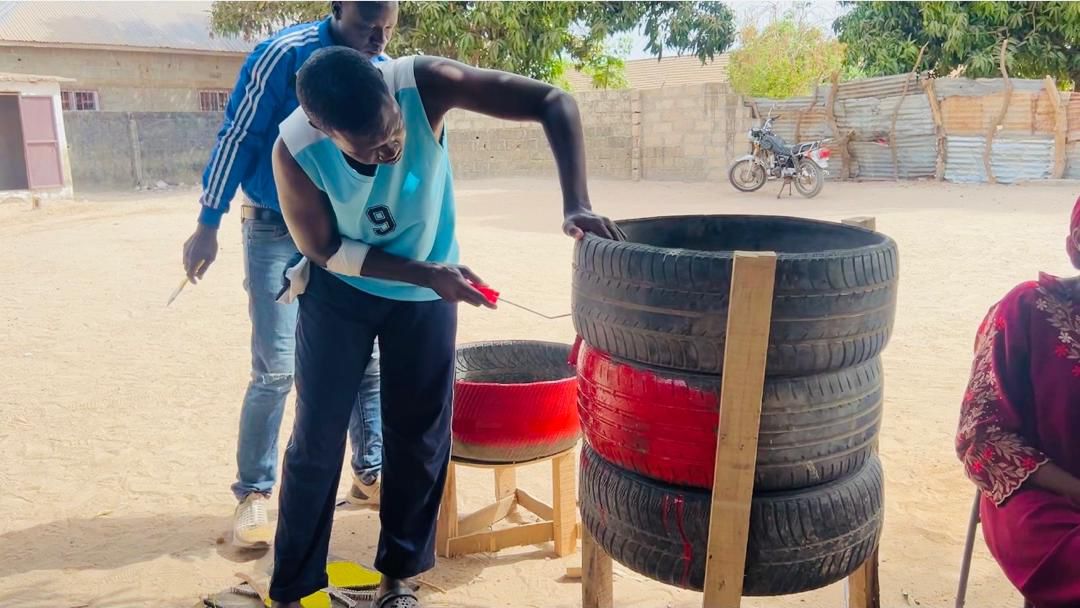
The recycling process is straightforward yet effective. Volunteers collect discarded tires from dumpsites, clean them, and transform them into functional bins. Similarly, used drinking straws are upcycled into decorative wall hangers. The trash cans are then placed free of charge in strategic public locations across communities to encourage proper waste disposal. “The trash cans we place are for free, but the wall hangers we sell to help raise some funds for the initiative,” Bojang noted.
Social media plays a crucial role in amplifying their message. The group uses platforms to educate the public on cleanliness and recycling, reaching audiences far beyond their local efforts. “We use social media to educate people about the importance of cleanliness and recycling,” he said. “It helps spread the message beyond our immediate reach.”
Material collection is a hands-on, communal activity. “We go to places where tires are thrown, pick them up, and bring them to our base. Then we set a day for all our members to come together and recycle,” Bojang described. These gatherings not only produce valuable items but also foster community spirit.
The impact is already visible in areas where the recycled bins have been installed. “We have been able to control littering in places where we put trash cans, and it has influenced people not to throw any trash in those areas,” he highlighted. More than just cleaning up, the project builds skills and inspires replication. Volunteers invite residents, especially youth, to participate in recycling sessions. “We invite community members and young people to our activities so they can learn how to recycle. When they return to their areas, they can gather people and start similar initiatives,” Bojang added.
Despite the successes, challenges persist, particularly in funding. “The biggest challenge we faced is having funds to support the idea,” he admitted. The team has turned to creative solutions, including online crowdfunding and sales of the wall hangers, to sustain operations.
Bojang’s background as a writer has further bolstered his advocacy. “Being a writer has had an influence because writing is another way of raising awareness among people,” he said. By blending literary skills with practical action, he reaches diverse audiences and drives home the urgency of environmental stewardship.
One key lesson from his experience resonates deeply: perseverance in the face of limitations. “You don’t need to wait until you have everything to start. Start with what you have,” Bojang advised. This philosophy has propelled “Clean the Gambia” forward despite resource constraints.
Looking to the future, Bojang envisions nationwide expansion. “Our plans for the future are to see this country attain cleanness. We want everyone to understand that small actions, like proper waste disposal, can make a big difference,” he said.
For Bojang and his volunteers, this is more than a project – it’s a patriotic calling to empower communities, reduce waste, and secure a healthier environment for generations to come. In a nation grappling with waste management issues, “Clean the Gambia” stands as a beacon of grassroots innovation and collective responsibility.