By Abdoulie John
With the December 5, 2026, presidential election approaching, two civil society organizations are intensifying efforts to unite opposition forces against incumbent President Adama Barrow and his ruling National People’s Party (NPP).
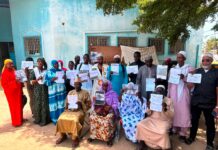
The Coalition for System Change (CSC), based in the United States with members in the diaspora and The Gambia, and the People’s Alliance for Change (PAC) issued a joint statement last Sunday, obtained by The Alkamba Times, declaring their agreement “in principle to collaborate” in building a broad coalition. The goal is to bring together political parties and civil society groups that share similar values under one umbrella to strengthen their collective resolve.
The statement emphasizes that both groups share the overarching objective of defeating President Barrow in the upcoming polls. They point to the recent bye-election victory by the NPP as evidence that no single opposition party can defeat the incumbent on its own, underscoring the need for unity.
CSC and PAC leaders sharply criticized the current administration, asserting that The Gambia is “heading in the wrong direction” and that the government lacks the interest or competence to improve citizens’ lives. They accused the Barrow administration of failing to meet post-2016 expectations, while highlighting persistent issues such as endemic corruption, impunity for economic crimes, and mismanagement of public resources.
The organizations warned against the growing tribalization of politics, describing divisive tactics as a “toxic and dangerous phenomenon” that threatens national stability. In a region where elections often spark unrest, they urged all stakeholders to prioritize the country over personal or partisan interests.
Calls for opposition unity have grown louder following the NPP’s recent electoral success, with observers viewing a fragmented opposition as a major obstacle to change. CSC, known for its diaspora-driven advocacy against poor governance, economic failures, youth unemployment, and corruption, has previously signaled preparations to contest the 2026 race. PAC, a newer civil society movement, has similarly positioned itself as a platform for systemic reform.
As political actors mobilize, the success of this coalition-building initiative could reshape the electoral landscape in Africa’s smallest mainland nation. Whether major opposition parties will join remains uncertain, but CSC and PAC’s move signals a determined bid to consolidate anti-Barrow forces ahead of the pivotal vote.