By: Alieu Ceesay
A new national opinion poll by the Center for Policy, Research and Strategic Studies (CepRass) has highlighted significant public concern that President Adama Barrow may seek a third term in the 2026 presidential elections, with many respondents warning that this would pose a direct threat to the country’s young democracy.
The survey, described as the first in a series leading up to the polls, captures public sentiment on democracy, governance, term limits, electoral reforms, and key national issues. Data collection took place from November 10 to 19, 2025, across the country, providing a timely snapshot of voter attitudes amid ongoing debates over leadership continuity.
On the contentious issue of a third term for the incumbent, the poll found that 58% of respondents believe it would weaken Gambia’s democracy, compared to just 17% who think it would strengthen it. The concern is particularly pronounced in urban and metropolitan areas: more than 60% of respondents in Kanifing, Brikama, and Banjul expressed the view that pursuing a third term would undermine democratic principles. Youth and voters in these regions were especially vocal in urging President Barrow not to contest again, citing risks to institutional checks and the spirit of alternation in power established after the 2016 transition.
CepRass emphasized that polls serve as vital tools for gauging and representing public opinion on critical matters. The findings reflect broader dissatisfaction with the government’s performance. Respondents expressed strong discontent with economic management, with over 30% describing it as poor and 21% as fairly bad. Around 70% highlighted failures in creating youth employment and tackling corruption effectively.
Perceptions of institutional reforms—promised during the administration’s reelection—were similarly negative. A combined 44% rated the government’s handling of reforms poorly, pointing to a lack of interest or progress. Many respondents perceived limited willingness to combat corruption, further eroding trust.
Views on the current administration compared to the previous regime were mixed, with some describing it as better and others as worse. Trust in the Independent Electoral Commission showed division, with 75% expressing confidence while others remained skeptical.
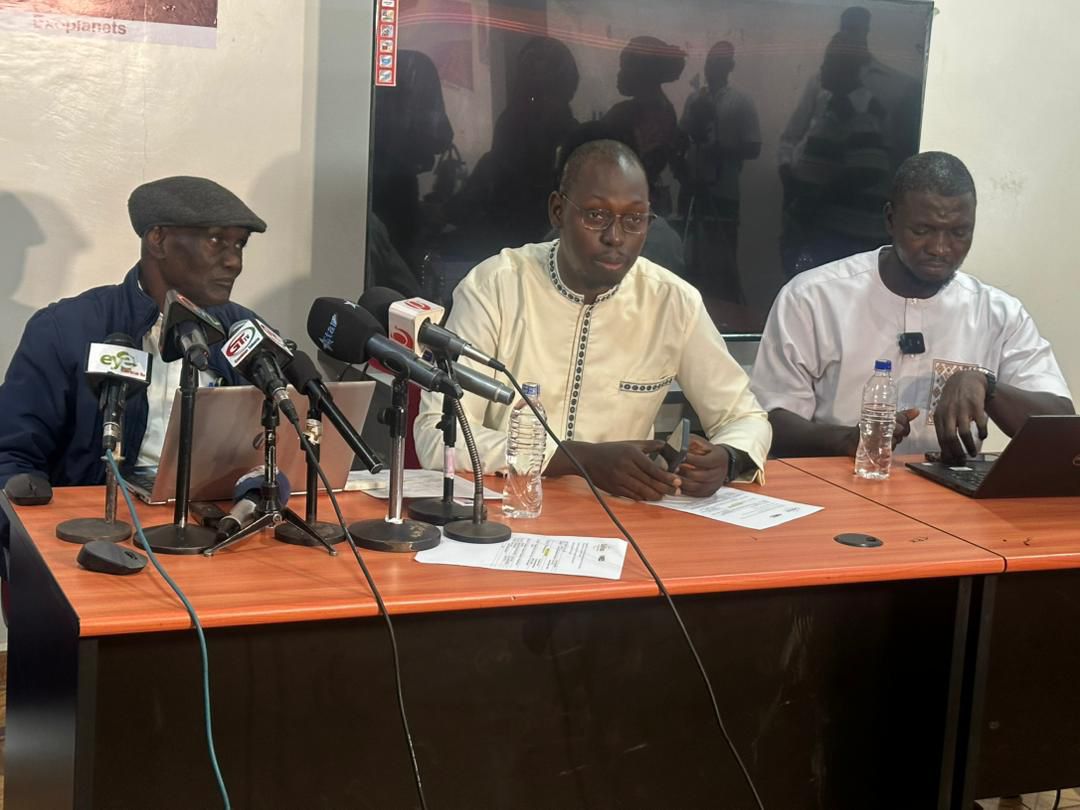
Lamin B. Jammeh of CepRass explained the organization’s objectives: “The goal of our opinion polls is to provide evidence on key electoral issues by conducting surveys. We’ve been doing this with funding from the National Endowment for Democracy (NED). We successfully conducted polls during the 2021 to 2023 electoral cycles and accurately predicted outcomes. With renewed NED support, we plan multiple polls for the 2026 to 2028 cycles, and this is the first in that series.”
As The Gambia approaches its next presidential vote, the CepRass findings underscore deep public anxiety over term limits and governance, signaling potential challenges for the incumbent amid calls for strengthened democratic norms and accountability.