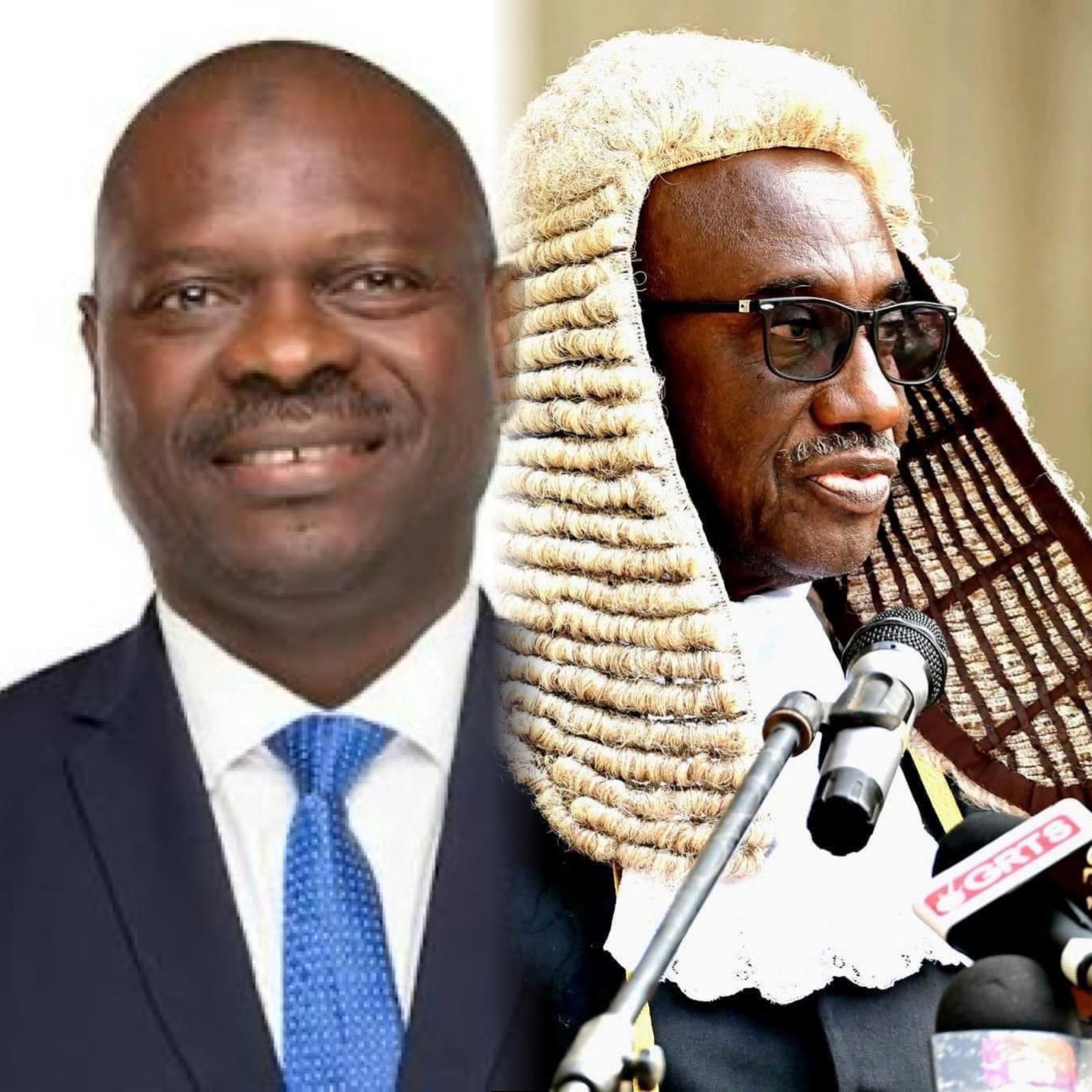
Tensions between Finance Minister Seedy Keita and the judiciary have escalated dramatically, with top judicial sources revealing that some court staff failed to report to work today due to unpaid January 2026 salaries, amid claims of retaliatory budget cuts and ongoing pay restructuring at the Ministry of Finance.
The crisis stems from the Supreme Court’s December 18, 2025, landmark ruling, in which Justice E.F. M’Bai declared Keita in violation of Section 152(1) of the 1997 Constitution for tabling the 2025 Budget Estimates on November 15, 2024, outside the required 60-day pre-financial-year window. The court rejected Keita’s excuse of World Bank and IMF negotiations, affirming that “such consultations do not provide a legal justification” for breaching constitutional timelines. The suit, filed by activists Sait Matty Jaw, Madi Jobarteh, Pa Samba Jow, and Baboucarr Nyang (represented pro bono by Abdoulie Fatty and Salieu Taal), targeted the Finance Minister, Attorney General, and National Assembly Clerk for eroding fiscal transparency.
Post-ruling, a visibly enraged Keita allegedly stormed the Supreme Court complex, first confronting Attorney General Dawda Jallow—who noted the court’s finality—then banging on the Judicial Secretary’s door, verbally attacking staff, and attempting to reach the presiding judge directly, sources told Alkamba Times.
A top judicial source, speaking on condition of anonymity, told this outlet today: “Some staff have not come to work because of the salary delay. The allocation that was supposed to be around 8 million dalasi for judicial operations and related costs has been reduced to just 1 million by the Finance Minister.”
Insiders at the Ministry of Finance attribute the broader delay to the ongoing restructuring of the new pay scale.
The source linked the funding squeeze to lingering fallout from Keita’s outburst and accusations that the judiciary aimed to “tarnish his reputation” over the budget lapse. While the 2026 national budget presentation by Keita emphasized fiscal discipline, personnel emoluments, and overall increases, independent institutions like the judiciary manage their subventions—yet recent reports highlight persistent public-sector payment strains, including in other agencies.
Legal observers view the ruling as a win for constitutional accountability, but the salary saga risks undermining judicial independence and morale.
Meanwhile, the Judicial Secretary Abdou Conteh, who has pushed back against speculation that recent salary delays affecting court staff are linked to Finance Minister Seedy Keita’s fallout with the judiciary, insists the problem is widespread across government institutions and stems from administrative errors at the Ministry of Finance.
In an exclusive statement to Alkamba Times reacting to reports of unpaid January 2026 salaries and staff absenteeism, Conteh said: “Not at all. The delayed salary not only affects the salaries of the judiciary but across the board. There were wrong inputs of allowances by the inputting officials at the Ministry of Finance.”
The comments come as frustrations mount over delayed payments, with a top judicial source earlier revealing that some staff did not report to work today due to the hold-up. The source also claimed the judiciary’s operational allocation—originally around 8 million dalasi—had been slashed by the Finance Minister to just 1 million dalasi, while ministry insiders attributed broader delays to the ongoing restructuring of the new pay scale.
Conteh’s denial directly addresses rumors of reprisal following Minister Keita’s alleged December outburst at the Supreme Court complex after the court’s landmark December 18, 2025, ruling.
Conteh’s clarification frames the salary issue as a technical glitch involving incorrect allowance entries during payroll processing, not a targeted cut or retaliation.
Civil society and legal observers continue to monitor the situation, stressing the need for a transparent resolution to preserve institutional trust and morale.