By Sainabou Sambou
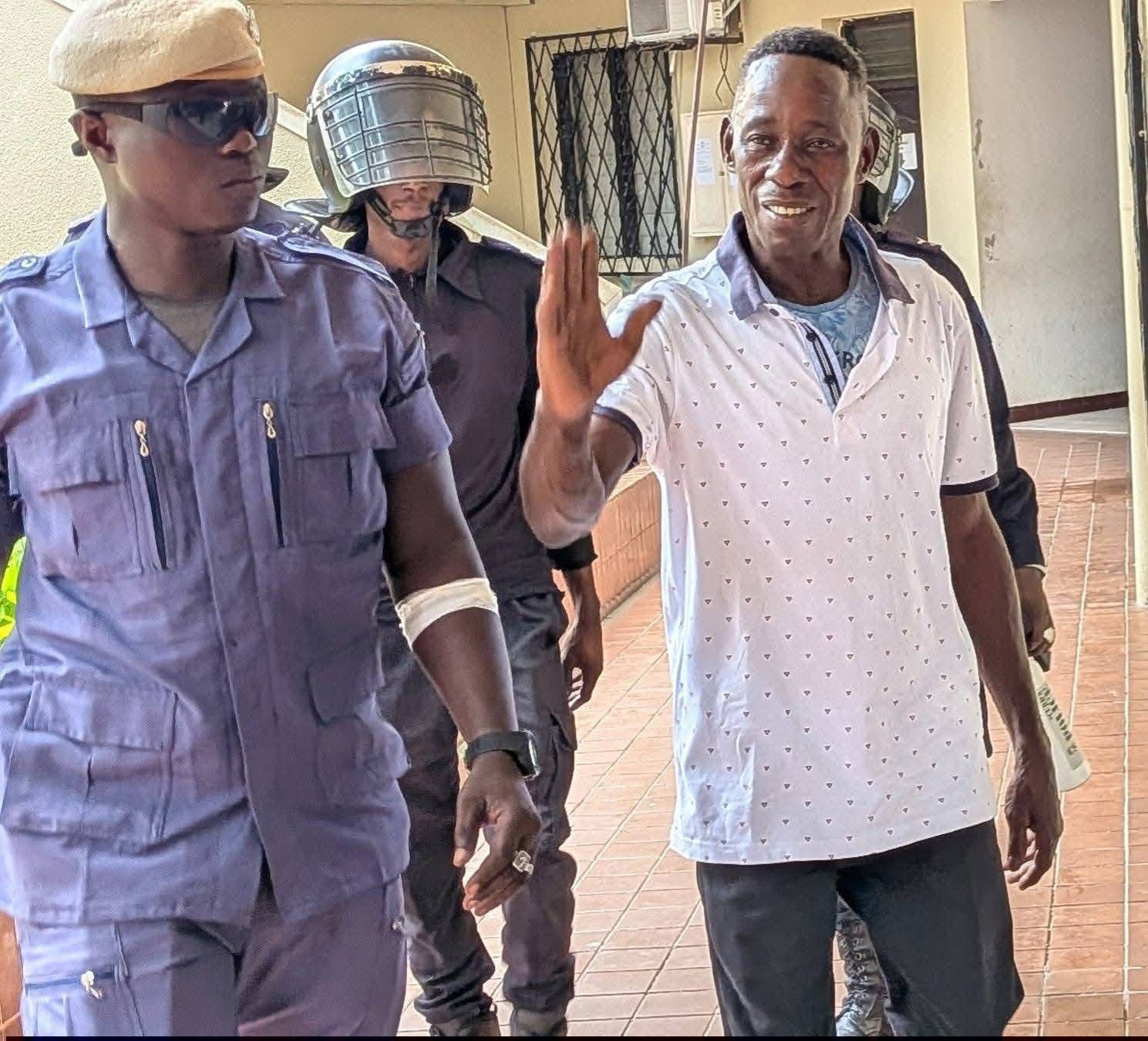
In a landmark ruling that underscores the primacy of proof beyond a reasonable doubt in criminal proceedings, Hon. Justice Ebrima Jaiteh of the High Court of The Gambia today acquitted and discharged former soldier Abdoulie Sanyang on charges of arson and interference with judicial proceedings. The decision follows a closely watched trial stemming from politically charged allegations tied to the 2016 burning of the APRC Bureau and controversial remarks made during a 2025 radio interview.
Sanyang, a Gambian national holding Swiss citizenship, had been in custody since his arrest at Banjul International Airport on August 17, 2025. He faced two counts: arson contrary to Section 305(a) of the Criminal Code for allegedly financing or facilitating the wilful burning of the Alliance for Patriotic Re-orientation and Construction (APRC) Bureau in Kanifing in 2016, and interference with judicial proceedings under Section 99(d) and (i) of the Criminal Offences Act, 2025, over statements broadcast live on West Coast Radio’s “Coffee Time with Peter Gomez” on August 14, 2025.
The prosecution, led by State Counsel S. L. Jobarteh and B. J. Konjira, called seven witnesses and tendered nine exhibits, including voluntary and cautionary statements from Sanyang, video and audio recordings of the radio interview (Exhibits P7 and P9), an investigation report, and an inventory of items seized at his arrest.
Key prosecution testimony included Police Officer Mbye Conteh of the Special Investigation Unit (SIU), who described how an investigative panel probed Sanyang’s radio claims that he contributed financially to the APRC Bureau fire and labeled certain court proceedings “clandestine.” Airport officers Filijeh Dibba and Corporal Kemo Korta detailed his peaceful arrest after he was placed on a stop list. Assistant Superintendent Paul A.F. Sambou confirmed the extraction of video footage from the show’s YouTube channel, while SIU officer Ousman Gibba admitted no financial or documentary records linked Sanyang to the arson. Eyewitness Omar Touray, a security officer on duty during the 2016 incident, recounted masked armed men overpowering him, tying him up, and setting the building ablaze around 3:00 a.m. on August 14, but could not identify the perpetrators.
West Coast Radio representative Fatou Therese Gomez tendered the audio recording of the interview.
Sanyang, testifying as the sole defense witness, denied any role in the arson, insisting he neither financed nor participated in the act. He argued that his radio comments were misinterpreted, that he had referred to excluded evidence in the pending case of The State v. Ousainou Bojang and Amie Bojang as a public interest matter, and that they were protected under freedom of expression. He further alleged that police statements attributed to him were fabricated or doctored.
In a comprehensive judgment, Justice Jaiteh first addressed the arson charge. While accepting the actus reus—that the APRC Bureau was unlawfully and wilfully set on fire based on Touray’s credible, unshaken testimony—the judge ruled the prosecution failed to prove Sanyang’s criminal responsibility beyond a reasonable doubt. No independent corroborative evidence, such as financial trails, communications, or co-conspirator testimony, supported claims of aiding, abetting, counselling, or procuring under Sections 23 and 24 of the Criminal Code. The alleged admissions in the cautionary statement and radio interview, retracted by Sanyang at trial, could not stand alone without such corroboration for a grave offence like arson.
On the interference charge, Justice Jaiteh found that while proceedings in the Bojang case were pending and Sanyang’s statements touched on them, the prosecution did not establish material misrepresentation, actual or realistic prejudice to parties, or the requisite mens rea of intentional interference or disrespect aimed at obstructing justice. Citing the Privy Council’s Ambard v Attorney-General for Trinidad and Tobago (1936), the judge emphasized that justice must endure public scrutiny and criticism—even robust or provocative—provided it does not cross into criminal obstruction. In Gambia’s judge-only system, the threshold for prejudice was not met, and no evidence showed that the remarks influenced judicial officers or proceedings.
“The burden of proof rests squarely on the prosecution throughout and never shifts,” Justice Jaiteh reiterated, invoking the golden thread principle from Woolmington v DPP. “Suspicion, conjecture, or disapproval cannot substitute for proof beyond a reasonable doubt.”
The court therefore acquitted and discharged Sanyang on both counts.
Immediately after the verdict, State Counsel Jobarteh announced the prosecution’s intent to appeal under Section 325 of the Criminal Procedure Act, 2025, and sought Sanyang’s continued detention pending appeal, citing his non-residency in The Gambia.
Justice Jaiteh overruled objections to the defense counsel’s submission. He stressed that an acquittal restores liberty and the presumption of innocence persists. Finding no exceptional circumstances justifying remand, the judge admitted Sanyang to bail in the sum of D50,000, with one Gambian surety required to deposit a National Identity Card with the Principal Registrar of the High Court and to file an affidavit of means confirming the ability to pay. The bail will lapse after 30 days if the State fails to file a competent appeal within that period, per Section 325(4).
Sanyang is expected to be released from Mile 2 Prison shortly after the ruling, if he meets the bail requirements, marking the end of his remand detention.
The case has stirred public debate, with supporters viewing the acquittal as vindication of due process and free expression, while others note lingering questions about the 2016 fire amid past electoral controversies. The prosecution’s appeal, if filed, will likely prolong scrutiny of the events.