By Alieu Ceesay
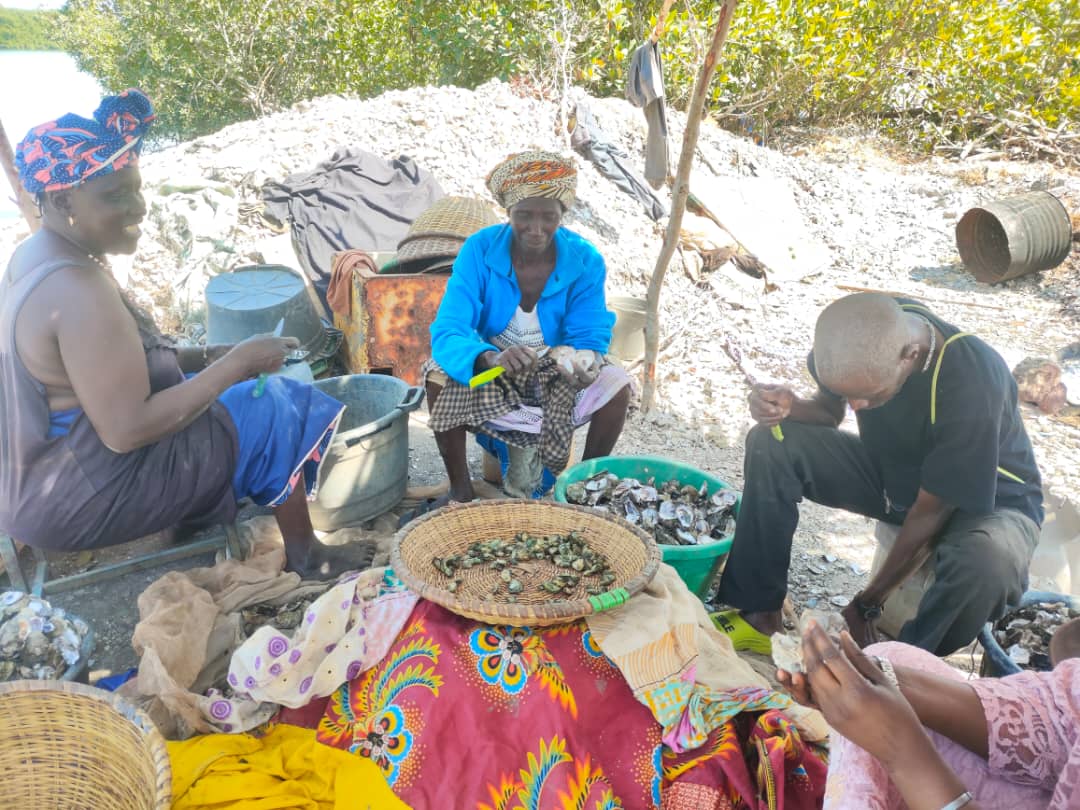
The small village of Jalikassa, on the River Gambia in the Kombo East District of the West Coast Region, remains a vibrant hub for standard oyster farming and fishing. Yet, behind its tranquil riverside setting lies a growing frustration among residents over what they describe as persistent government neglect in providing essential social amenities.
The community, home to families who depend heavily on harvesting oysters from the surrounding mangroves and fishing in the river for their livelihoods, lacks basic infrastructure that many other parts of The Gambia now enjoy. Electricity remains absent, forcing villagers to forgo modern preservation methods for their catch. Roads are poor or nonexistent, complicating transport, while access to education and clean drinking water poses daily challenges.
Ebrima Chorr, a respected community leader, voiced the collective plea during a recent discussion with locals. “We are calling on the government to consider us, too. We are part of The Gambia, so we don’t know why we still don’t have electricity,” Chorr said. He highlighted how the absence of power directly impacts their economic survival. “If we had electricity here, we could keep our fish in a fridge to prevent it from spoiling. But we can’t do that because there’s no electricity.”
The struggles extend beyond power supply. Villagers report that their last water tank was severely damaged during last year’s rainy season, leaving them without reliable access to clean drinking water. Many must now travel long distances or rely on unsafe sources, heightening health risks in an already vulnerable community.
Education remains another critical concern. With only one Early Childhood Development (ECD) center operating—established and supported by ChildFund The Gambia—older children often face a long walk to schools in nearby Faraba.
For those aged seven and younger, the journey proves too arduous, contributing to school dropouts. The ChildFund ECD program has provided a vital lifeline, offering daily lessons to young children while incorporating traditional skills like oyster farming and fishing into the curriculum, helping preserve ancestral knowledge amid modern challenges.
ChildFund The Gambia has also launched impactful initiatives in the area, including mangrove restoration efforts. These programs aim to boost seafood availability not only for Jalikassa but for surrounding communities by protecting the vital wetland ecosystems that sustain oyster populations. Such interventions demonstrate the role of nongovernmental organizations in filling gaps left by limited state support.
Mariama Sarr, a resident, echoed the frustrations shared by many. “For years, we haven’t had water, no electricity, or a proper school. Here, if you go to the sea and come back late—at 11 or midnight—your fish gets damaged,” she said.
Located near Faraba in a region known for its reliance on riverine resources, Jalikassa’s residents emphasize their contributions to the national economy through sustainable harvesting practices. Oyster farming, predominantly led by women in many Gambian communities, supports food security and income generation, yet the lack of infrastructure hinders progress and perpetuates poverty.
Community leaders and villagers are urging relevant stakeholders, including government authorities, to prioritize their needs. They argue that as citizens of The Gambia, they deserve equitable access to development projects that could transform their daily lives and secure a better future for the next generation.
As calls for intervention grow louder, the people of Jalikassa hope their voices will prompt concrete action to bring electricity, improved roads, reliable water, and expanded educational opportunities to their riverside village.