By Sainabou Sambou
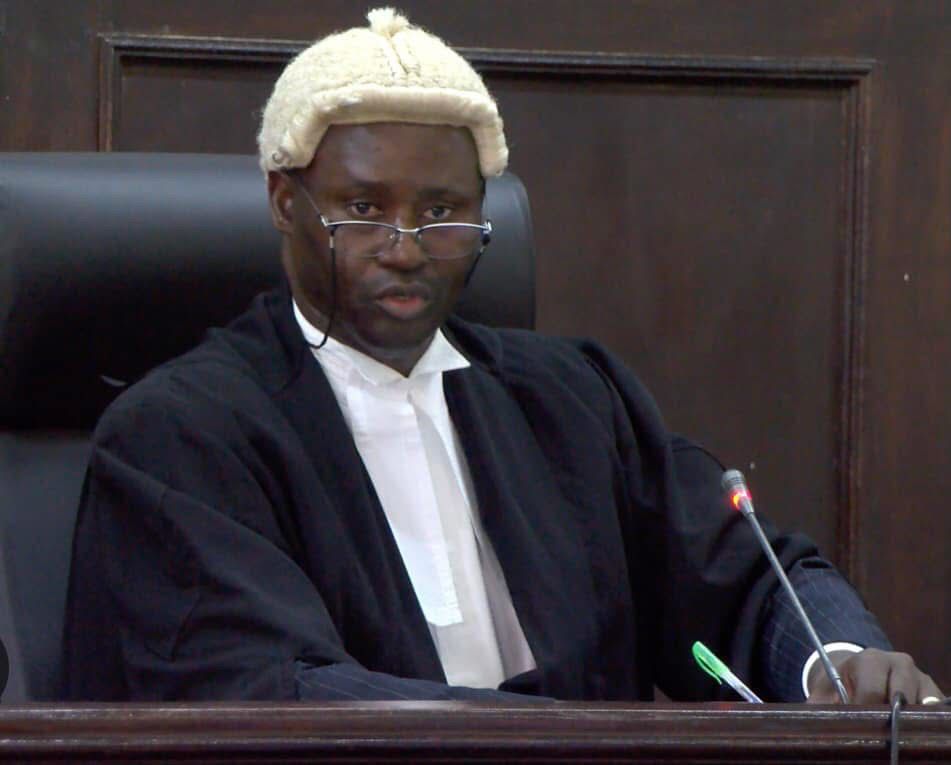
Justice Ebrima Jaiteh of the High Court on Tuesday, February 24, 2026, dismissed a “no case to answer” submission by businessman Alagie Kebbeh and directed him to open his defence in a case involving an alleged D64,080,000 fraud related to undelivered rice under a government COVID-19 relief programme.
Kebbeh, the Chief Executive Officer, Director, and majority shareholder (holding 90 percent of shares) of Win-Win Oils (Gambia) Limited, faces four serious charges: economic crime, theft, obtaining goods by false pretences, and cheating. He entered a not guilty plea when arraigned on April 22, 2024.
The allegations stem from the government’s emergency initiative during the COVID-19 pandemic, under which funds were advanced to 39 vendors to procure and distribute rice to the public. Prosecutors claim that payments covered 58,500 bags of 50kg rice, yet 41,404 bags were never supplied to the state.
According to the State, Kebbeh fraudulently induced the vendors—and by extension the government—to release D64,080,000 by falsely representing that Win-Win Oils had the full consignment of rice ready for delivery. The government allegedly paid the vendors on the belief that the rice had been purchased and was in storage awaiting collection.
The prosecution presented its case through eight witnesses and numerous exhibits, including cautionary statements, company records, correspondence involving the World Food Programme, and shipment-related documents. This evidence painted a picture of Kebbeh exercising dominant control over Win-Win Oils.
At the conclusion of the prosecution’s evidence, defence counsel K. Jallow filed a submission of no case to answer. He contended that Win-Win Oils, as a separate legal entity, shielded Kebbeh from personal liability as a director and shareholder. Counsel emphasised that no funds were deposited into Kebbeh’s personal accounts and argued the State failed to prove he personally caused any financial loss or committed the offences.
The Director of Public Prosecutions, supported by counsel F. Touray, vigorously opposed the application, urging the court to find sufficient evidence warranting a defence.
Delivering his ruling, Justice Jaiteh clarified the limited scope of the no-case stage: the court must not conduct a mini-trial, weigh credibility, or determine guilt, but simply assess whether the prosecution’s evidence—if believed—could support a conviction by a reasonable tribunal.
The judge highlighted key prosecution evidence, including company documents confirming Kebbeh’s controlling role. He pointed to a signed communication from Kebbeh asserting that a full shipload of rice from India had been arranged, with an expected arrival on March 19, 2022. In the same document, Kebbeh sought a 45-day extension to deliver 2,070 metric tons of outstanding rice.
Justice Jaiteh noted the absence of any proof that the shipload had arrived or that the rice had been ultimately supplied. He ruled that these representations, if shown to be false, bore directly on the charges of false pretences, cheating, and economic crime. The massive shortfall of 41,404 bags, despite full payment, created “serious and substantial issues” that demand an explanation from the accused.
On the theft charge, the judge found that linking payments for specific goods to their non-delivery raised a triable issue of dishonest conversion, potentially establishing the offence if proven at trial.
The judge deferred broader defence arguments—such as corporate veil principles and personal versus corporate liability—to the full trial, stating they were inappropriate for resolution at this preliminary stage.
After examining the entire prosecution case, Justice Jaiteh concluded that a prima facie case had been made out on all four counts. The evidence was neither speculative nor so tenuous that no reasonable court could convict if accepted.
Accordingly, the no-case submission was dismissed, and Kebbeh was formally called upon to enter his defence.
The trial continues, with proceedings expected to resume as the court hears from the defence side in this closely watched matter that touches on public funds disbursed during a national health crisis.