By: Kebba Ansu Manneh
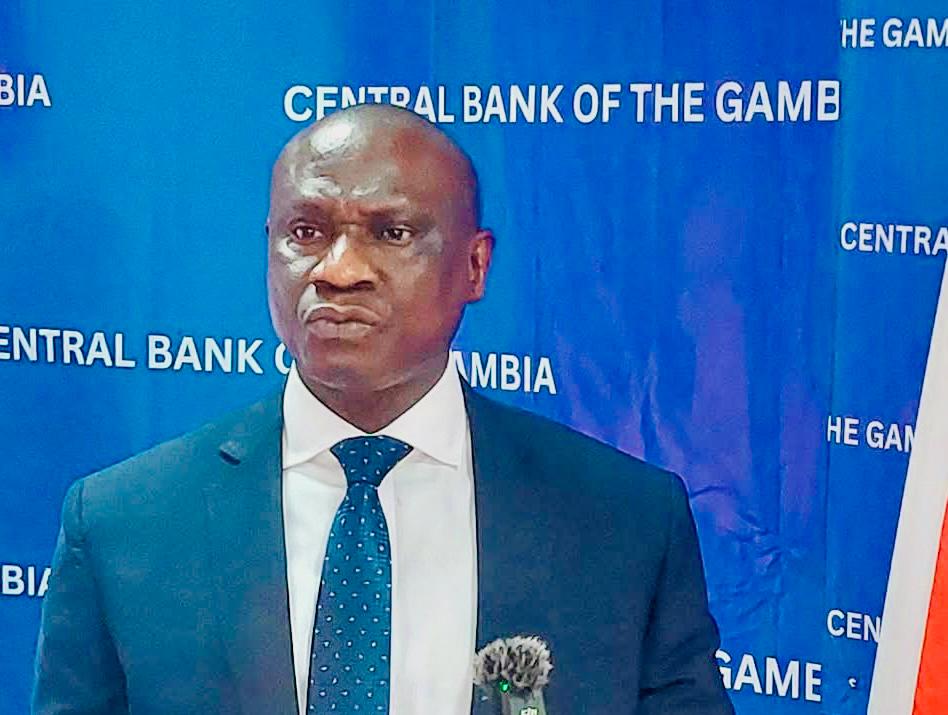
The Gambia’s domestic debt stood at D52.0 billion in 2025, representing 26.0 percent of GDP, Central Bank of The Gambia (CBG) Governor Buah Saidy announced today during a Monetary Policy Committee press conference.
The figure marks an increase from D46.4 billion (26.7 percent of GDP) recorded in 2024. Governor Saidy described the rise as part of a deliberate shift toward more sustainable government financing, noting that medium- and long-term instruments now account for 46.2 percent of the domestic debt portfolio as of December 2025.
The governor highlighted several encouraging economic indicators. Private remittance inflows rose sharply to US$872.1 million in 2025—a 12.4 percent increase from the previous year—providing a vital boost to market liquidity and supporting household consumption.
The domestic foreign exchange market operated smoothly, with total foreign currency transactions climbing to US$2.4 billion in 2025 from US$2.2 billion in 2024, reflecting stronger supply conditions.
The Gambian Dalasi remained broadly stable in the final quarter of 2025. It depreciated modestly by 0.5 percent against the US dollar, 0.1 percent against the British pound, and 2.2 percent against the CFA franc between September and December. In contrast, the currency appreciated by 0.9 percent against the Euro over the same period.
International reserves remained robust at US$585.3 million by year-end, covering 4.5 months of prospective imports of goods and services. This buffer has helped underpin confidence in the Dalasi and the broader economy.
On the fiscal front, preliminary estimates indicate progress. The overall budget deficit (including grants) narrowed significantly to D5.2 billion (2.8 percent of GDP) in 2025, down from D6.8 billion (4.4 percent of GDP) in 2024. The improvement stemmed from enhanced domestic revenue collection, better tax administration, and ongoing fiscal consolidation measures. The deficit excluding grants, however, widened slightly to D21.4 billion (11.5 percent of GDP) from D18.7 billion (11.4 percent of GDP) the prior year.
Governor Saidy projected continued economic strength, forecasting real GDP growth of 6.4 percent in 2025 and 6.2 percent in 2026. These outlooks rest on solid private and public investment, reliable remittance flows, and gains in key sectors including services, construction, and agriculture. The CBG’s Composite Index of Economic Activity points to a promising beginning for 2026.
The external account also improved, with the current account deficit shrinking to US$75.9 million (3.2 percent of GDP) in 2025 from US$103.9 million (4.4 percent of GDP) in 2024. Factors driving this included tourism’s ongoing recovery, steady remittances, budget support inflows, lower global commodity prices, and greater efficiency at Banjul port.
Despite persistent global uncertainties, the governor emphasized The Gambia’s demonstrated resilience and the importance of sustained macroeconomic policies to secure long-term stability and inclusive growth.