By Fatou Dahaba
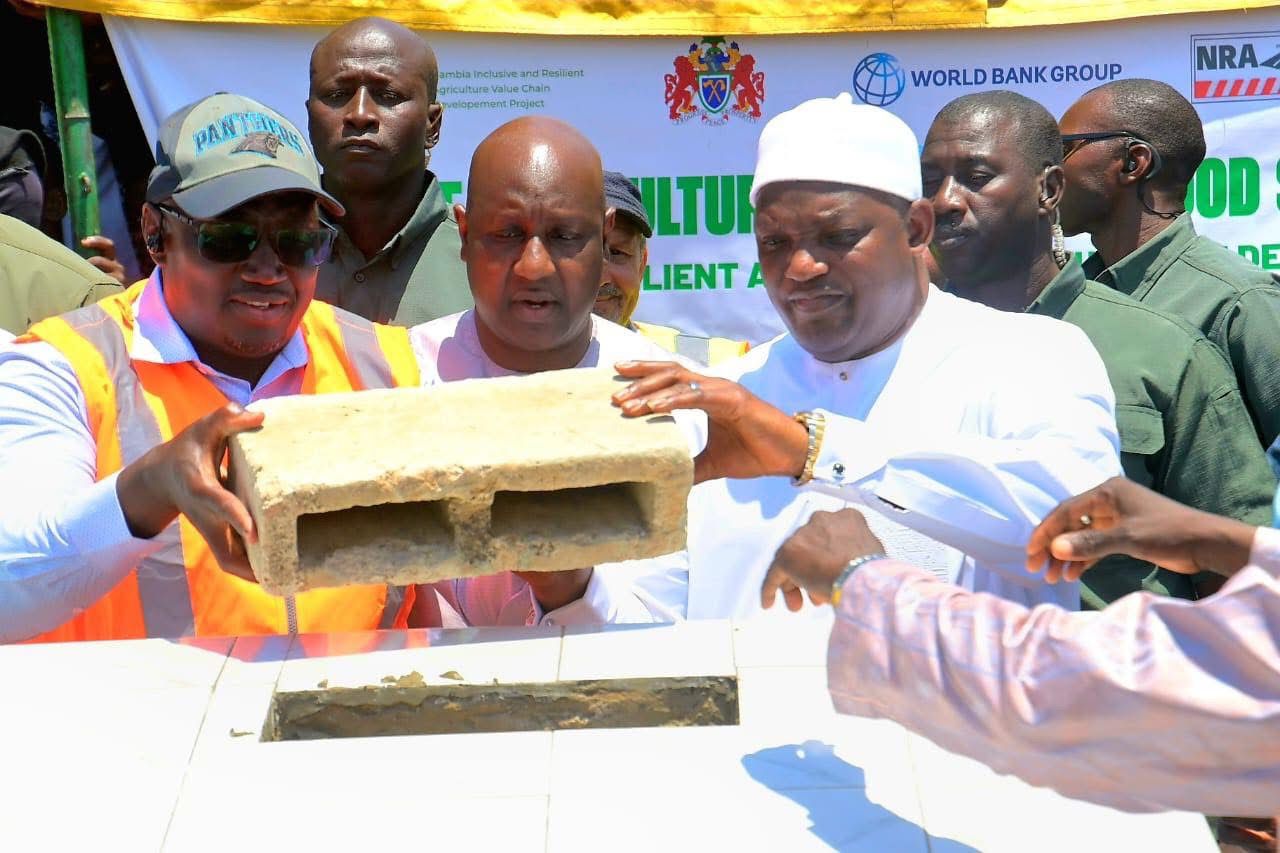
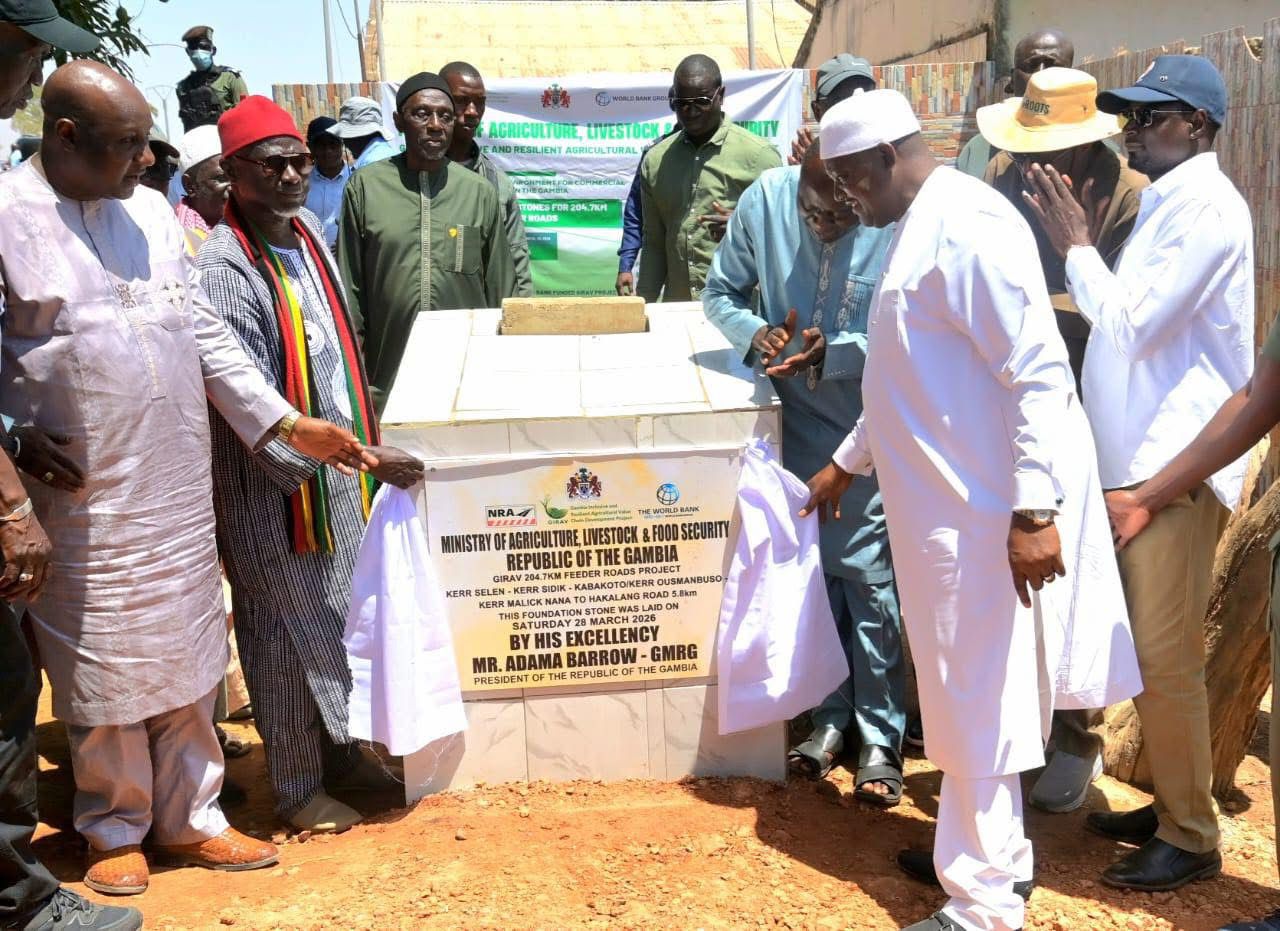
President Adama Barrow on Saturday presided over the laying of foundation stones for the construction of 75.7 kilometres of feeder roads under the Gambia Inclusive and Resilient Agricultural Value Chain Development (GIRAV) Project in the North Bank Region.
The $25 million initiative, funded by the World Bank, seeks to enhance market access, reduce post-harvest losses, and drive economic growth for smallholder farmers who form the backbone of the country’s economy.
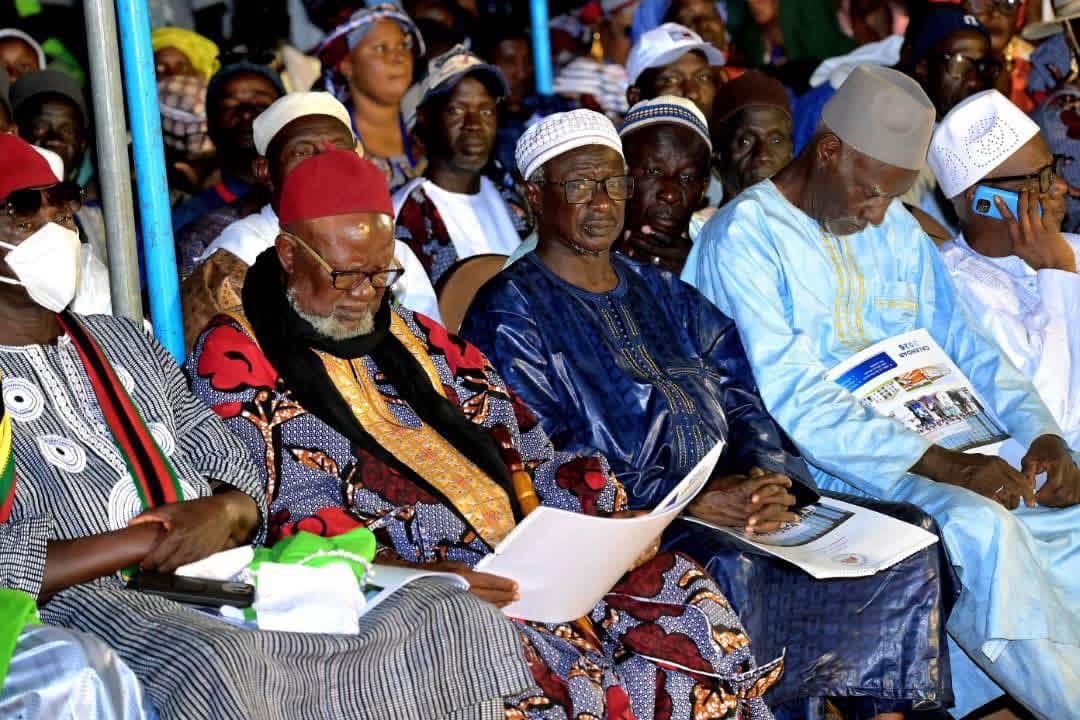
The ceremonies took place across the districts of Lower Niumi, Jokadu, and Baddibou, signalling a major push to improve rural connectivity and support key agricultural activities in horticulture, rice, and cashew production.
Speaking at a community meeting in Njawara, Lower Baddibou, President Barrow described the feeder roads as essential infrastructure that links remote farming areas directly to major roads and markets.
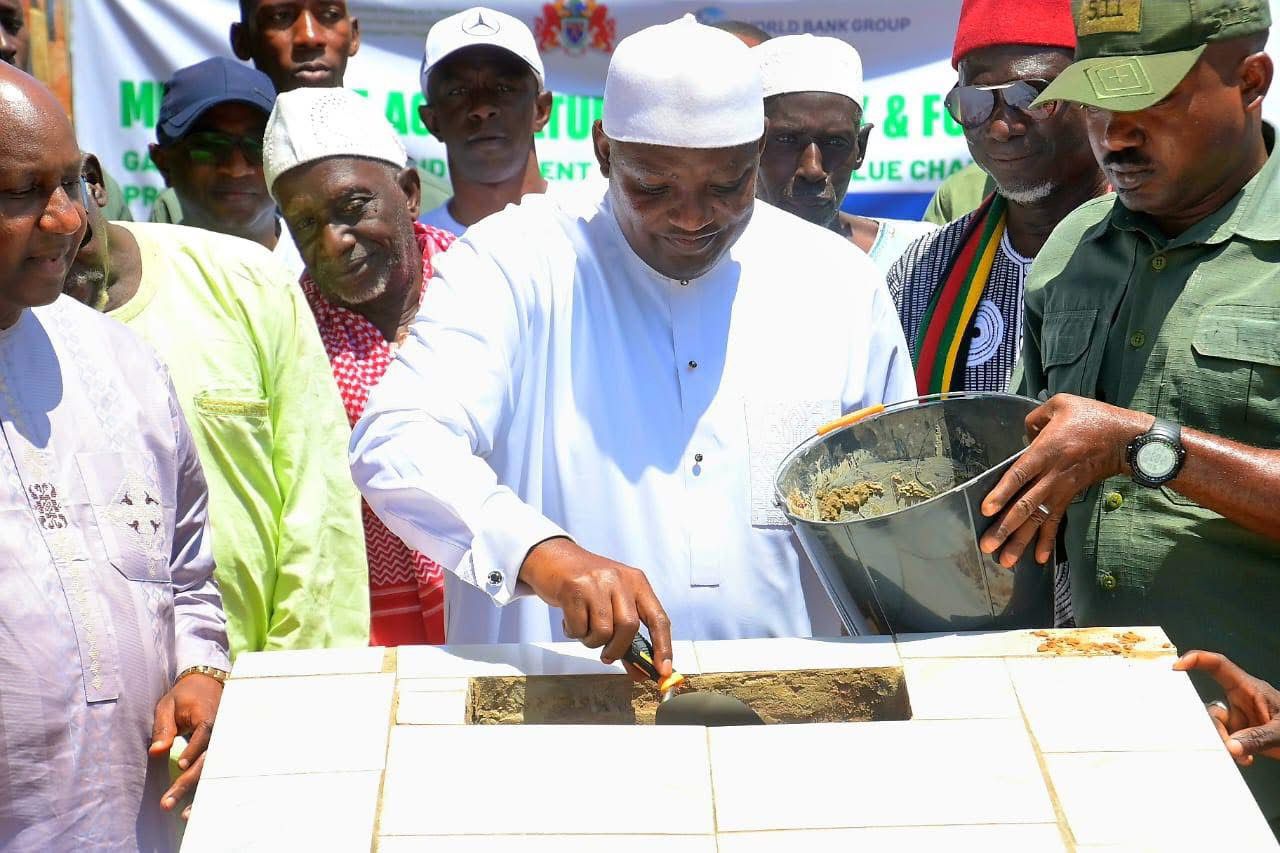
“These roads are intended to change the reality for our farmers, facilitating the timely and cost-effective movement of agricultural produce,” he said.
He stressed that agriculture remains the backbone of Gambia’s economy, employing a significant portion of the population, and that better roads would address long-standing challenges in transporting goods efficiently, boosting farmers’ incomes, and reducing post-harvest losses.
Barrow added that the project forms part of a broader national strategy to modernise infrastructure and ensure no region is left behind in the country’s development drive.
“Today, we are laying the foundation for opportunity, dignity, and shared prosperity,” the President declared, highlighting the roads’ potential to connect communities both socially and economically.
The GIRAV project, which has received a total of $108 million from the World Bank, aims to promote inclusive, resilient, and competitive agricultural value chains with a focus on smallholder farmers and agribusinesses. It targets priority sectors including rice, horticulture, cashew, poultry, and maize.
Franklin Mutahakana, the World Bank Country Representative, underscored the critical role of feeder roads in addressing high post-harvest losses stemming from poor infrastructure.
He noted that while agriculture employs about 70% of the Gambian workforce, many face declining productivity and informal working conditions. The new roads, he said, would improve market access for smallholders, stimulate economic growth, enhance food security, and create jobs.
Mutahakana commended the government’s commitment to the sector and called on contractors and supervising consultants to deliver the project on time and to high standards of quality. He also urged local communities to take ownership of road maintenance to ensure long-term sustainability.
“Your presence here today underscores the importance of these feeder roads in connecting producers to markets,” he stated.

Sulayman Sumareh Janneh, Managing Director of the National Road Authority, echoed these sentiments, praising the World Bank’s support through the GIRAV project. He emphasised the need for quality workmanship and community involvement in upkeep.
Mamud Alieu Jagne, Project Coordinator at the Central Projects Coordination Unit (CPCU), highlighted how improved rural connectivity would transform the agricultural sector and contribute to broader national development goals.
Local voices also welcomed the initiative. Marie Mendy, the female representative, and Momodou S. Bah, the youth representative from the village, reassured President Barrow of their continued support. They appealed for additional skills centres in the region to empower young people and expand economic opportunities.
The specific road segments where foundation stones were laid include, 7.3km from Kerr Jatta to Ndofan and Kerr Wali in Lower Niumi; 9km from Fass Njaga Choi to Maneh, Ngare/Sadir Jobe, and Ndongu Charr to Ndongu Kebbeh in Lower Niumi; 5.8km from Kerr Selen to Kerr Sidik, Kabakoto/Kerr Ousmanbuso, Kerr Malick Nana to Hakalang Road in Jokadu; 7km from Kuntaya, Jissa Ker Amadou to Kerr Omar in Jokadu; 5.6km from Land Sarr, Macca Farafenni to the main road in Baddibou; 7.2km from Illiasa, Jiman Sarr Baa to Katchang in Baddibou; 9.3km from Yallal Tankunjala, Bantang Killing, Yuna Angalleh, Taaly Ya, Jajari India to Illiasa in Baddibou and 24.5km from Minteh Kunda, Kerr Ardo to Njawara in Lower Niumi
Officials expect the roads to ease the movement of people, goods, and services, thereby boosting local trade, improving access to social services, and unlocking the economic potential of rural Gambia.
The project aligns with wider efforts to build climate-resilient agriculture and strengthen value chains, ultimately contributing to poverty reduction and shared prosperity across the country.
As construction begins, stakeholders expressed optimism that these feeder roads will mark a turning point for farming communities long hindered by poor infrastructure, paving the way for a more connected, productive, and inclusive rural economy.