
Special Report by Fatou Dahaba and Alieu Ceesay
In a landmark ceremony that blended national pride with forward-looking ambition, President Adama Barrow today officially inaugurated the new Q Group Consortium House, ushering in what many are calling a new era for The Gambia’s digital transformation and private-sector-led development.
The state-of-the-art facility, which also saw the simultaneous launch of Q-Cell Avenue, Q-Cell Fiber Services, and the country’s first indigenous data center, stands as a powerful symbol of Gambian innovation, resilience, and determination to reduce reliance on foreign infrastructure.
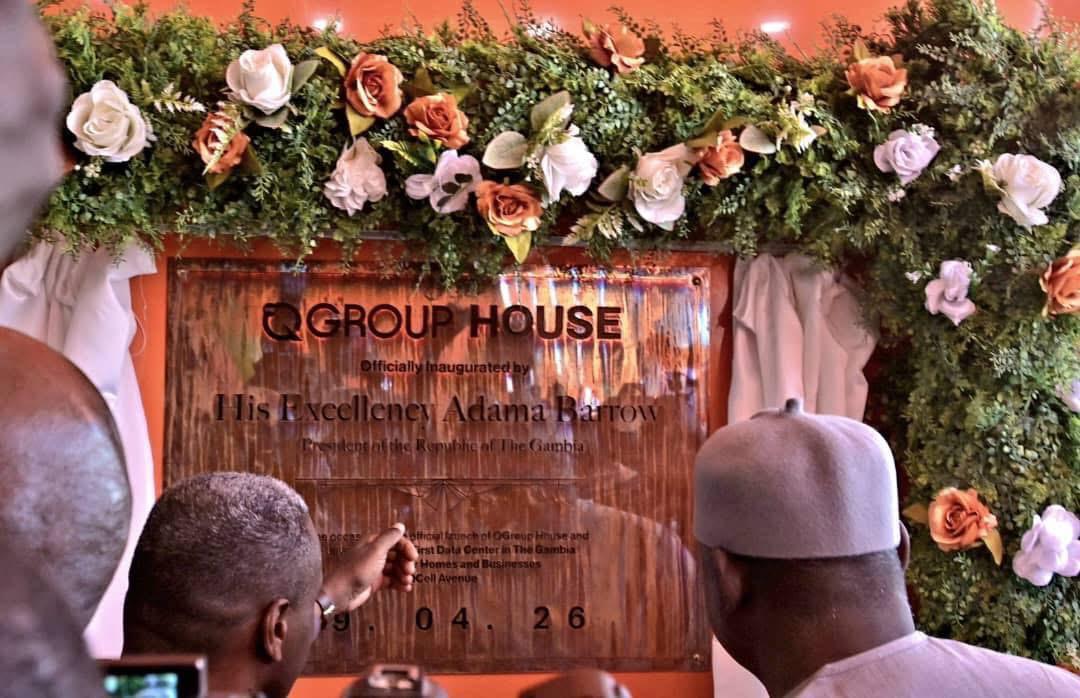
Dignitaries, cabinet members, business leaders, and community representatives gathered at the site to witness this significant moment in the nation’s journey toward digital sovereignty.
President Barrow, addressing the gathering with characteristic optimism, described the inauguration as far more than the opening of a corporate headquarters. “For many years, development was associated with foreign capital and imported solutions,” he declared. “Today, we affirm that Gambians can drive their own progress. Q Group embodies this ethos, having established itself as an institution funded, financed, and built by Gambians themselves.”
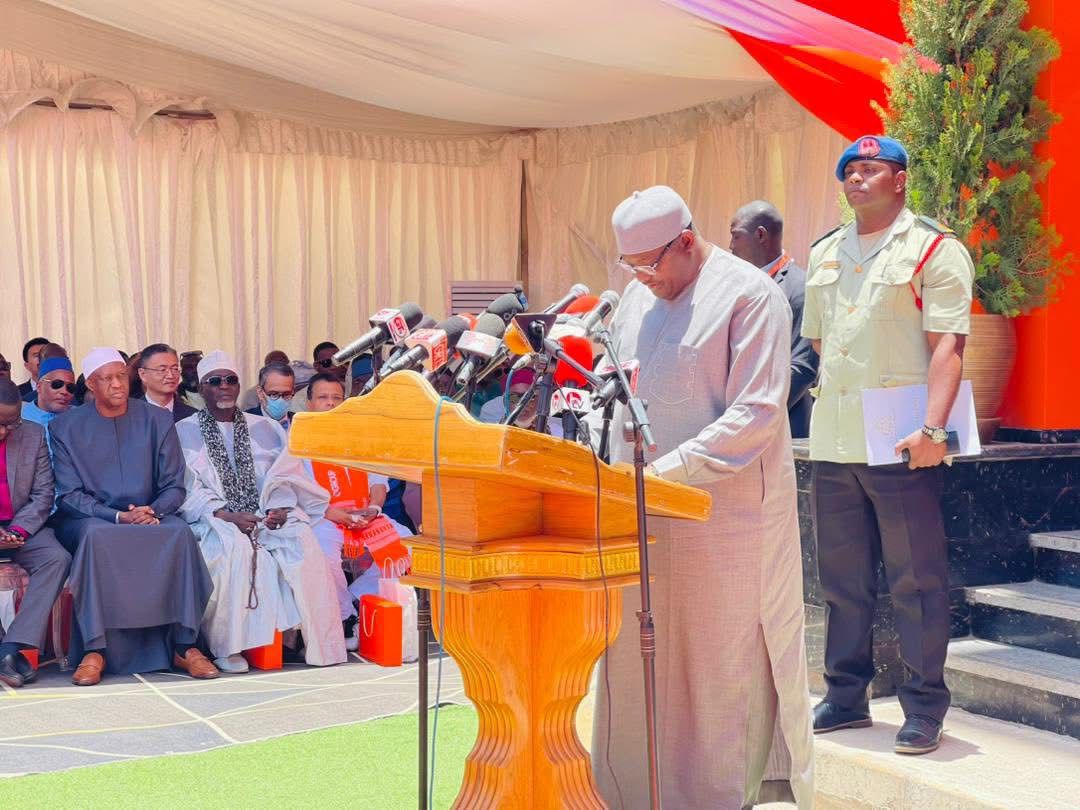
The President emphasized that his administration’s role is to provide stability and sound policies that create an enabling environment for private enterprise to flourish. “The Q Group House reflects this vision; it is more than a corporate headquarters. This facility stands as a beacon of what Gambians can achieve when they collaborate and innovate,” he said.
Q Group’s journey, as recounted by its Chairman, Muhammed Jah, began humbly with the establishment of the Quantum Net Training Center years ago. At a time when The Gambia lagged significantly in digital connectivity, Jah’s vision was to localize the global technology revolution and bring world-class skills to Gambian youth. That modest initiative has since evolved into a diversified conglomerate spanning telecommunications (through Q-Cell), consumer electronics, financial inclusion, media, and, most recently, advanced digital infrastructure.
Today, Q Group ranks among the largest private sector employers in The Gambia, providing thousands of direct and indirect jobs and contributing substantially to government revenue through consistent tax payments to the Gambia Revenue Authority. President Barrow praised this record, noting, “When businesses meet their responsibilities, the government can effectively deliver on its promises to the citizens.”
A major highlight of the event was the unveiling of Gambia’s first locally owned data center and the rollout of Q-Cell Fiber services. These developments are expected to dramatically improve nationwide high-speed internet access, enhance data sovereignty, reduce reliance on overseas servers, and provide a robust backbone for e-government services, education, healthcare, and business innovation.
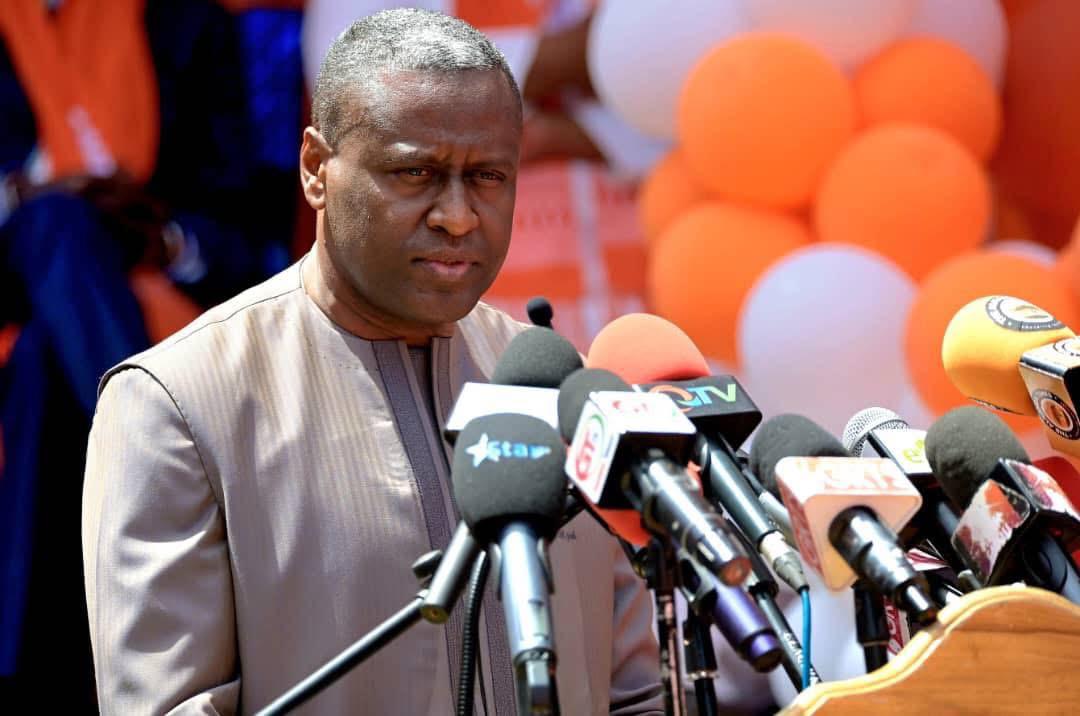
Muhammed Jah, visibly moved during his address, reflected on the long road traveled. “The greatest constraint to our country’s development is not a lack of resources but rather the ceilings we place on our own expectations,” he told the audience. He urged Gambians to embrace ambition, self-belief, and local ownership, stressing that true independence comes from investing in and supporting homegrown enterprises.
Jah expressed profound gratitude to Q Group’s customers, whose loyalty and patronage made this milestone possible. He also paid tribute to his team’s resilience, noting that Q-Cell became the first Gambian-owned telecommunications operator in a highly competitive market. This achievement continues to inspire young entrepreneurs across the country.








The event also featured remarks from Huawei Africa’s Vice President, who commended the strong public-private partnership between Huawei and Q-Cell, a collaboration spanning 17 years. He highlighted key milestones achieved under President Barrow’s leadership, including the launch of the nation’s first streaming network and the rollout of 4G and 5G services. “Gambia is accelerating its digital transformation in ways that enhance government efficiency and improve quality of life,” he said, reaffirming Huawei’s commitment to supporting key sectors such as education and public service delivery.
In a touching community gesture, Aji Yandey Njie, speaking on behalf of residents along the newly renamed Q-Cell Avenue, expressed delight at the area’s transformation. What was once an ordinary road has become a modern thoroughfare symbolizing progress, thanks to the investments by Muhammed Jah and Q Group.
The new Q-Group House itself is an architectural and technological marvel. Equipped with state-of-the-art facilities, it will serve as the nerve center for the group’s expanding operations while housing the pioneering data center. Experts say this infrastructure will be pivotal in bridging the digital divide, connecting rural and urban communities, and positioning The Gambia as a competitive player in the regional digital economy.
In an era where data is often described as the new oil, retaining control over national data infrastructure strengthens cybersecurity, supports local content creation, and creates opportunities for data-driven innovation in agriculture, finance, and governance.
As the sun set on this historic day, the mood was one of collective optimism. The inauguration of Q Group House is not merely the opening of a building—it represents a declaration of confidence in the Gambian spirit.
From the early days of Quantum Net to today’s sophisticated digital ecosystem, Q Group’s story illustrates what is possible when vision meets opportunity in a stable environment.
Looking ahead, the Q-Cell Fiber network promises to connect communities across the nation, bridging long-standing gaps in communication and access to technology.
For students in remote villages, entrepreneurs in urban centers, and government ministries seeking efficiency, these developments herald a more connected, empowered, and prosperous Gambia.
In his closing remarks, Chairman Jah called on all Gambians to support local ventures and work together toward a shared national future. “The foundation is set,” he declared. “Now we must build upon it with courage and unity.”
As the Q Group Consortium House officially opens its doors, The Gambia stands at the threshold of a new chapter—one defined by digital innovation, self-reliance, and the unyielding belief that its people have everything they need to shape their own destiny.