Senegalese President Bassirou Diomaye Faye delivered his most revealing testimony yet on the practical realities of governance in Senegal.
Speaking directly to the press, Faye robustly defended the continued existence of opaque “political funds” — discretionary state resources long denounced by his own PASTEF movement during its years in opposition.
His remarks, punctuated by the Wolof phrase “dama fekké lepp” (“I have seen it all”), signaled a pragmatic evolution in the president’s approach to power.
Faye acknowledged the controversial and secretive nature of these funds but insisted they remain essential instruments of effective statecraft. “If we said everything, the Senegalese would have a different impression,” he stated, cautioning that excessive transparency on sensitive matters could distort public perception. He outlined their critical roles in intelligence operations, discreet diplomatic initiatives, rapid emergency responses, and targeted social assistance to citizens facing hardship — areas where speed and confidentiality are paramount and full disclosure impractical.
“There are actions that a State must take,” the President emphasized.
This stance marks a sharp departure from PASTEF’s earlier rhetoric. Under Prime Minister Ousmane Sonko’s leadership in opposition, the party had vehemently criticized such funds as tools of corruption and misappropriation, often labeling them “haram” and calling for their outright elimination
Faye pushed back against what he termed a “simplistic” interpretation, advocating instead for “flexible supervision” that balances accountability with operational efficiency. “Control should not be a constraint,” he declared, framing the issue as a fundamental tension between democratic ideals and the imperatives of governance.
Beyond the debate over funds, Faye highlighted his administration’s economic and institutional achievements. He reported slashing Senegal’s budget deficit from 12% to 6% within a year, despite modest 1.6% growth, while preserving vital social programs. Key reforms include the dissolution of costly institutions such as the High Council of Territorial Communities and the Economic, Social, and Environmental Council, with the savings redirected toward education, supporting teachers, and phasing out makeshift classrooms. The President pointed to stable salaries and the absence of payment arrears as evidence of stronger fiscal discipline.
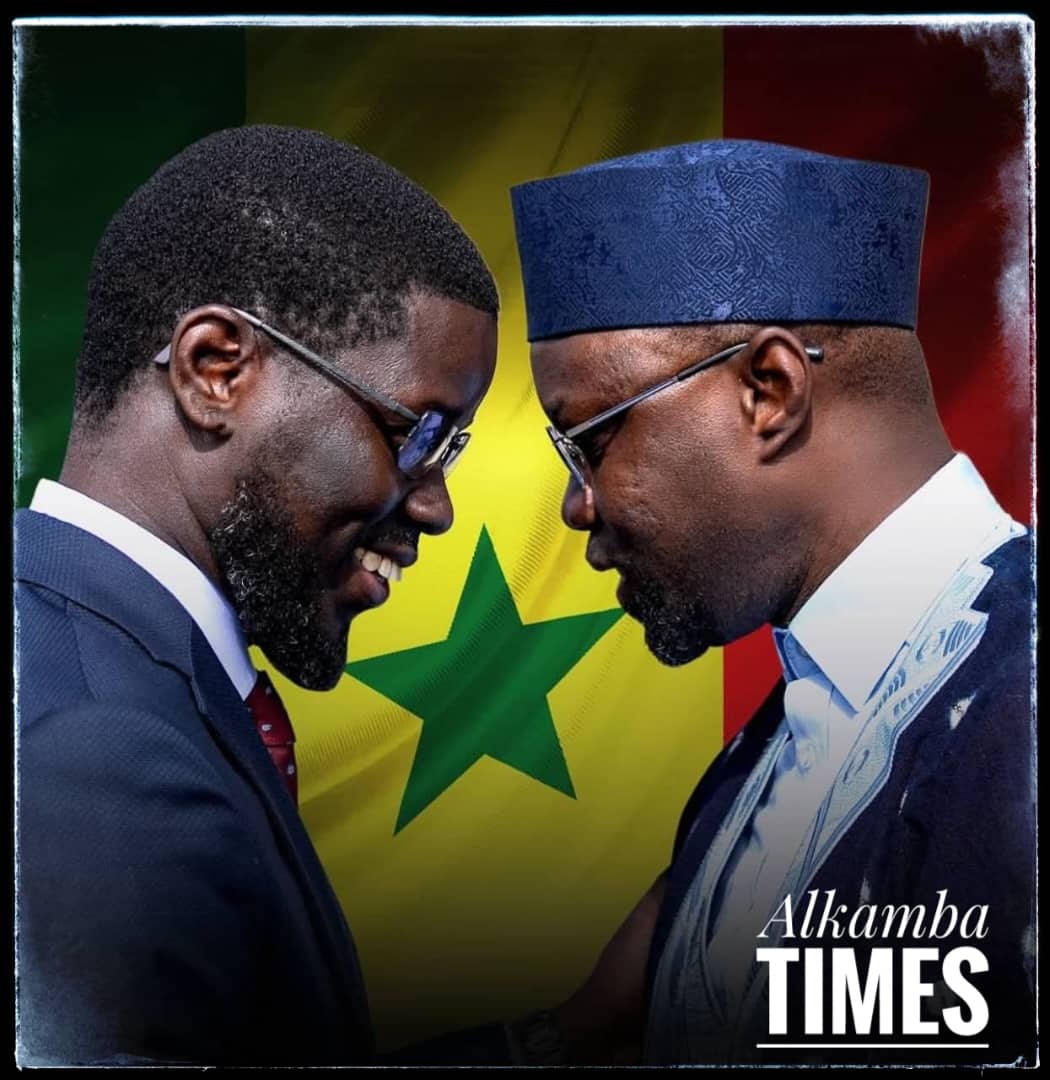
Politically, Faye reiterated that his 2024 electoral triumph resulted more from the broad “Diomaye Président” coalition than from PASTEF alone, which had been dissolved at the time of the vote. Delivered partly at the coalition’s recent Annual General Meeting, these comments have intensified discussions about cohesion within the ruling alliance, especially amid reported strains with Sonko.
Critics argue the government has abandoned its reformist promises upon assuming power, while supporters praise a necessary shift toward realism. Faye urged citizens to focus on tangible outcomes: improved purchasing power and lower living costs compared to the previous administration.
As Senegal confronts ongoing economic challenges and prepares for future electoral battles, including 2027 contests, the President’s interview reveals a maturing leadership style — one that seeks to reconcile revolutionary roots with the compromises of executive authority. The controversy surrounding political funds is expected to test the administration’s credibility on transparency for the foreseeable future.