By Sainabou Sambou
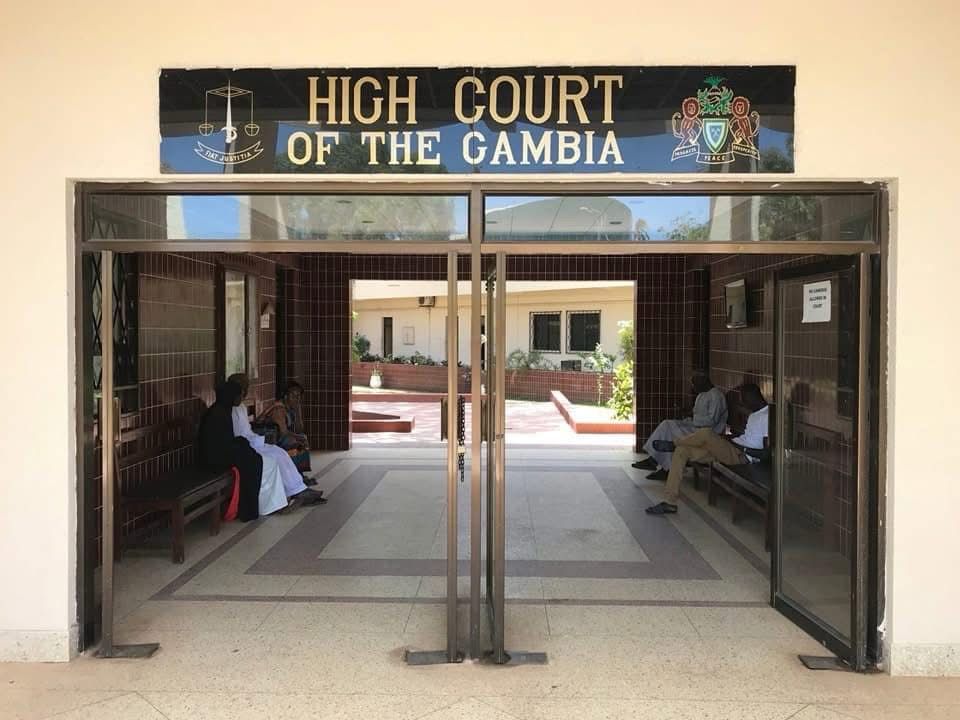
In a gripping final address that painted a chilling picture of domestic terror, the prosecution has called on the High Court in Banjul to convict Yugo Sowe of five serious charges stemming from a savage machete attack on his wife of 22 years.
State counsel A. Gibba, representing the prosecution before Justice Ebrima Jaiteh, declared that the evidence presented was “complete, coherent, and points irresistibly to the guilt of the accused.” Sowe faces charges of attempted murder, grievous harm, previous harm, wounding, and domestic violence, all linked to the alleged November 16, 2023, assault on Amie Sowe.
Gibba opened his closing arguments by describing the couple’s long marriage, which produced seven children, as one overshadowed by years of domination, violence, humiliation, and abuse. The victim, he said, endured a relentless pattern of mistreatment that finally erupted into a near-fatal nighttime attack.
According to the prosecution, Amie Sowe testified that after she informed her husband she had divorced him following unwanted sexual advances, he warned her that as long as she lived under his roof, she would submit to his demands. When asked in court how many times she had been abused, the victim replied that listing the incidents would take until the next day — a statement Gibba said underscored the depth and persistence of the violence.
The court heard how Sowe allegedly expelled his wife and children to a degrading, isolated shelter in the bush and threatened to discard their belongings. On another occasion, he reportedly stripped Amie naked in front of their children before assaulting her — acts that were reportedly known in the community.
The climax came on the night of November 16, 2023. Under the cover of darkness, prosecutors say, Sowe armed himself with a machete and forced his way into his wife’s room through a faulty door. He allegedly rained repeated blows on her, aiming fatal strikes at her head. The victim testified that the room was illuminated enough for her to clearly identify her attacker, who was wearing a distinctive ‘Haftan’ later tendered in evidence.
In terror, she cried out, “Gorgi, why are you trying to kill me?” calling Sowe by his familiar name. Amie survived only because she had switched her sleeping position the previous night, turning her head so her legs would normally be where her head was. The machete blows meant for her skull instead landed on her legs and limbs.
Police officer Omar Drammeh (PW2) told the court that when he arrived at the scene, a member of the crowd identified Sowe as the victim’s husband and the likely perpetrator. When officers brought Sowe into the room, Amie immediately pointed to him, saying her husband had chopped her with a machete. Blood was visible throughout the room and on the mattress.
A police search later recovered a bloodstained bedsheet and mattress. At Sowe’s second residence, investigators allegedly found a bloodstained machete hidden under his bed, along with clothing matching the ‘haftan’ described by the victim. Sowe’s second wife reportedly identified both items as belonging to him. These were admitted as key exhibits.
The couple’s son, Abdoulie Sowe (PW4), gave an eyewitness account, testifying that he saw his father attacking his mother with the machete while dressed in the halftan. He said Sowe barricaded the children to prevent them from helping their mother before fleeing by jumping off a railing.
Medical evidence from Dr. Pa Samba Secka (PW5) confirmed that Amie sustained severe machete wounds. She is now permanently disabled and wheelchair-bound as a direct result of the attack.
Addressing the charge of attempted murder, counsel Gibba argued that all elements were proven: an overt act, intentional conduct, and clear homicidal intent. “A machete is a deadly weapon,” he said, “and repeated blows aimed at the head leave no doubt about the intention to kill.”
On grievous harm and previous harm, he pointed to the medical evidence showing permanent disability. The victim’s testimony, he submitted, was strongly corroborated by her son’s account and physical exhibits.
For the domestic violence charge, Gibba highlighted the prolonged pattern of abuse, including beatings, sexual humiliation, and the degrading stripping incident.
On identification, the prosecutor stressed it was a case of recognition between people who had lived together for 23 years. The room was lit, the victim called out his name, and both her son and the police officer supported her account.
Concluding powerfully, Gibba told the court the evidence led to only one conclusion: a calculated and vicious attack on a defenseless woman in her own home. The prosecution, he reminded the judge, needed only to prove guilt beyond a reasonable doubt — a burden he said had been fully discharged.
The case has been adjourned to June 22 for judgment.