By Fatou Dahaba
Gambian lawmakers on Tuesday intensified scrutiny of the country’s 2025 government financial statements, sharply criticizing delays in transferring public revenues from commercial banks to state accounts, persistent reconciliation gaps, and weaknesses in financial reporting.
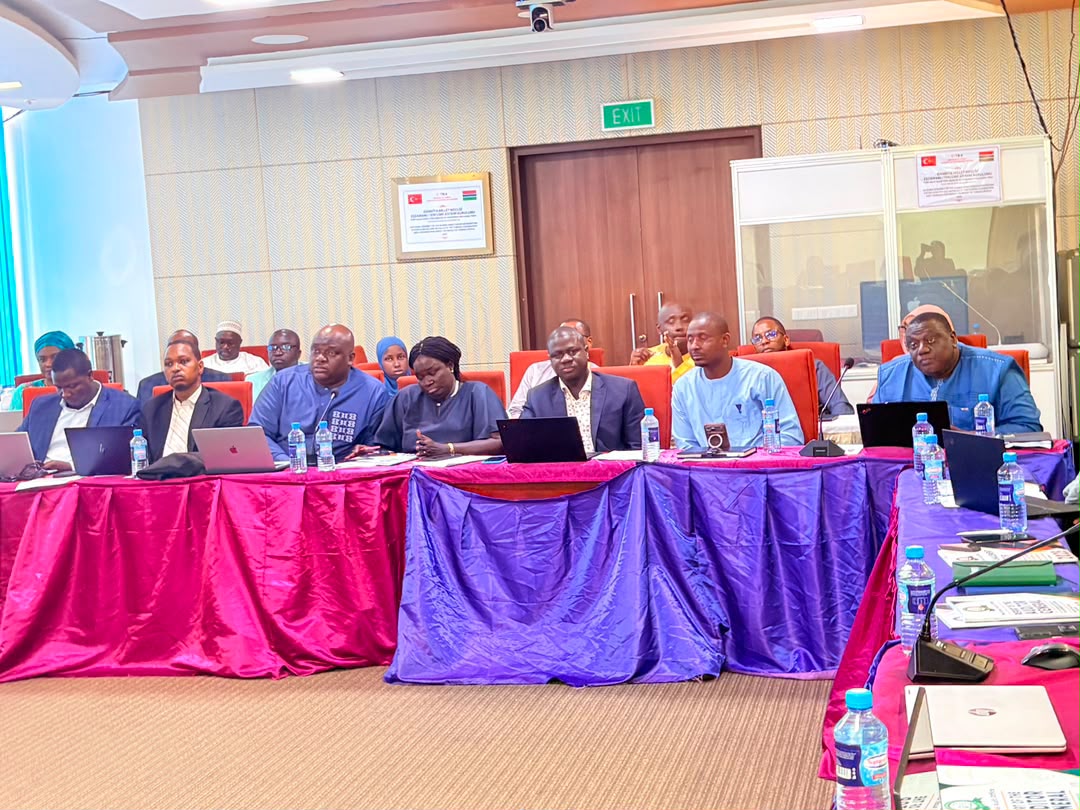
The session of the Finance and Public Accounts Committee of the National Assembly came a day after the Accountant General presented the 2025 accounts, triggering pointed questions about how state funds are managed and whether financial statements accurately reflect the government’s fiscal position.
Nominated Member of Parliament Kebba Lang Fofana led the charge, demanding to know why substantial government revenues were left sitting idle in commercial banks, sometimes for more than a year, in violation of agreed timelines. “Public funds should not be parked in commercial banks while government struggles to finance essential public services,” Fofana argued.
Finance officials conceded the shortcomings, accepting responsibility for inadequate monitoring. They acknowledged that while Memoranda of Understanding clearly stipulate transfer deadlines, continuous oversight had faltered. The officials pledged to implement more robust and regular monitoring mechanisms going forward.
Fofana also highlighted failures in remitting concession-related revenues. One notable case involved D50 million that reportedly remained in a commercial bank account for years until auditors flagged the issue, prompting its eventual transfer to government coffers.
The committee further probed significant discrepancies in the financial statements. Lawmakers questioned a difference of D3,413,577,286.39 between certain account balances. Although officials said the variances had been analyzed and revised, auditors maintained that unresolved balances persisted, including D105,493,432 and a negative D87,288,631. The Accountant General reported the net difference had narrowed to D18,204,801, but auditors insisted the figures should be examined individually rather than netted off.
Another major concern centered on differences between cash book balances and those disclosed in the statements, initially reported at D14.4 billion. Auditors noted unresolved amounts of D36,258,060 and a negative D156,504,900 remained. Officials requested additional time to finalize reviews, particularly for embassy and autonomous institution accounts.
Embassy-related discrepancies drew particular attention, with officials attributing some variances to year-end foreign currency translations. However, both lawmakers and auditors argued that exchange rate fluctuations alone could not explain the large gaps. Auditors also cited instances where embassy transactions bypassed the approved financial management system, creating mismatches between cash books and the general ledger.
The committee examined long-standing unreconciled items dating back to 2019, with outstanding balances of D1,044,354,082 and a negative D321,351,061 yet to be cleared. Officials indicated that analysis was advanced but sought until the end of the year to complete the process.
Additional issues included discrepancies in bank reconciliations, technical problems with treasury management software, and unreconciled items in BTL accounts totaling tens of millions of dalasis. Lawmakers also stressed the need for proper appropriation of self-generated revenues retained by government entities, estimated at D65,846,779, to ensure full parliamentary oversight.
The review underscored ongoing challenges in public financial management. While officials highlighted recent improvements and committed to corrective measures, parliamentarians insisted that stronger oversight, timely resolution of discrepancies, and greater transparency are essential to restore confidence in government accounting practices.