By: Abdoulie John
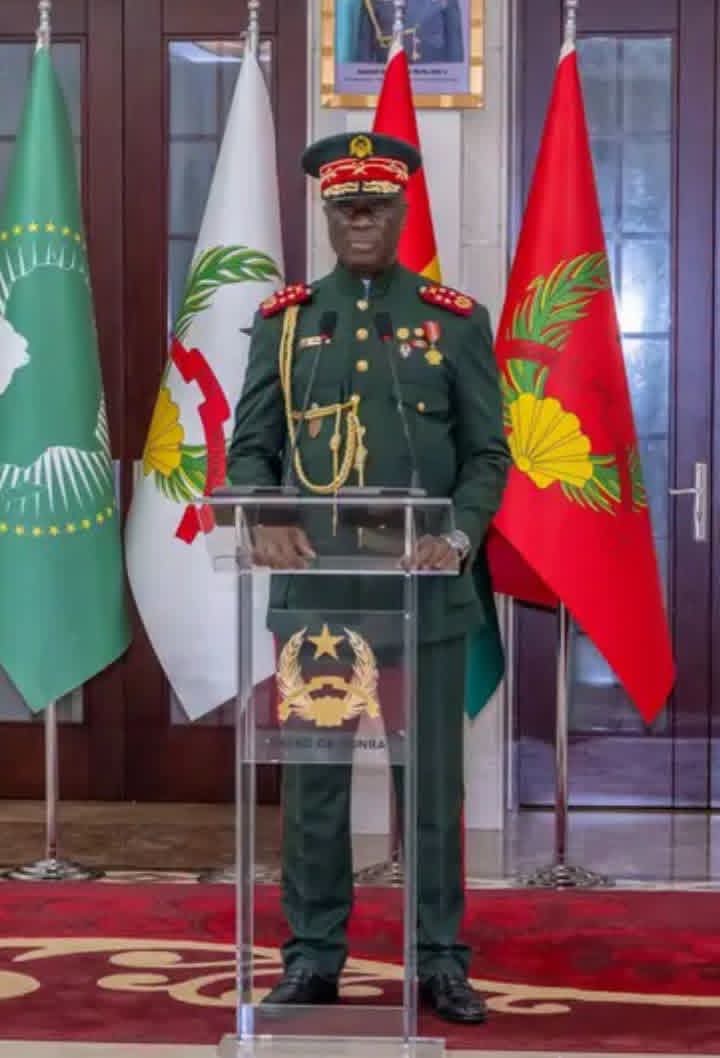
Transitional President Horta Inta-a is due to meet the National Electoral Commission at the Presidential Palace on Thursday, less than two months before Guinea-Bissau’s scheduled legislative and presidential elections, for talks expected to center on logistics and the poll’s technical readiness.
The Presidency’s Communications Office told the press that the meeting would begin at 11:15 a.m. Officials did not publish a detailed agenda, but accounts reaching The Alkamba Times indicated that the session would review the arrangements the commission has put in place to conduct the vote. Before receiving the CNE, Inta-a is also scheduled to meet government officials led by Ilídio Vieira Té; observers likewise expect the discussion to turn to electoral preparations.
The military authorities, who took power in late November 2025, set the December 6, 2026, date after interrupting the count following a presidential election and installing Inta-a as transitional head of state. The junta has presented the coming ballot as the end of a one-year transition. An August constitutional referendum, which the authorities say passed with about 70 percent of the vote, rewrote the rules under which the next president and parliament would govern, expanding presidential authority and shrinking the legislature.
Opposition figures argue that the political conditions for a credible contest are still absent. Domingos Simões Pereira, president of the African Party for the Independence of Guinea and Cape Verde (PAIGC), has said the country is not ready to hold general elections on December 6. Critics point to restrictions that continue to limit ordinary political activity, including the closure of party headquarters, at a moment when several organizations still have internal business to settle and have yet to hold congresses planned for this year.
Those constraints, they say, leave parties unable to organize freely, select candidates, or campaign on equal terms. The transitional authorities have maintained that the electoral calendar remains intact and that the necessary conditions for the vote are being assembled. Thursday’s meetings at the palace are the latest public signal that the presidency is pressing the electoral machinery and the government on preparations, even as the gap between the official timetable and the opposition’s assessment of the political climate widens.
With candidate registration, campaigning, and the deployment of materials still ahead, the CNE’s account of its logistics will be closely watched by parties, civil society, and regional observers who have repeatedly pressed Bissau to deliver a vote that is both timely and open.