Story by: Ebrima Mbaye and Photography by: Mamadou Gagigo
In a decision that has sparked outrage and heightened tensions, the Kanifing Magistrates’ Court in The Gambia, presided over by Magistrate Thomas Touray, ordered the remand of 23 protesters at Mile Two Central Prison on Monday, August 25, 2025, following their arrest during demonstrations against alleged price hikes by the Public Utilities Regulatory Authority (PURA). The court rejected bail applications, setting the next hearing for September 4, 2025, as supporters clashed with police outside the courtroom.
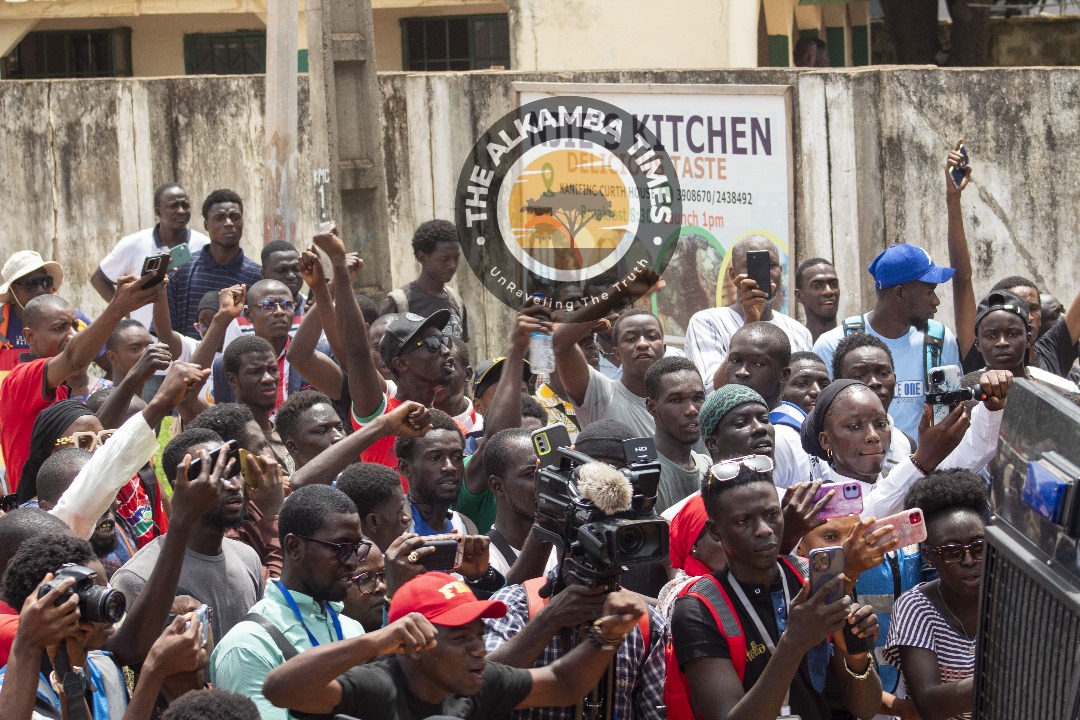
The protesters, arrested during an unauthorized procession on Kairaba Avenue on August 23, face charges under Section 5(5) of the Public Order Act for allegedly conducting themselves in a manner likely to cause a breach of the peace. Prosecutors claim the group failed to obtain permission from the Inspector General of Police for the demonstration. The accused include Lamin Daffeh, Lamin Sey, Badou Secka, Yusuf Taylo, Tumani Colley, Ali Cham, Abdouli T. Bah, Alieu Sarr, Bakary Jammeh, Musa Conteh, Rofine Camara, Ansumana Touray, Bakary J. Sanyang, Lamin FM Marigo, Fallou Gallas Ceesay, Yahya Jaiteh, Sisaho Danso, Sulayman Manga, Ebrima Jatta, Ebrima B. Keita, Musa Sanyang, Musa Sisoho, and Ebrima Jallow.
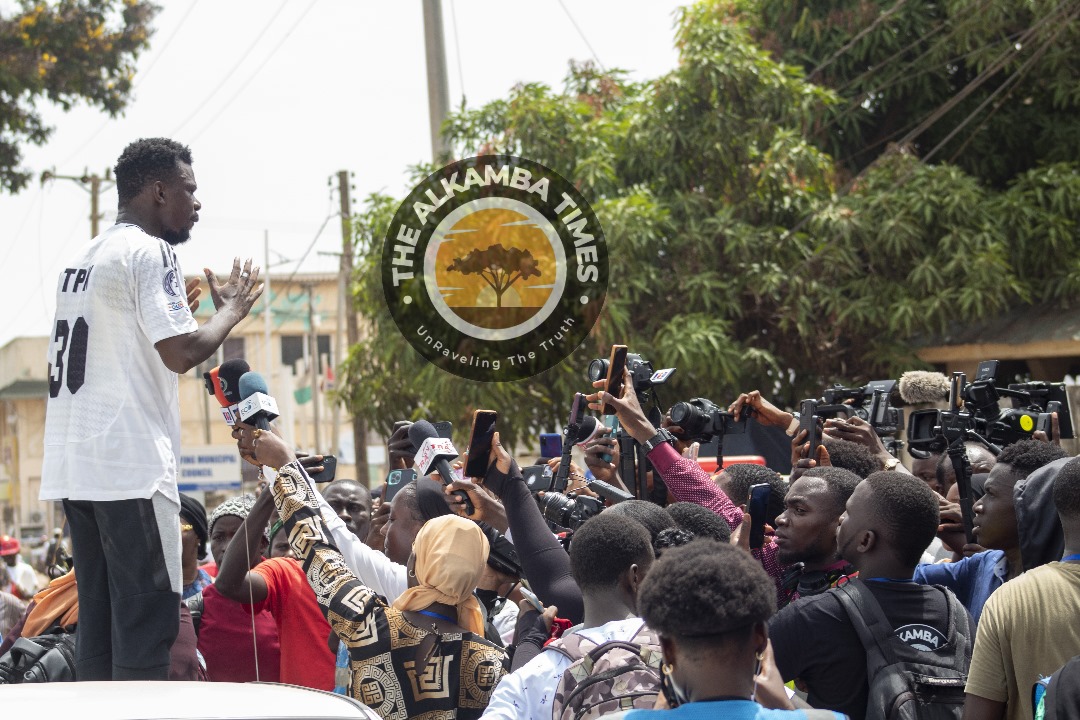
The courtroom, heavily secured and packed with observers, saw a robust legal defense led by Lamin J. Darboe, K. Jallow, Counsel Jobarteh, C. Mendy, E. Saho, F. Bondi, A. Martin, and L. Jaiteh. The state was represented by Commissioner A.S. Manga, Assistant Commissioner F. Touray, ASP A. Touray, and ASP Y. Colley.
Before pleas were entered, prosecutors successfully requested amendments to the charge sheet to correct what they described as grammatical errors, including the date of the alleged offense, which the defense did not oppose.
Defense counsel L. Jaiteh argued for bail, emphasizing that the charges constituted a misdemeanor and that the accused posed no flight risk. While the prosecution did not object to bail in principle, they requested an adjournment to prepare witnesses. Magistrate Touray, after considering both arguments, denied bail and ordered the accused remanded at Mile Two Prison, citing the need for further preparation by the prosecution. The ruling stunned the defendants’ supporters, who had gathered in large numbers outside the court.
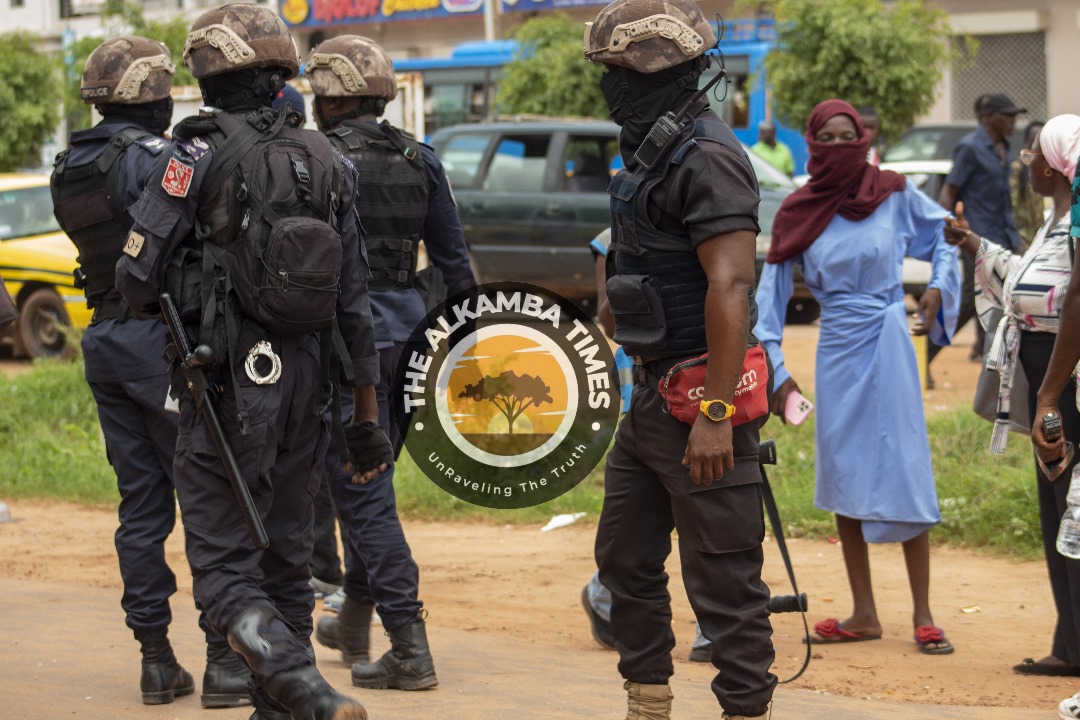
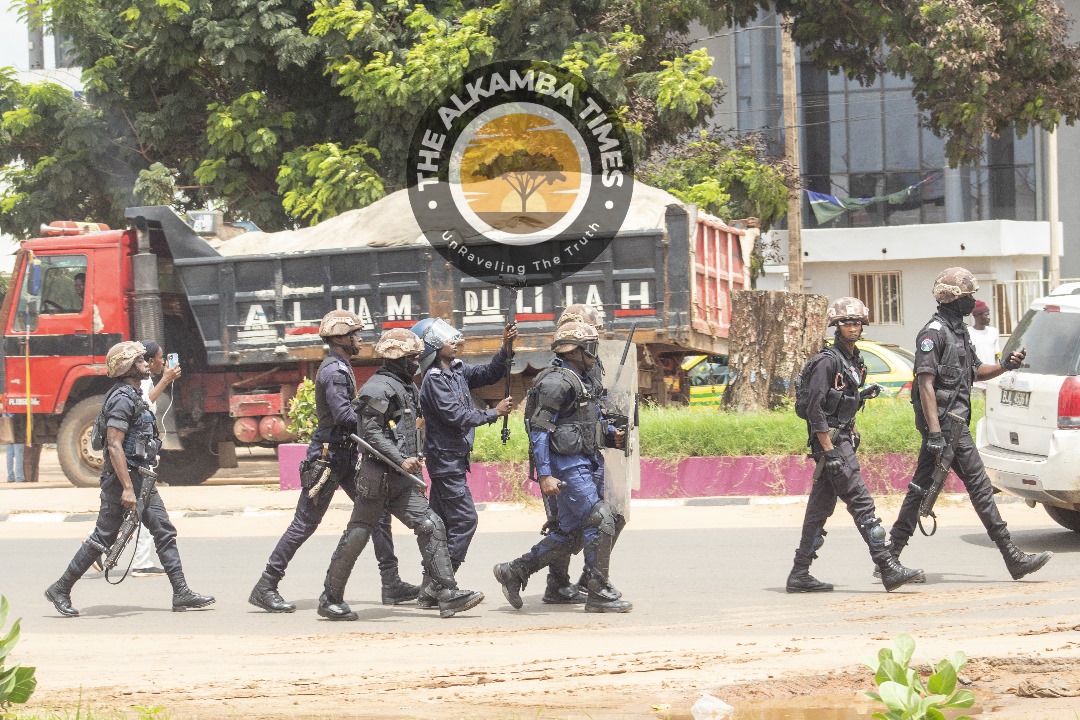
As news of the decision spread, tensions erupted. Supporters chanted slogans such as “No Justice, No Peace” and “Free Our Youth,” expressing frustration with the court’s ruling. The situation escalated when the Police Intervention Unit riot officers deployed teargas to disperse the crowd, affecting not only protesters but also passersby, including women and children. Eyewitnesses reported chaotic scenes as people fled the stinging gas, with some requiring medical attention.
The arrests and subsequent remand have drawn sharp criticism from civil society groups, who view the government’s actions as a crackdown on dissent.
In a joint statement, Gambians Against Looted Assets (GALA), Team Gom Sa Bopa, and the Edward Francis Small Center for Rights & Justice condemned the arrests as “unlawful” and a violation of constitutional rights to assembly and expression. The groups reported that, in addition to the 23 remanded at Mile Two, authorities detained 21 more youths in a separate wave of arrests, including six at Westfield and 15 along the Banjul highway. Among those detained were Omar Saibo Camara and Omar “Revolutionist” Sanyang, held at Kotu and Kairaba police stations, respectively.
The civil society coalition described the arrests as a “disturbing return to authoritarianism” and demanded the immediate release of all detainees, calling for an end to what they termed “arbitrary” detentions. They warned that such actions threaten The Gambia’s democratic progress and could further inflame public discontent.
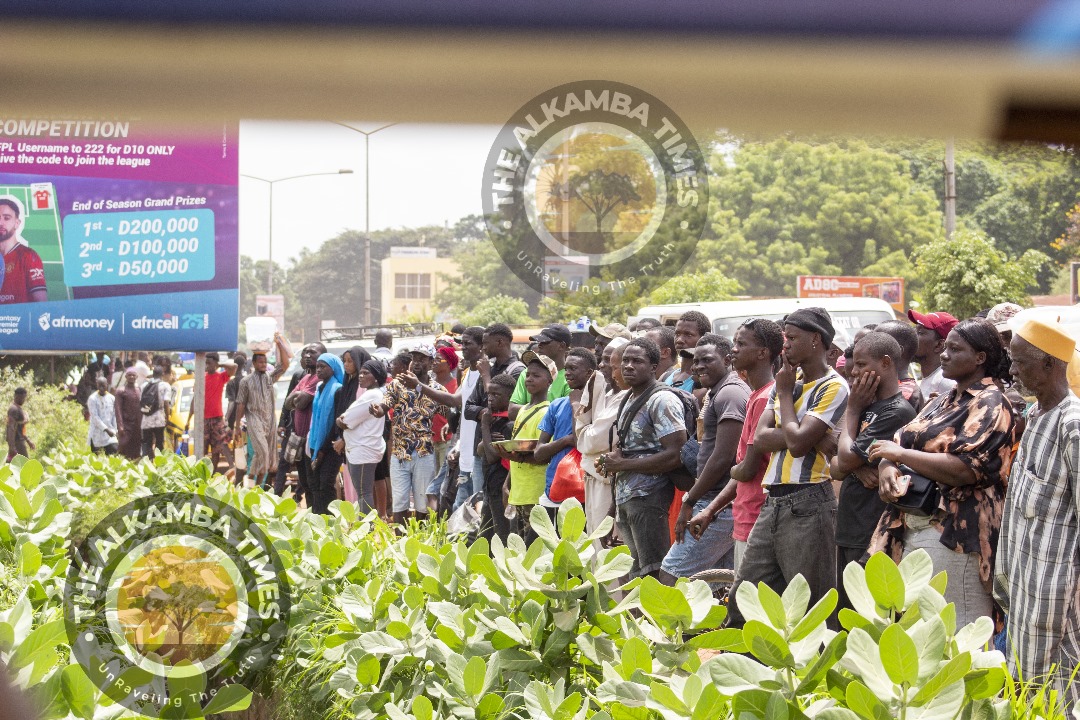
The protests stem from widespread frustration over PURA’s alleged price hikes, which demonstrators claim exacerbate economic hardships. The unauthorized march on August 23 was one of several recent demonstrations, with 14 additional protesters detained while attempting to march toward the National Assembly in Banjul.
As The Gambia grapples with these tensions, the court’s decision to remand the 23 protesters has cast a spotlight on the delicate balance between public order and the right to protest, with many watching closely to see how the situation unfolds at the next hearing on September 4.