The Economic Community of West African States (ECOWAS) has suspended Guinea-Bissau from all its decision-making bodies and warned of additional sanctions following a military coup that overturned the country’s fragile democratic process just hours before provisional election results were due.
In an extraordinary virtual summit on 27 November, chaired by Sierra Leone’s President Julius Maada Bio, the ECOWAS Mediation and Security Council condemned “in the strongest terms” the 26 November putsch and demanded the “unconditional restoration of constitutional order without delay.” The bloc rejected any arrangement that would perpetuate what it called the “illegal abortion of the democratic process.”
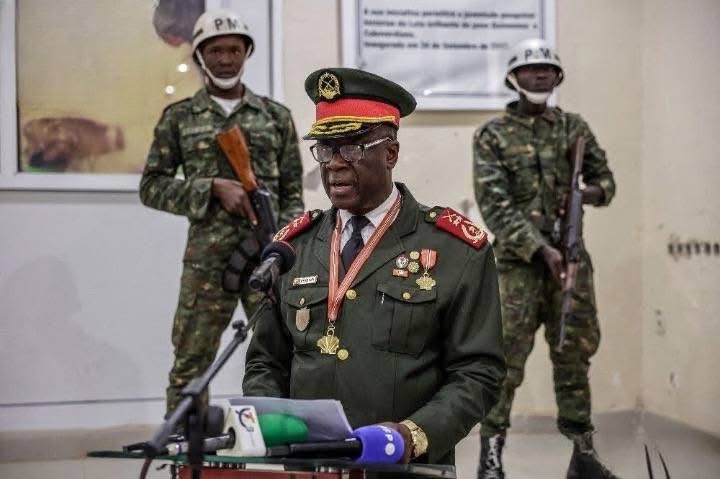
The coup, led by elements of the armed forces, saw President Umaro Sissoco Embalo detained along with senior electoral officials. Military officers imposed a curfew, closed borders (later reopened), and suspended the electoral process. On 27 November, General Horta-A, head of the Presidential Guard and a reported Embalo ally, was sworn in as transitional president for one year.
ECOWAS demanded the immediate release of President Embalo and all detained officials, insisted that the National Electoral Commission (CNE) be allowed to announce the 23 November presidential and parliamentary election results without interference, and held coup leaders “individually and collectively responsible” for the safety of detainees and citizens.
The bloc mandated a high-level mediation mission led by President Bio and including the presidents of Togo, Cabo Verde, and Senegal, accompanied by ECOWAS Commission President Dr Omar Alieu Touray, to engage the coup leaders and secure the restoration of constitutional order.
ECOWAS also ordered its Stabilization Support Mission in Guinea-Bissau (ESSMGB) to continue protecting state institutions and urged the armed forces to return to barracks. The communiqué explicitly reserved “the right to use all options, including sanctions” against those disrupting the democratic process.
The 23 November elections, described by ECOWAS, African Union, and international observers as generally peaceful despite initial logistical issues, had seen high voter turnout. Both President Embalo and independent candidate Fernando Dias claimed victory ahead of official results.
The coup is the latest in a series of more than half a dozen successful and attempted military takeovers since Guinea-Bissau’s independence from Portugal in 1973. The African Union, United Nations, Nigeria, Ghana, and the West African Elders’ Forum have all condemned the action and called for a return to civilian rule.
With Mali, Burkina Faso, and Niger having already withdrawn from ECOWAS following their own coups, and Guinea under military-led transition, the latest crisis in Bissau represents the most serious challenge yet to the bloc’s anti-coup framework.