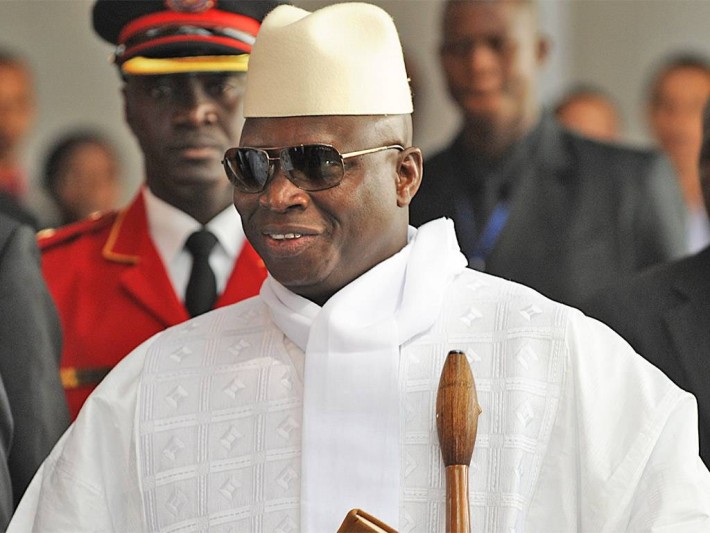
As the clock ticks toward former President Yahya Jammeh’s announced homecoming this month, Gambian authorities have ramped up security at Banjul International Airport, bracing for potential unrest and a possible arrest upon his arrival. On November 1, 2025, just days after Jammeh’s October 26 audio declaration from exile in Equatorial Guinea, government forces deployed additional Military units, anti-riot squads, and intelligence operatives to the airport perimeter, signaling a proactive stance against what officials describe as a “high-risk” political flashpoint.
The move follows a stern government statement on October 29, reaffirming Jammeh’s constitutional right to return while underscoring that it “does not shield anyone from responsibility for alleged serious crimes.”
A senior military official speaking to TAT anonymously, “We are ensuring the safety of all citizens and visitors. No disruptions will be tolerated, and legal processes will proceed as warranted.”
Sources indicate that drone surveillance, vehicle checkpoints, and collaboration with ECOWAS security advisors are now in place, with the airport’s passenger screening protocols tightened to detect any coordinated influx of supporters.
Jammeh, who seized power in a 1994 coup and ruled until his 2016 election loss to President Adama Barrow, fled amid international pressure, leaving behind a legacy of alleged human rights abuses, including torture, enforced disappearances, and corruption probed by the Truth, Reconciliation and Reparations Commission (TRRC). The commission’s 2018 report recommended his prosecution for crimes against humanity, fueling fears that his return could ignite protests from loyalists or demands for immediate justice.
In his WhatsApp message to thousands gathered in Kanilai village, Jammeh vowed, “Nobody can prevent me from coming in. I have missed my country,” citing a purported 2017 Memorandum of Understanding (MOU) for a six-month exile—now stretched to nine years—as his legal basis.
He plans to resume farming and political activities, with APRC interim leader Momodou Yafaye Tamba set to announce flight details soon.
The escalation has polarized the nation. Supporters, chanting “The real president is back!” in Kanilai, view the security buildup as government intimidation, while victims’ advocates like human rights lawyer Reed Brody hail it as essential for accountability. “There is no legal basis for his safe return claims,” Brody asserted, dismissing the MOU as baseless.
National Assembly Member for Foñi warned that arresting Jammeh at the tarmac could “spark instability,” urging dialogue to avert clashes, given his enduring sway in regions like Foñi.
President Barrow, on vacation in his home village, returned to Banjul last week and has emphasized the importance of dignity in transition, deferring to legal mechanisms, including a pending ECOWAS-backed hybrid tribunal approved in December 2024.
Analysts like Nyang Njie call this a “litmus test” for Barrow’s administration, with businesses in Banjul reporting jittery markets and civil society groups mobilizing to ensure Jammeh faces justice if he sets foot in Banjul.
As November unfolds, The Gambia’s fragile democracy hangs in the balance. Will Jammeh’s jet touch down to cheers or cuffs? For now, the airport’s fortified gates stand as a stark reminder: the past is knocking, and the nation is locking its doors.