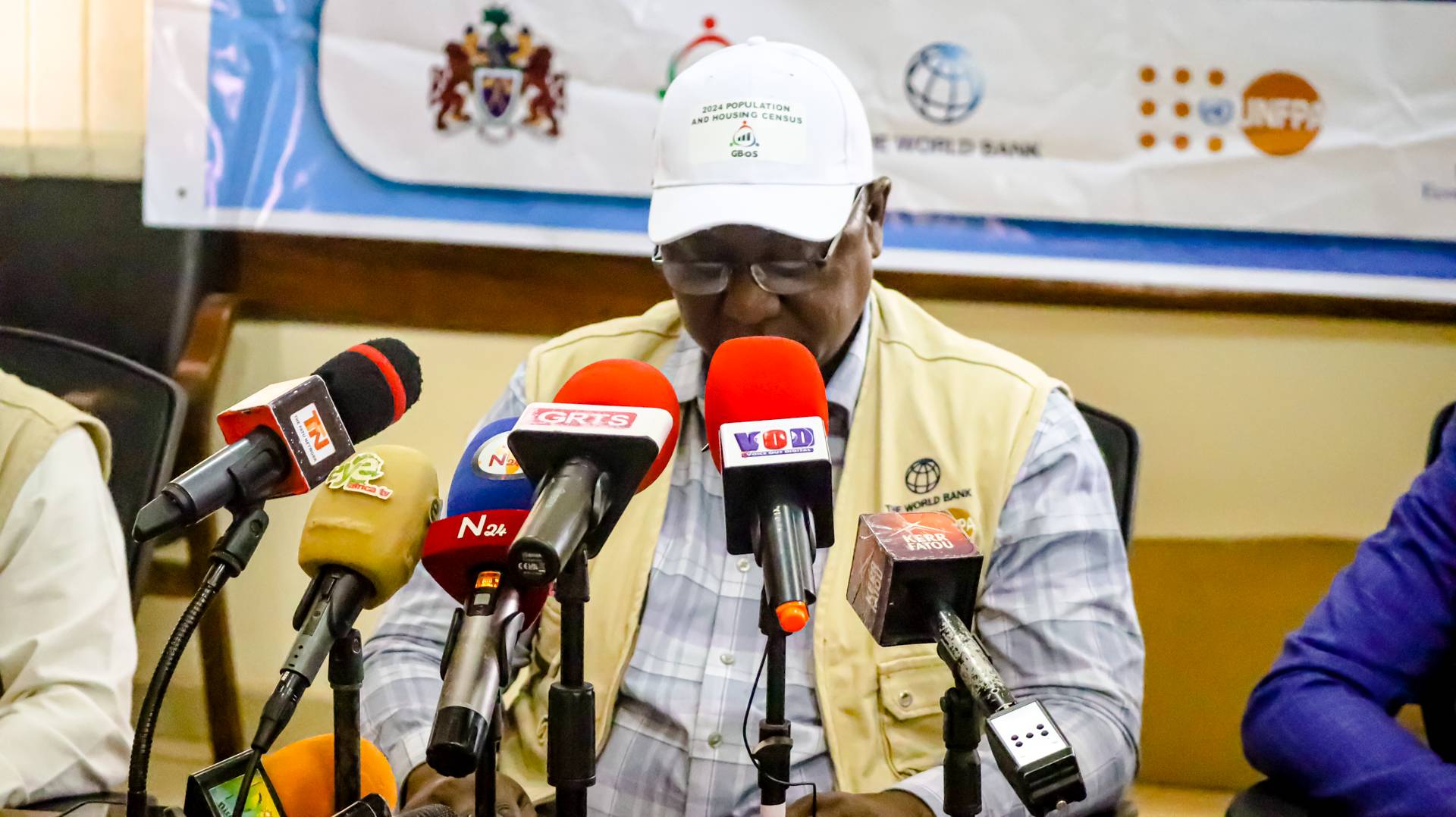
The Gambia Bureau of Statistics (GBoS), in collaboration with the Ministry of Trade, Industry, Regional Integration and Employment (MoTIE), has released the 2025 Gambia Labour Force Survey (GLFS), shedding light on the nation’s evolving labour market. Funded by the World Bank through the Harmonizing and Improving Statistics in West Africa and Central Africa (HISWACA) project and supported technically by the International Labour Organization (ILO), the survey highlights both progress and critical gaps in employment, particularly for women, youth, and persons with disabilities.
The 2025 GLFS reports a labour force participation rate of 47.1%, up from 43.6% in 2022-23, signaling growing economic activity. However, disparities persist, with men participating at a higher rate (53.8%) than women (40.9%). The employment-to-population ratio also improved, rising from 40.3% to 43.2%, reflecting modest job creation. Yet, the unemployment rate increased slightly from 7.6% to 8.3%, with women facing a higher rate (9.2%) than men (7.5%). This underscores the need for accelerated job growth to absorb new labour market entrants, particularly in the formal sector.
Informal employment remains the dominant form, with 81.0% of workers engaged in informal jobs, up from 79.4% in the 2022-23 period. Women are disproportionately affected, with 82.3% in informal roles compared to 76.7% for men. This high informality rate raises concerns about job quality, social protection, and productivity, necessitating policies to promote formalization and enhance worker protections.
Gender disparities are a recurring theme. Women face higher labour underutilisation (34.3% vs. 19.1% for men), as measured by the LU3 indicator, which combines unemployment and the potential labour force. Time-related underemployment is also a significant issue, with women (14.2%) more than twice as likely as men (6.8%) to work insufficient hours.
Additionally, women are concentrated in services (70.7%) and agriculture (24.3%), with only 5.0% in industry, highlighting the need for sector-specific strategies to boost women’s economic empowerment.
Youth disengagement remains a pressing challenge. The share of youth aged 15-35 not in education, employment, or training (NEET) decreased from 45.3% in 2022-23 to 41.3% in 2025; however, the figure remains high, particularly for young women (45.3%) compared to men (36.6%). With 84.5% of employed youth in informal jobs and a youth labour underutilisation rate of 33.3%, targeted interventions like vocational training, entrepreneurship programs, and job placement initiatives are critical to harnessing The Gambia’s demographic dividend.
Persons with disabilities face significant barriers, with a labour force participation rate of just 20.1%, compared to 47.4% for those without disabilities. This stark gap necessitates inclusive employment policies, workplace accessibility reforms, and targeted skills development programs to ensure equitable opportunities.
The survey’s findings point to positive trends, such as increased labour force participation and a declining LU3 rate (from 31.6% to 26.7%), indicating better utilisation of the potential workforce. However, over a quarter of the labour force remains underutilised, signaling room for improvement. The rise in informal employment and persistent youth NEET rates underscore the urgency of sustained policy action.
GBoS and its partners recommend several measures to address these challenges: expanding formal job opportunities through private-sector incentives and infrastructure projects, enhancing skills development to align with market demands, and promoting gender-inclusive policies to boost women’s participation. Simplifying business registration processes and strengthening social protection coverage can help reduce informality. Meanwhile, apprenticeships, technical training, and digital skills programs are crucial for engaging young people.
Workplace accessibility and targeted training are essential for promoting inclusion among individuals with disabilities.
The 2025 GLFS provides a roadmap for policymakers to build a more inclusive and dynamic labour market in The Gambia, addressing structural barriers and unlocking economic potential for all.