By: Fatou Dahaba and Alieu Ceesay
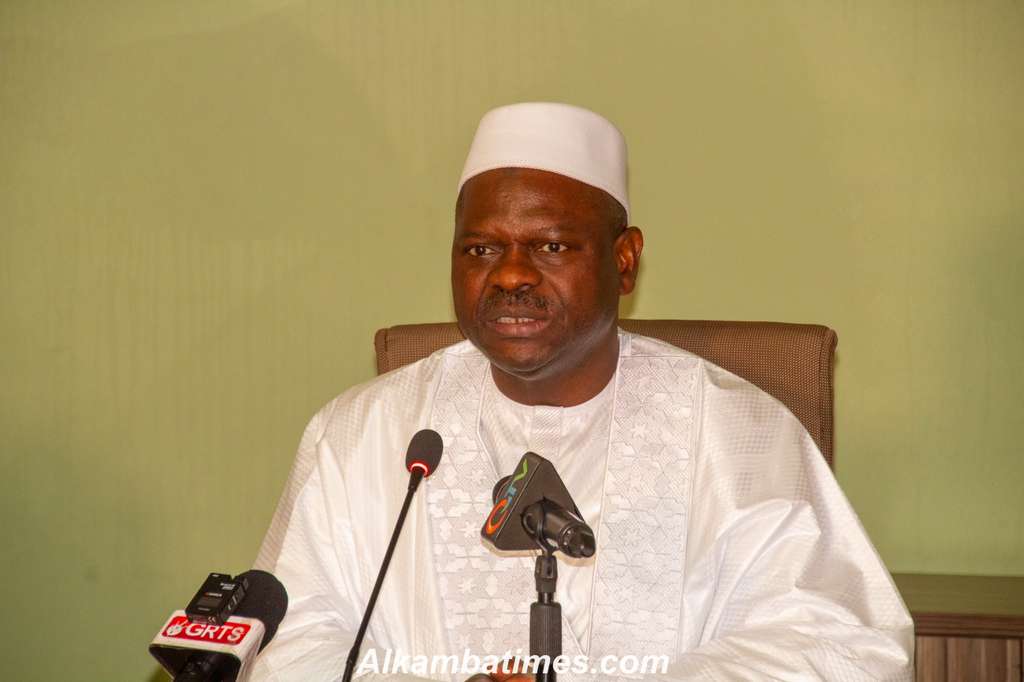
The Gambia’s public debt has climbed to D110.7 billion, Finance Minister Seedy Keita told reporters on Friday, pinning the surge primarily on the lingering effects of COVID-19 and the sharp depreciation of the dalasi against major currencies.
Speaking at a post-budget press briefing in Banjul, Minister Keita described the rise as largely a “legacy issue” stemming from the global pandemic. “When COVID came, all countries faced similar debt-service challenges,” he said. “Western nations funded their massive bailout packages with borrowed money, not revenue. The Gambia was no exception.”
Approximately 60 percent of the country’s debt portfolio is denominated in foreign currencies – mainly the US dollar, euro, and British pound. Every drop in dalasi’s value automatically inflates the debt stock when measured in dollars. “For every decline in the exchange rate, the dollar-equivalent of our debt increases,” Keita explained, adding that this currency effect, rather than new borrowing alone, has driven much of the recent spike.
The Minister stressed that the bulk of Gambia’s borrowing remains concessional, with significant grant elements that lower the real cost. A portion has also been channeled to cash-strapped state-owned enterprises and major infrastructure projects.
Bakary Krubally, Director of Debt Management at the Ministry, defended the strategy. “We are investing in growth-enhancing sectors,” he said, citing the new University of The Gambia campus at Faraba Bantang and an ambitious road-and-bridge program under the Ministry of Works. “These projects will expand the revenue base and improve our repayment capacity over the medium to long term.”
Debt restructuring efforts are underway, focusing mainly on reducing interest burdens. Despite the high stock, both officials insisted the debt remains sustainable under current projections.
Minister Keita also used the briefing to address persistent procurement scandals that have eroded public trust. “We are digitizing the process to increase transparency,” he announced. The Environmental Protection Agency is already moving bidding documents online, while the Finance Ministry is exploring similar measures for high-risk areas, such as airline ticket procurement. Citizens were urged to report irregularities and participate in open tenders.
Looking ahead, the Ministry warned of several risks: rising contingent liabilities from state-owned enterprises, higher domestic borrowing costs that could crowd out priority spending, shifting donor priorities, and more frequent climate-related disasters that could lead to unplanned expenditures.
Yet the medium-term outlook was described as “positive.” Real GDP growth is forecast at 5.5 percent in 2026, averaging 5.1 percent over the coming years, buoyed by structural reforms, digitalization, falling inflation, and a hoped-for stabilization of the dalasi.
“We acknowledge the debt is elevated,” Minister Keita concluded, “but with disciplined management and productive investment, The Gambia can grow its way toward greater fiscal space and long-term stability.”